Where To See Quokkas On Rottnest Island
Rottnest Island holds the world's largest quokka population, an estimated 8,000 to 12,000 animals on an island 11 km long. Here is where to look, when to go, what the law says about touching and feeding, and the guided ways to meet them.
Short answer
See quokkas around the Thomson Bay settlement and the nearby bays, early morning or late afternoon, because they are mainly nocturnal. The IUCN estimates 8,000 to 12,000 quokkas on the island (assessed November 2024). Do not touch or feed them: on-the-spot fines apply and prosecutions can reach A$10,000.
Where To See Quokkas On Rottnest Island
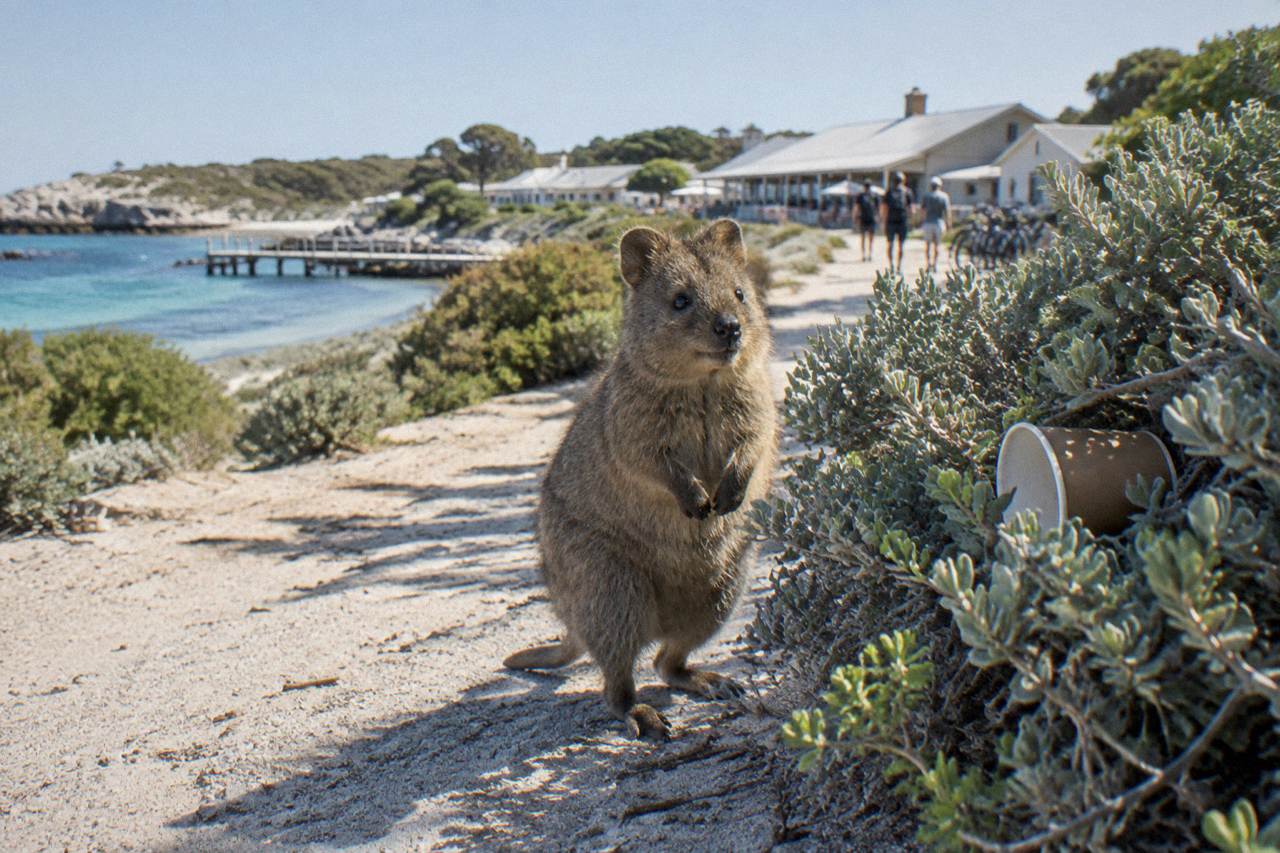
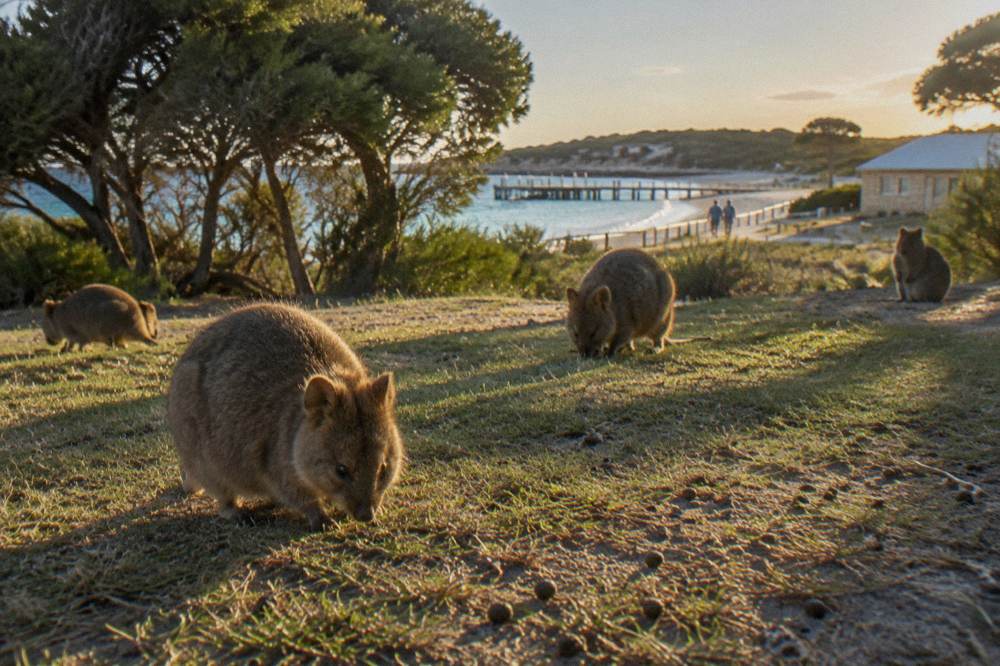
The most reliable quokka sightings are in and around the Thomson Bay settlement, where the ferries dock, and along the nearby bays including Geordie Bay and the lawns around the main buildings. Quokkas are mainly nocturnal, so the hours just after sunrise and the late afternoon give the best odds, and the cooler months from May to September raise daytime activity noticeably.
That combination of place and hour matters more than luck. A visitor who steps off a midday ferry, walks straight to The Basin and sees nothing has not done anything wrong; the quokkas were simply resting. The same visitor wandering the settlement lawns at 4 pm will likely cross paths with several. The island's quokkas have lived around people for more than a century, and the settlement, with its shade, watered lawns and sheltered nooks, is where they are most comfortable being visible.
The broader geography helps too. Rottnest, or Wadjemup as the Whadjuk Noongar Traditional Owners call it, is 11 km long by 4.5 km wide, small enough that a quokka population estimated at 8,000 to 12,000 animals by the IUCN (an assessment, not a headcount, last reviewed in November 2024) is spread thickly across 19 square kilometres. Away from the settlement, try the heath near the bays on the island's southern side, the tracks around the salt lakes, and the sheltered areas behind the dunes at Longreach and Little Parakeet Bay. Quokkas are only part of the draw, and if you want the full picture of what makes this place so well known, the guide to why Wadjemup draws visitors from around the world covers the rest.
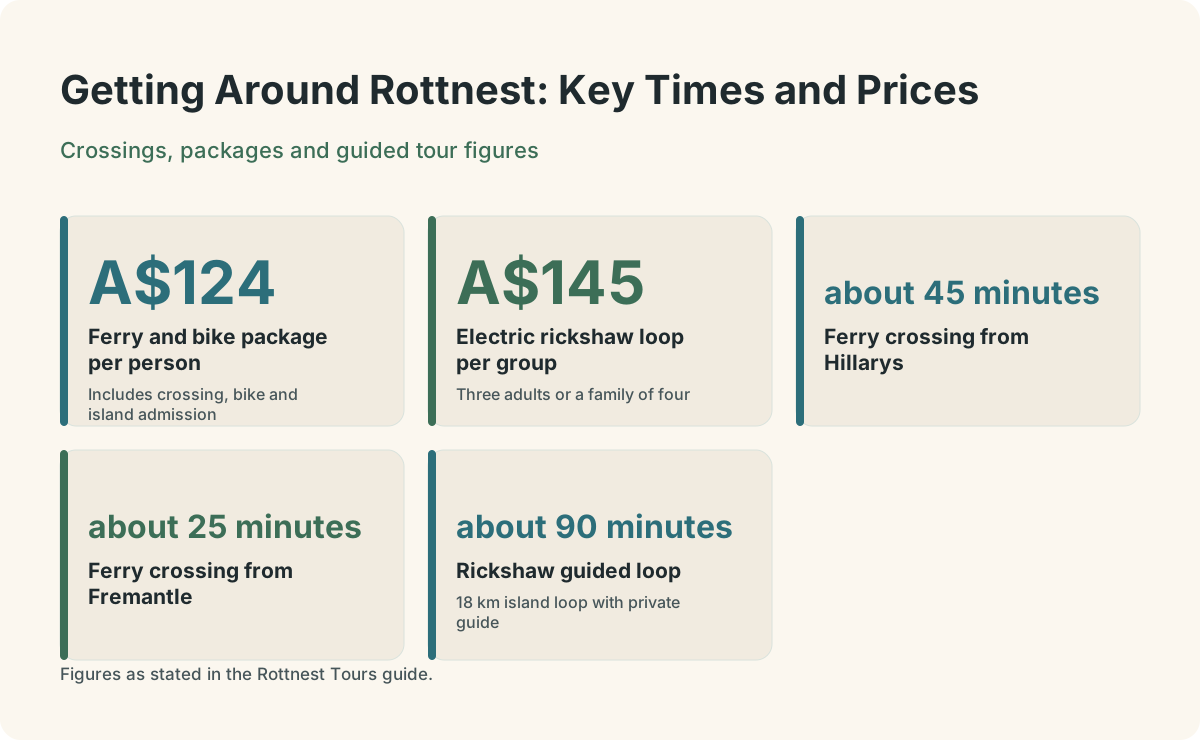
Getting there is the first decision, and it shapes your day. A ferry and bus tour package gets you across with transport and a commentary ride sorted, while a hillarys ferry and bike package bundles the crossing, a bike and the island admission fee from A$124 per person, leaving the whole day free for wildlife. The crossing itself takes about 45 minutes from Hillarys and about 25 minutes from Fremantle.
This guide walks through the sightings map, the timing, the rules and the guided options in turn. For the widest lens on every product on the island, from snorkel trips to scenic flights, Rottnest Tours compares the full roster side by side.
The main sighting spots at a glance:
| Location | Sighting odds | Best hour | Notes |
|---|---|---|---|
| Thomson Bay settlement lawns | Very high | Early morning, late afternoon | Two minutes from the Main Jetty |
| Geordie Bay | High | Late afternoon | Quiet, shady, fewer crowds |
| Tracks behind the southern bays | Moderate | Early morning | Sheltered heath, good in summer |
| Around the salt lakes | Moderate | Cooler months | Best from May to September |
| West End near Cathedral Rocks | Lower for quokkas | Any | Fur seals at the viewing platform instead |
When Are Quokkas Most Active?
Quokkas are mainly nocturnal and are most active early in the morning and late in the afternoon, which makes those the best sighting windows on any visit. In the cooler months, roughly May through September, daytime activity rises, so midday encounters become far more common than in the heat of summer. Midday in summer is the weakest window. For a deeper look at how to plan your whole day around their activity patterns, our guide on the best time to see quokkas has you covered.
The seasonal pattern is well documented on the island's own wildlife pages. Through the Djeran, Makuru and Djilba seasons of the Noongar calendar, roughly May to September, quokkas spend more of the daylight hours feeding and moving. In high summer they retreat to shade through the middle of the day and the population effectively becomes invisible between late morning and mid-afternoon.
For a day tripper, this has a practical consequence: the timing of your ferry shapes what you will see. Arrive on an early sailing and the settlement will be busy with quokkas still finishing their morning feed. Arrive at lunchtime in February and you may need to walk further, into the shadier reserves behind the settlement or toward Geordie Bay, before the late-afternoon shift begins. Visitors planning the whole day around wildlife may find the site's guide to how long you need on the island useful, since a second golden hour is the main argument for staying overnight.
Timing the crossing itself matters less than timing the walk, but it still counts. All three operators land you at the Main Jetty in Thomson Bay, which is to say, in the middle of the best quokka habitat on the island.
How activity shifts through a typical day:
| Time of day | Summer activity | Cooler-month activity | Sighting strategy |
|---|---|---|---|
| Sunrise to mid-morning | High | High | Walk the settlement lawns first |
| Late morning to mid-afternoon | Low, resting in shade | Moderate | Head west by bike or bus |
| Late afternoon to sunset | High | High | Back to Thomson Bay and Geordie Bay |
| After dark | Peak | Peak | Overnight guests only |
Three ways to spend your island hours line up well with quokka behaviour:
The rickshaw option is worth a pause because it is built around exactly this question. The listing describes an 18 km loop of the island in a brand new electric rickshaw with a private guide, audio tour and, in the operator's words, wildlife encounters, quokkas included among the draws. It runs about 90 minutes, is priced A$145 per group for three adults or a family of four, and carries a 5.0 rating, though from a small pool of 15 reviews. Details are on the private rickshaw tour page.
How Many Quokkas Live On Rottnest Island?
Rottnest Island supports the world's largest quokka population, estimated at 8,000 to 12,000 animals. That figure is an IUCN assessment last reviewed in November 2024, not a physical count, and it sits against the island's small size, just 19 square kilometres, which works out to several hundred quokkas per square kilometre at the upper end. With that many animals sharing such a small island, close encounters are common, and if one goes further than a photo, our guide on treating a quokka bite and the rules around feeding them explains what to do next.
Why the island carries so many is a story of isolation working in the animals' favour. Rottnest has no foxes, cats or dogs roaming free, and the Class A Reserve status keeps habitat largely intact. The mainland quokka populations in the south-west forests, by contrast, hold on in fragmented patches after introduced predators stripped much of their range, which is why the species carries a threatened listing even while Rottnest thrives. If you'd like a better shot at spotting one in the wild, the guide to Rottnest Island quokka tours covers where rangers most often find them.
The density also explains why sightings are near-certain given reasonable timing. Even at the low end of the estimate there are more quokkas on the island than there are permanent residents in the settlement. A quiet early morning walk around Thomson Bay rarely fails to produce at least one, and most mornings produce several, including mothers with pouch young in late winter.
One caveat belongs beside any big number: an estimate is a modelled range, not a census, and the island's quokka numbers move with seasons and rainfall. The figure's value is comparative, it shows why Rottnest, out of every quokka habitat in the world, is where sightings come easy.
Why Can You Not Touch Or Feed A Quokka?
Touching or feeding any wildlife on Rottnest Island, quokkas included, is prohibited. Interference draws on-the-spot fines under the Rottnest Island Regulations 1988 and can be prosecuted under the Biodiversity Conservation Act 2016 with fines up to A$10,000, while animal cruelty carries penalties up to A$300,000 and five years imprisonment under the Animal Welfare Act 2002.
The rules are strict for the quokkas' sake, not to spoil photos. The island's protect-our-wildlife guidance explains that touching can spread disease and can cause mothers to abandon young, and that feeding causes illness and pushes quokkas toward aggressive food-seeking behaviour. A quokka that learns to associate people with food becomes a problem animal in a place where problem animals cannot be relocated anywhere else.
The word "selfie" deserves a note, because Rottnest quokkas became world famous through exactly those smiling close-ups. There is no special selfie exemption and no rule banning cameras. The workable method is to crouch or lie down a metre or so away, let the quokka's curiosity do the approaching, and never use food, sticks or hands to lure it closer. A quokka that approaches you of its own accord, sniffs a shoe and looks into the lens has chosen the photo; a quokka lured into frame has been interfered with.
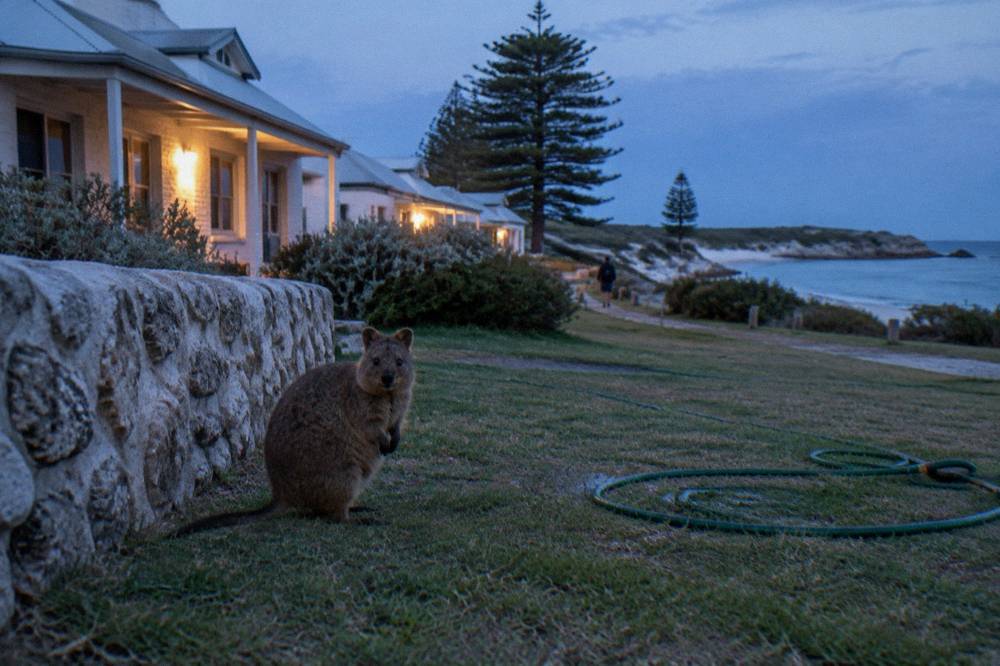
Bites are rare but they happen, usually when fingers are offered near a mouth. If a quokka bites you, clean the wound and have it assessed at the island's nursing post in Thomson Bay, and call 000 in an emergency. The deeper answer is in the why you can't touch a quokka explainer, which works through both the animal-welfare reasoning and the legal detail.
The rules extend beyond quokkas. Long-nosed fur seals haul out at Cathedral Rocks on the island's west end, and swimming with them is not permitted; view them from the purpose-built platform. Dugites, venomous native snakes, are present and are best given a wide berth. Sick or dead birds should be reported to the Emergency Animal Disease Hotline on 1800 675 888 rather than handled.
The penalties, in one view:
| Behaviour | Consequence | Instrument |
|---|---|---|
| Touching or feeding wildlife | On-the-spot fine | Rottnest Island Regulations 1988 |
| Deliberate interference with wildlife | Fines up to A$10,000 | Biodiversity Conservation Act 2016 |
| Animal cruelty | Up to A$300,000 and 5 years imprisonment | Animal Welfare Act 2002 |
| Swimming with fur seals | Not permitted | Island wildlife rules |
| Recreational drones | Not permitted | Island practical tips policy |
What Is The Free Meet The Quokkas Walk?
The Rottnest Voluntary Guides Association runs a free Meet the Quokkas walking tour daily, departing from the historic Salt Store next to the Information Booth in Thomson Bay, with departures around 9:15 am and 2 pm. No booking is needed, the walks are subject to weather and guide availability, and they are the cheapest structured way to learn about the animals.
The volunteer guides run a full daily program beyond the quokka walk: Reefs Wrecks and Daring Sailors, Pioneers and Prisoners, Salt Settlers and Survivors, Whitecaps and Wilderness at Parker Point, and the roving West End Wanderer. All are free, all leave from the Salt Store, and all are weather dependent. During the summer school holidays from 2 to 31 January 2027 and the autumn holidays from 10 to 25 April 2027 the guides add free family programs with beach discovery activities and quiz nights.
The 9:15 am departure is the one to target for quokkas specifically, since it lands squarely in the morning activity window. The 2 pm walk can be a shade early in summer, but from May onward the afternoon shift starts earlier and both departures work. Because the walks need no booking they pair well with any ferry arrival, including bare ferry-and-admission tickets from A$90 per person out of Fremantle.
More free and low-cost ideas, including the walks and the Wadjemup Museum, are gathered in the free things to do on Rottnest Island guide.
What Are The Best Guided Ways To See Quokkas?
Four guided formats reliably deliver quokka sightings: the free volunteer Meet the Quokkas walk, a 90-minute private rickshaw loop at A$145 per group, segway tours from A$98 per person covering the settlement and coast, and the ferry-and-bus packages that combine the crossing with a 1-hour 45-minute commentary tour. Each suits a different budget and mobility level.
The rickshaw is the most quokka-focused product on the roster. Rotto Rickshaws runs a private electric rickshaw, a guide driving and narrating an 18 km loop, with stops framed around wildlife encounters. Because it is private, the pace bends to the animals: a group that wants ten minutes at a shady patch where quokkas are feeding gets ten minutes. At A$145 for up to three adults or a family of four it is also one of the better per-person values for small groups, and it carries free cancellation.
Segways cover similar ground under your own balance. Segway Tours WA runs two products on the island: the one-hour Settlement tour from A$98 per person, rated 4.7 from 62 reviews, which loops the settlement and coastline where quokkas are most visible, and the 90-minute Fortress Adventure tour from A$139 per person, rated 4.8 from 117 reviews, which pushes out toward the military heritage sites at the island's west end. Both include rider training, all safety equipment and personal radios so the guide's commentary reaches every rider, useful when a group stops quietly near grazing animals.
The bus option suits travellers who would rather sit than steer. The ferry-and-bus package, from A$149 per person and rated 4.6 from 1,512 reviews, combines return ferry tickets, the island admission fee and a 1-hour 45-minute bus tour with commentary, with departures from Perth or Fremantle and a Swan River scenic cruise on the Perth option. The bus route passes through quokka country on its way to the bays and lookouts, and the commentary folds the island's natural history into the ride.
For visitors building a full day around the island rather than one species, the wider options, from the Parker Point snorkel trail to the Oliver Hill guns and tunnels, fill the middle of the day while the quokkas rest. The island's own quokka page and the protect-our-wildlife guidance are the primary sources for the rules quoted above.
A quick comparison of the guided quokka-friendly options:
| Option | Price | Duration | Operator | Rating |
|---|---|---|---|---|
| Meet the Quokkas volunteer walk | Free | About 1 hour | Rottnest Voluntary Guides | Not rated |
| Private rickshaw quokka tour | A$145 per group | About 1.5 hours | Rotto Rickshaws | 5.0 from 15 reviews |
| Settlement segway tour | From A$98 per person | About 1 hour | Segway Tours WA | 4.7 from 62 reviews |
| Fortress Adventure segway tour | From A$139 per person | About 1.5 hours | Segway Tours WA | 4.8 from 117 reviews |
| Ferry and bus tour package | From A$149 per person | 7 hours to a full day | SeaLink Rottnest Island | 4.6 from 1,512 reviews |
When Do Quokka Joeys Appear?
Quokka joeys are born in late summer and stay in the pouch until around August, when they begin poking their heads out, and take their first hops out of the pouch in September. Late winter and early spring, August to October, is therefore the window for seeing a joey at foot or peeking from a pouch.
The timing lines up with the island's cooler, wetter months, when food is most available after the winter rains, which is the standard macropod strategy carried to a mild offshore extreme. A joey at foot, the stage after permanent pouch exit, stays close to its mother for several more weeks, so sightings of mother-and-young pairs run well into spring.
For photographers this is the premium window, but it demands extra restraint. A mother with a pouch young or a joey at foot is more easily disturbed, and the interference rules exist precisely because stress at this stage carries real costs, including abandoned young. Keep the same metre-plus distance, move slowly and let the pair decide the encounter.
The season also overlaps with some of the island's calmer visitor months, between the summer peak and the school holidays of 10 to 25 April 2027. Anyone planning around the joey window should also read the best time to visit Rottnest Island piece, which weighs weather, crowds and wildlife in one place.
How Should You Behave Around Quokkas?
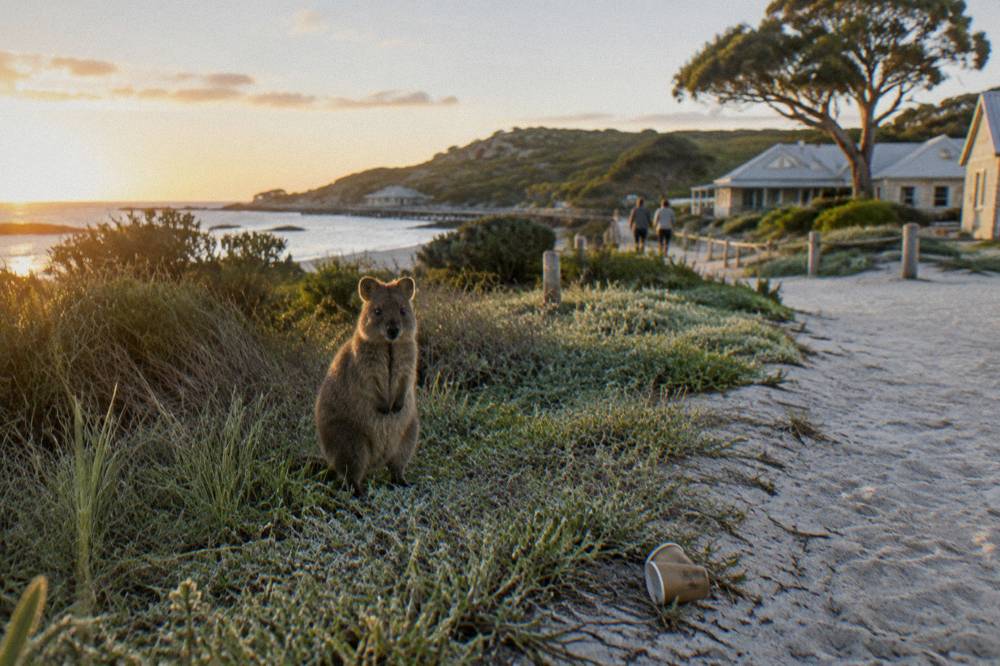
Behave as a passive guest: keep at least a metre of distance, never touch, feed or chase, keep food sealed and out of sight, and move slowly and quietly. If a quokka approaches you, stay still and let it leave on its own terms. Food discipline matters most near the settlement, where quokkas and picnics share the same lawns.
Most bad quokka encounters start with a dropped chip or an offered crust. Feeding is not a kindness, it is the offence the on-the-spot fines target, and it trains animals to approach people, which ends badly for the quokka long before it ends badly for the person. Eating inside the bakeries and cafes rather than on the lawns, and zipping snacks away in a bag between stops, removes most of the temptation for both parties.
The law backs the etiquette. Beyond the on-the-spot fines, the Biodiversity Conservation Act 2016 allows prosecutions with fines up to A$10,000 for interfering with wildlife, and animal cruelty provisions under the Animal Welfare Act 2002 reach A$300,000 and five years imprisonment. Nobody is fined for a quokka walking over their shoe; the enforcement target is deliberate touching, feeding and harassment. The island's quokka page and the IUCN Red List assessment are the reference sources for the population and behaviour facts cited through this guide.
Which Parts Of The Island Hold The Most Quokkas?
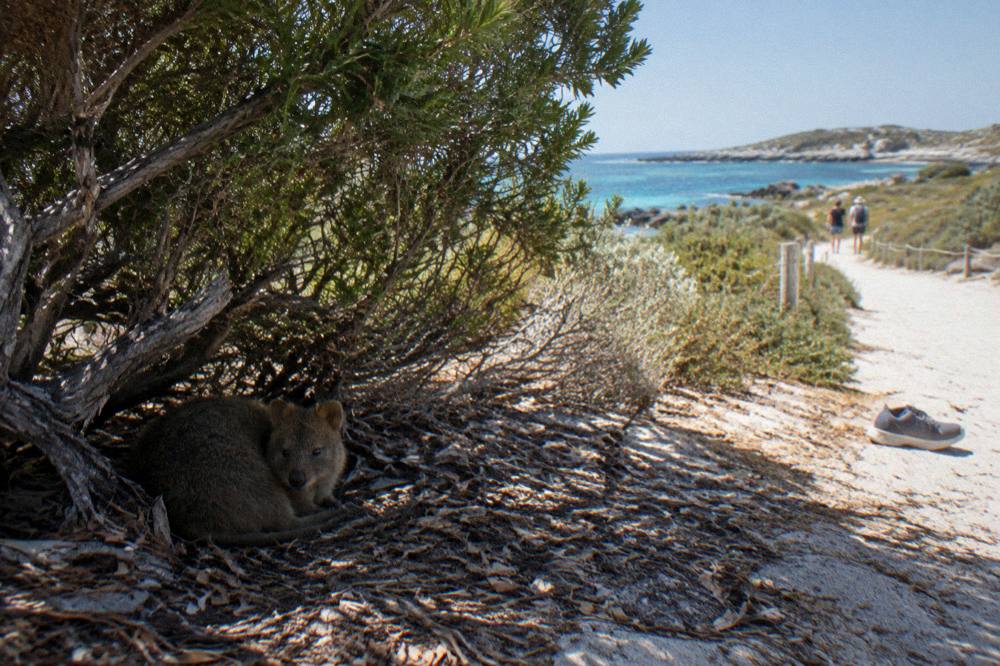
The Thomson Bay settlement holds the densest, most visible population, followed by Geordie Bay, the lawns and gardens around the main buildings, and the shaded heath behind the southern bays. The west end around Cathedral Rocks has fewer quokkas but adds fur seals at the viewing platform, making it a strong second half of a wildlife day.
Working the settlement first also fits the ferry logistics. Everything lands at the Main Jetty, so the highest-density quokka habitat is a two-minute walk from where you step ashore. A simple wildlife circuit is: settlement lawns on arrival, the shaded tracks toward Geordie Bay, then a bike or bus run west in the middle of the day while the quokkas rest, and back to Thomson Bay for the late-afternoon feed before the ferry home.
Cyclists have the run of 22 km of cycle paths, and the island is car-free apart from approved service vehicles, so every wildlife circuit is human-powered or bus-powered. Bike hire through a ferry package, such as the hillarys ferry and bike day from A$124 per person, or on-island hire at Pedal & Flipper, a standard multi-geared bike at A$35 a day plus a A$50 deposit, both open the quieter bays where day-trippers on foot rarely reach.
Whichever way you cover the ground, the same logic holds: put the settlement hours at the edges of the day and give the quokkas the middle to themselves. The three quokka-friendly picks below cover the private, the seated and the self-balancing options.
Common Questions About Quokkas On Rottnest Island
Where can I see quokkas on Rottnest Island?
Most reliably around the Thomson Bay settlement where the ferries arrive, on the lawns near the main buildings, and along the tracks to Geordie Bay. Away from the settlement, try the shaded heath behind the southern bays and the areas around the salt lakes.
What time of day is best for quokka sightings?
Early morning and late afternoon, because quokkas are mainly nocturnal. From May to September, cooler weather raises daytime activity, so midday sightings become far more likely than in summer.
How many quokkas are on Rottnest Island?
The IUCN estimates 8,000 to 12,000, an assessment last reviewed in November 2024. Rottnest holds the world's largest quokka population, packed into just 19 square kilometres.
Can I touch or feed a quokka?
No. Touching and feeding wildlife is prohibited on Rottnest Island. Interference draws on-the-spot fines, with prosecution possible up to A$10,000 under the Biodiversity Conservation Act 2016, and animal cruelty penalties reach A$300,000 and five years imprisonment.
When can I see quokka joeys?
Joeys poke their heads from the pouch in August and take their first hops in September, so August to October is the window for seeing mothers with young.
Is there a free quokka tour on the island?
Yes. The Rottnest Voluntary Guides Association runs a free Meet the Quokkas walk daily from the Salt Store next to the Information Booth in Thomson Bay, with departures around 9:15 am and 2 pm, subject to weather and guide availability. No booking is needed.