What's The Best Time To Visit Rottnest Island?
A month-by-month verdict on the best time to visit Rottnest Island, based on verified climate data, whale and quokka seasons, school holidays and ferry fares.
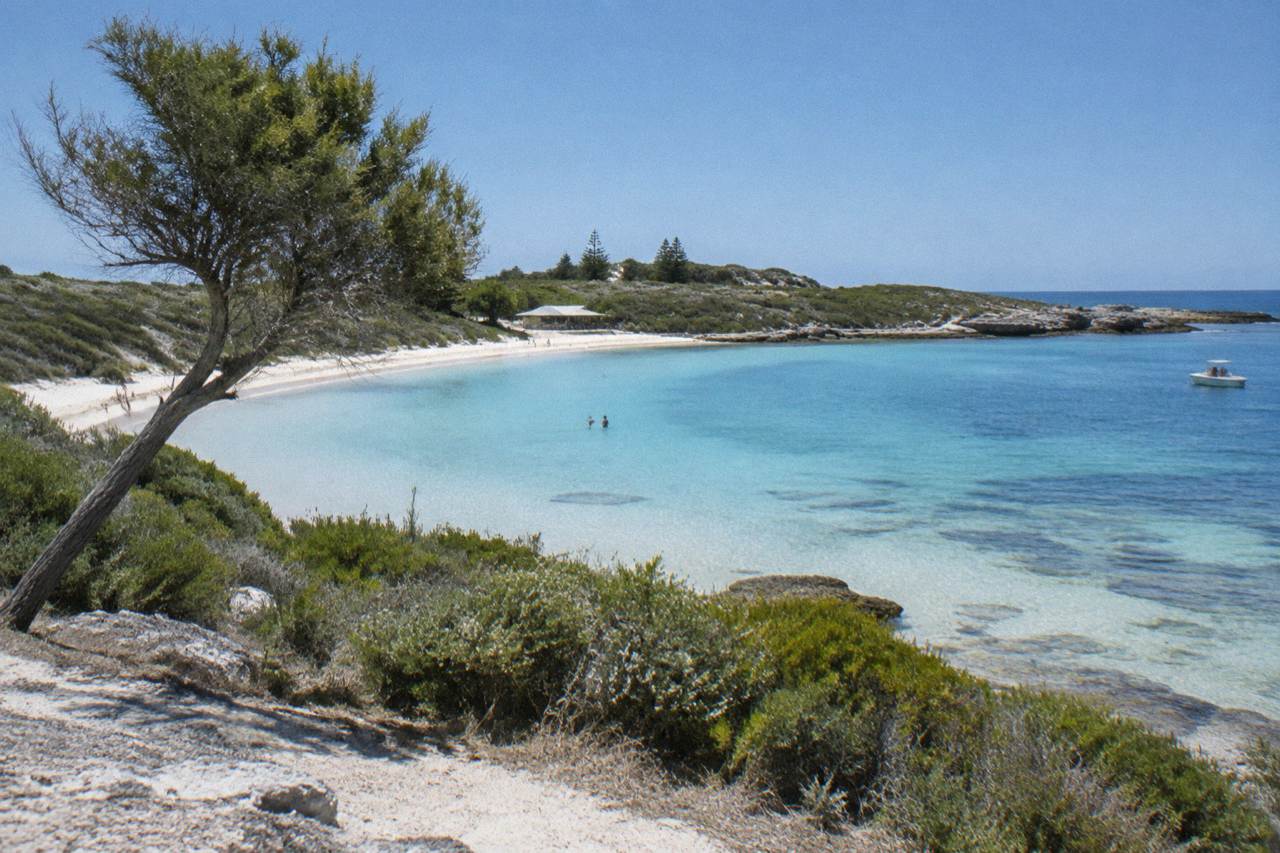
Rottnest Island sits 19 km off Fremantle, close enough that the ferry crossing takes about 25 minutes from the mainland, and its seasons swing far more than visitors expect. The same island that serves up 22 C sea temperatures and dry, sun-baked days in February delivers soaking winter months, empty beaches, and humpback whales passing the West End. There is no single wrong month, but there is a best month for whatever you personally want from the trip.
The short verdict, drawn from Bureau of Meteorology averages and the island's own seasonal operations: December to March is the warm, dry, busy window. June to August is cool, wet, quiet and the heart of whale season. August to September is joey season for quokkas. Spring brings the snorkel boats back and shoulder-season calm, and school holidays from 17 December 2026 to 31 January 2027 are the busiest stretch of the year.
That choice shapes everything downstream: which ferry you take, whether the ferry-and-bike day that most visitors book makes sense, and whether you will be swimming or watching storms roll over Thomson Bay. The full comparison on the Rottnest Tours homepage lines up the ferry, bike and tour packages side by side; this page handles the calendar question on its own.
What's The Best Time To Visit Rottnest Island?
For warm, dry weather and swimming, December to March is the best time: average maximums run 25.3 to 27.3 C, monthly rainfall averages sit in the low teens of millimetres, and the sea sits around 22 C. For whales, fewer crowds and lower winter rates, June to August is better. For quokka joeys, plan for August to September. The honest answer is that the best month depends on which of those three you want most.
Start with the climate record, because it is more decisive on Rottnest than on most Australian islands. The Bureau of Meteorology's station on the island has averaged 26.7 C maximums in January, 27.3 C in February and 26.2 C in March, against mean rainfall of 13.3, 10.3 and 18.0 mm respectively. Sea surface temperatures over the past decade average 22.17 C in January, 22.43 C in February and 22.55 C in March, the warmest water of the year. That four-month stretch is objectively the island's summer: dry, warm, and made for the snorkel trails and 63 beaches.
Winter flips the picture. June, July and August average maximums of 18.8, 17.9 and 18.0 C, with the two wettest months of the year landing in the middle of it and 11 to 15 rain days a month. The sea drops to 18.8 C in August. What winter gives back is space and wildlife: the whale season runs August to December, quokkas are more active in daytime in the cooler months, and the summer crowds vanish. Shoulder months, April, May, October and November, sit between the two: 20 to 24 C maximums, modest rainfall early and late, and sea temperatures that fall from 22.01 C in April to 18.53 C in September before climbing again.
Whichever window you pick, the transport decision is the same. Most visitors book a combined ferry-and-bike day, and the largest of those on this site, the From Perth full-day bike and ferry trip, runs from Hillarys with bike hire and island admission included from A$124 per person, rated 4.7 from 2,937 reviews, with free cancellation. You can Check availability alongside the guide to ferry and bike packages, which explains what the packages bundle.
What To Do On Rottnest Island In Winter
Winter on Rottnest means whales from the shore and the ferry, active quokkas in daylight, empty walking trails and the Wadjemup Museum by the fire-adjacent contribution door. Swimming is possible at 18 to 19 C but is a wetsuit proposition, and the seasonal snorkel boats are closed. The three winter months are the island's wettest, so pack for showers between the clear, brilliant days the island is known for.
The whale season is winter's headline. The Perth and Rottnest whale watching window runs from August to December, with humpback and southern right whales sometimes visible as early as June and July, and whales are regularly seen from the ferry itself on the crossing. Rottnest Express also runs a whale cruise from Thomson Bay between September and November. No listing on this site sells a guaranteed sighting, and no operator can promise one; the whales pass on their own schedule, which is exactly why the season is defined in months rather than appointments. More detail is in when you can see whales at Rottnest.
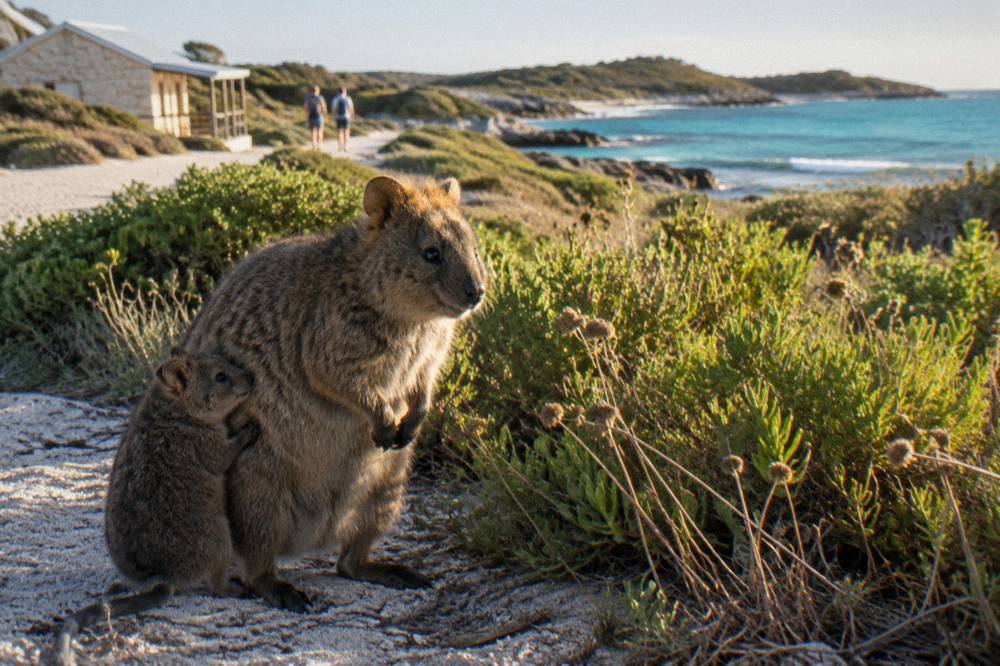
Quokkas, the island's other winter drawcard, become easier to see. They are mainly nocturnal, most active early morning and late afternoon, but the cooler months raise daytime activity, which is why the island's own winter wildlife pages push Djeran in May, Makuru in June and July, and Djilba in August and September as the viewing window. The rules do not change with the temperature: do not touch or feed quokkas, with on-the-spot fines and penalties up to A$10,000 under the Biodiversity Conservation Act 2016 for interference, and up to A$300,000 and five years for animal cruelty. More on that in why you can't touch a quokka.
Winter is also the season the island feels smallest. The Rottnest Voluntary Guides run free daily walks from the Salt Store year-round, including Meet the Quokkas, and the Wadjemup Museum is open daily by contribution. If you want a winter day with a roof, a guide and a schedule, the ferry-and-bus option, a 1-hour 45-minute commentary bus tour from A$149 per person rated 4.6 from 1,512 reviews, keeps you mostly out of the weather while still covering the island.
When Is Rottnest Island Warmest And Driest?
February is the warmest month on average, with a mean maximum of 27.3 C, and February is also among the driest, averaging just 10.3 mm of rain and 0.9 rain days of a millimetre or more. January and March run close behind at 26.7 and 26.2 C. The sea peaks at 22.55 C in March, slightly warmer than the air-temperature peak month.
The full monthly picture is worth seeing side by side, so here it is from the island's own weather record.
| Month | Mean maximum (C) | Mean rainfall (mm) | Mean sea temperature (C) |
|---|---|---|---|
| January | 26.7 | 13.3 | 22.17 |
| February | 27.3 | 10.3 | 22.43 |
| March | 26.2 | 18.0 | 22.55 |
| April | 23.8 | 32.1 | 22.01 |
| May | 21.2 | 70.0 | 21.36 |
| June | 18.8 | 103.2 | 20.58 |
| July | 17.9 | 114.1 | 19.66 |
| August | 18.0 | 86.6 | 18.80 |
| September | 19.0 | 51.2 | 18.53 |
| October | 20.6 | 27.9 | 18.99 |
| November | 23.1 | 18.2 | 19.77 |
| December | 25.3 | 9.4 | 21.14 |
Two things jump out of that table. First, the dry season is sharper than visitors assume: December's 9.4 mm average and February's 10.3 mm sit next to a midwinter deluge in July, roughly a twelvefold difference between the wettest month and the driest. Second, the sea holds its heat well past the air-temperature peak, staying above 22 C through April, which makes March and April quietly excellent swimming months with thinner crowds than the January peak. The full month-by-month detail, including the rain-day counts, is in the Rottnest Island weather guide, which uses the same Bureau of Meteorology station data.
The trade-off for that summer perfection is demand. A same-day return ferry from Fremantle with Rottnest Express totals A$87.50 for an adult including the A$21.50 admission fee, and from Hillarys with Rottnest Fast Ferries it totals A$95, but summer weekends and school holidays sell those seats out first. Booking ahead matters more in this window than in any other, which is its own argument in whether you need to book the ferry in advance.
When Can You See Quokka Joeys On Rottnest Island?
Quokka joeys first poke their heads out of their mothers' pouches in August and take their first hops in September, which makes late winter and early spring the joey season. Quokkas give birth in late summer and carry the young through winter, so August to September is when visible pouch young appear. The island holds the world's largest quokka population, an IUCN estimate of 8,000 to 12,000 animals.
That August-to-September window overlaps neatly with the improving weather: September's average maximum of 19.0 C and 51.2 mm of rain is far gentler than July's, and daytime quokka activity is still elevated by cool conditions. For photographers and families, it is arguably the single best-aimed fortnight on the calendar: joeys, active adults, the first of the whale season, and crowds that are a fraction of January's.
The same rules apply regardless of season, and they apply doubly around mothers with pouch young. The island's official position, on the quokkas page, is to observe from a distance, never touch or feed, and never chase or corner an animal for a photograph. Touching can spread disease and cause mothers to abandon young, and feeding causes illness and aggression. The practical version of the rule is simple: let the quokka approach its own background, and never stage one.
If a guided introduction appeals more than finding your own way, the free Meet the Quokkas walk from the Rottnest Voluntary Guides departs the Salt Store daily at about 9:15 am and 2 pm, subject to weather and guide availability, and the quokka tours guide lists the paid options, including a private electric rickshaw loop rated 5.0 from a small pool of 15 reviews, priced at A$145 per group for three adults or a family of four.
When Do The Snorkel And Boat Tours Run?
The commercial snorkel and sailing trips on the island are seasonal products that reopen in spring: the guided snorkel boat trips restart in October and the catamaran snorkel and sail trips in November, both running through to autumn. Winter is closed season for both. Ferry-based wildlife cruises and the ferry-and-bike days run all year.
Seasonality here is a water-temperature story more than a weather one. The guided snorkel boat experience, about 3 hours from A$239 per person and rated 4.5 from 51 reviews, and the half-day catamaran snorkel and sail, about 3 hours from A$185 per person and rated 4.8 from a small pool of 33 reviews, both wait for the sea to climb back through the 19 C mark, which the averages show happening in October. Shore snorkelling on the Parker Point trail, with its 12 interpretive plaques on the seabed, needs no operator at all and is open whenever you are willing to get in; September's 18.53 C average demands more commitment than March's 22.55 C.
The boat experiences that do run year-round are the ferry-based ones. The adventure cruise, a 90-minute high-speed wildlife run bundled with the ferry from A$164 per person and rated 4.5 from 244 reviews, operates on the same calendar as the ferries themselves, and guest reviews of that trip and of the plain ferry crossings regularly mention whales in season. One seasonal note that trips up summer planners: the luxe seafood cruise, a 7-course lobster lunch with Margaret River wines from A$395 per person, is explicitly a seasonal product that does not run in winter.
The practical takeaway for trip timing is to match the boat to the month. Book the catamaran and the guided snorkel boat for November to April, the wildlife adventure cruise for any month but especially August to December, and treat winter boat time as ferry time.
Which Months Are The Quietest On Rottnest Island?
May to August is the quietest period on Rottnest Island, with June and July the emptiest of all: 11 to 15 rain days a month, average maximums under 19 C, and school in session. Midweek days outside school holidays in April, May, September, October and November are the best compromise, offering mild weather with a fraction of the summer foot traffic.
The WA school calendar is the crowd engine here. School holidays run 17 December 2026 to 31 January 2027 in summer, 10 to 25 April 2027 in autumn, and 3 to 18 July 2027 in winter, and the island's own ferry page recommends booking ahead specifically for peak summer periods. The summer holiday stretch is the busy one: extra ferry services run for the free New Year's Eve family fireworks on Thursday 31 December 2026, and the South32 Rottnest Channel Swim on Saturday 20 February 2027 pulls thousands of swimmers and spectators to the island for a single day.
Winter's mid-year holidays, by contrast, barely register compared with summer, because the weather keeps the casual day-trip crowd away. That makes the July 2027 school-holiday window an interesting sleeper pick for families: whale season, joey season approaching, quokkas active in daylight, and the island still genuinely quiet by summer standards. The free Rottnest Voluntary Guides school-holiday programs run in summer from 2 to 31 January 2027 and in autumn from 10 to 25 April 2027, adding free structured activities for kids in exactly the periods when families visit.
Quietest does not mean closed, either. The Island Explorer hop-on hop-off bus runs daily year-round on its 19-stop loop, the two General Stores open seven days, and the segway tours, rated 4.8 from 117 reviews for the 1.5-hour fortress tour from A$139, run in all but the worst weather. If a quiet, fully operational island appeals, the how many days you need on Rottnest question also changes with the season, since winter days are shorter and slower.
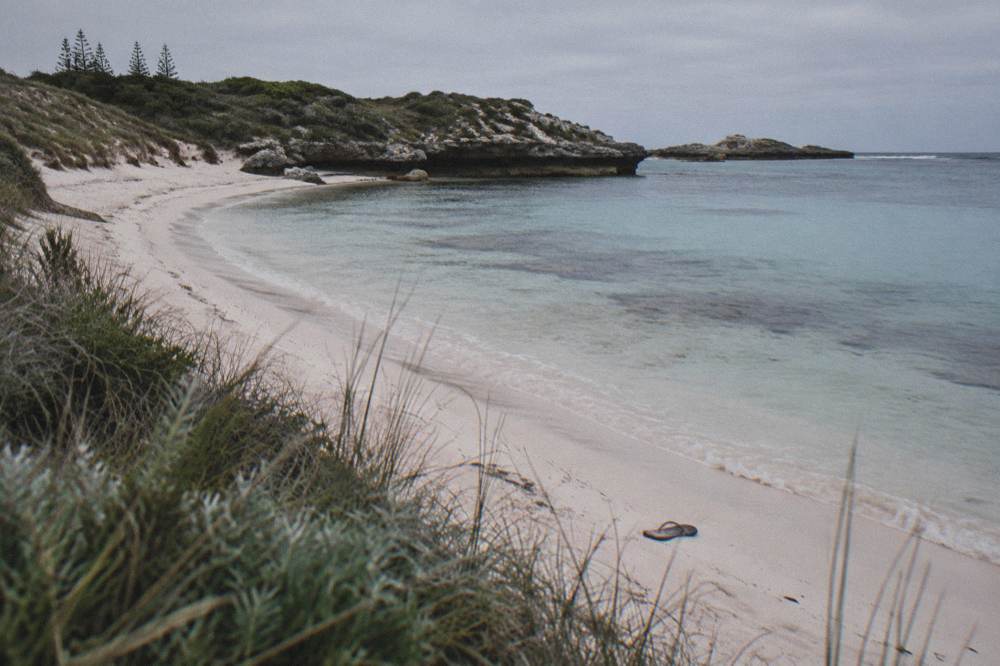
Which Month Should You Pick For Your Trip?
Pick February for the warmest, driest weather; March or April for warm sea with fewer people; August for joeys and the start of whale season at low crowds; September to November for whales, reopened snorkel boats and mild days; and December to January only if you accept peak crowds and book well ahead. October is the strongest all-round compromise month on paper.
Here is the verdict by goal, using only the verified numbers above.
| If you want | Best months | Why |
|---|---|---|
| Warmest, driest beach weather | December to March | Mean maximums 25.3 to 27.3 C, rainfall averages of 9.4 to 18.0 mm, sea around 22 C |
| Warm water, thinner crowds | March to April | Sea averages 22.55 C and 22.01 C, school in session, holiday rush over |
| Quokka joeys | August to September | Pouch young visible in August, first hops in September, daytime activity still high |
| Whales | August to December | Season window, whale cruise from Thomson Bay September to November, sightings possible from the ferry |
| Snorkel boat trips | November to April | Guided snorkel boats reopen in October, catamaran in November, sea back above 19 C |
| Fewest people | June to July | 11 to 15 rain days a month, no holiday rush, cool but fully operational island |
| Budget-conscious travel | May to August | Shoulder and winter sailing dates are the least contested, and the cheapest ways to reach the island are easiest to book |
The one genuinely clever play in that table is the August overlap: joeys, the opening of whale season, elevated daytime quokka activity, an 18.8 C sea for the brave, and a fraction of the summer crowd. If the trip's purpose is wildlife rather than swimming, August beats February outright.
Whatever month you settle on, the booking mechanics are the same: choose your departure port, with Hillarys at about a 45-minute crossing, Fremantle at about 25 minutes and Perth at up to 90 minutes via the river and sea, and lock in the ferry or package early if the date falls inside school holidays. The ferry prices guide breaks down every fare table, and the packages below are the three this site would shortlist for each kind of season.
Common Questions About The Best Time To Visit Rottnest Island
What's The Best Time To Visit Rottnest Island?
December to March for warm, dry swimming weather with mean maximums of 25.3 to 27.3 C and sea around 22 C. August to September for quokka joeys, and August to December for whales. June to August for the quietest island. If you want one compromise month, aim for October: mild days, reopened seasonal tours and thin crowds.
What To Do On Rottnest Island In Winter?
Watch for humpback and southern right whales from the shore, the ferry or a whale cruise between September and November, see quokkas active in daylight, join the free daily Rottnest Voluntary Guides walks from the Salt Store, visit the Wadjemup Museum by contribution, and ride the ferry-and-bus tour for a covered, commentary-driven loop of the island.
Is Winter Too Cold To Visit Rottnest Island?
No. Average maximums of 17.9 to 18.8 C from June to August are mild by most standards, and clear winter days on the island are frequent and spectacular. Expect 11 to 15 rain days a month and an 18.8 to 20.6 C sea, so pack a rain layer and treat swimming as optional rather than central.
When Can You See Baby Quokkas On Rottnest Island?
Joeys poke their heads out of their mothers' pouches in August and take their first hops in September. Quokkas give birth in late summer and carry young through winter, so late winter and early spring is the visible joey window, and cooler weather keeps adults more active in daytime through those months.
Are The Snorkel Tours Open All Year On Rottnest Island?
No. The guided snorkel boat trips and the catamaran snorkel and sail trips are seasonal products that reopen in spring, in October and November respectively, and run through to autumn. Shore snorkelling on the Parker Point trail is possible year-round whenever conditions allow, though winter water averages 18.8 C.
Which Months Are Busiest On Rottnest Island?
The summer school holidays, 17 December 2026 to 31 January 2027, are the busiest stretch, along with single-event days such as the South32 Rottnest Channel Swim on Saturday 20 February 2027. Book ferries, tours and packages well ahead in these windows; the island's own guidance says peak-period services often sell out.