Why Can't You Touch A Quokka?
The rules, the fines and the biology behind Rottnest Island's no-touching rule for quokkas, plus how guided tours get you close the legal way.
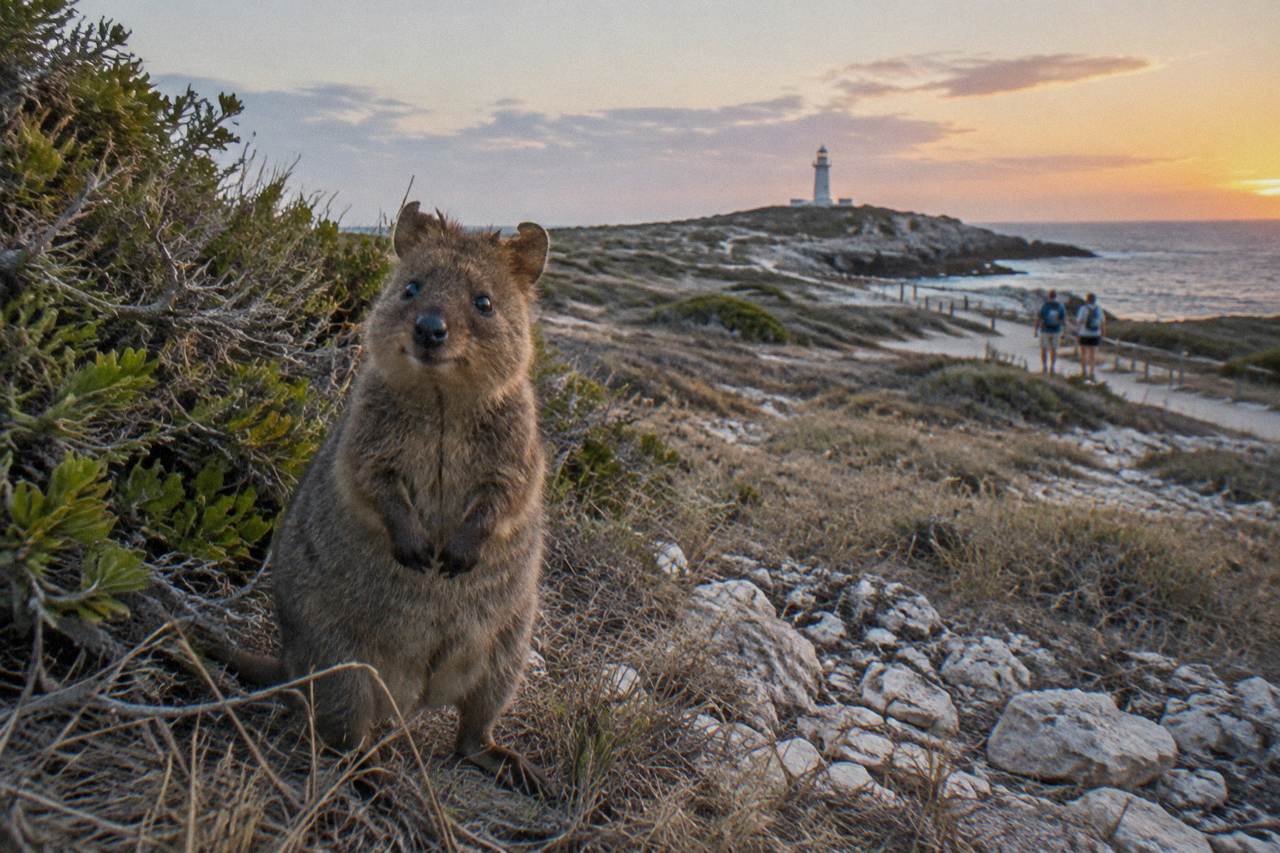
Quokkas have spent a decade being called the happiest animals on earth, and every one of those photographs was taken from a distance. Rottnest Island, home to the world's largest quokka population, is blunt about the rule: do not touch or feed any wildlife. The island's own protect our wildlife page explains why touching can make quokkas sick, spread disease and cause mothers to abandon their young. The rule is not bureaucratic caution. It is a direct response to what happens when tens of thousands of visitors share a small island with a small marsupial that has no fear of people, and no defence against what people carry.
You cannot touch a quokka because human contact harms them in ways that are not visible in the moment: diseases and chemicals on hands can make them ill, and a handled mother may abandon her joey, which then dies. Deliberate interference, including feeding, draws on-the-spot fines under the Rottnest Island Regulations 1988 and prosecution up to A$10,000 under the Biodiversity Conservation Act 2016. If you still want to see quokkas up close without breaking the rules, the guide to Rottnest Island quokka tours covers the best ways to meet them responsibly.
The rest of this article unpacks that in plain terms: what "interference" actually covers, whether quokkas enjoy contact (the honest answer is no), what the dark side of their story is, and how the island's guided options, from free voluntary-guide walks to the private rickshaw quokka tour, get you close without breaking the law.
The reason the rule feels strict is that the stakes are not symmetrical. A visitor loses nothing by keeping two metres away. A quokka that picks up a pathogen from a human hand can die from it, and a joey separated from a stressed mother rarely survives. Wardens on the island enforce the rules, but the deeper protection is behavioural: quokkas that learn to approach people for food become aggressive, and an aggressive quokka near a café is one complaint away from being managed as a problem animal. Feeding, even with something "healthy", rewires wild behaviour in a place that has no veterinary safety net for thousands of animals.
For visitors who want the photograph, the practical takeaway is simple. Quokkas approach people on their own terms, constantly, especially around the Thomson Bay settlement in the early morning. You do not need to reach out. Crouch, stay quiet, let the animal decide the distance, and you will usually get a closer encounter than any touching would allow, and a better picture. The tours below are the island's licensed ways to spend time around quokkas with a guide who manages that distance for you.
Why Can't I Touch Quokka?
Touching is banned even when a quokka approaches you, because the harms are invisible and delayed: disease transfer, illness from chemicals on skin, and abandoned young. The island's guidance is to observe from a safe distance with no touching at all, and the same rule covers feeding, which changes quokka behaviour and can cause aggression and illness.
The question usually comes from visitors who have already had a quokka wander up to their shoes and sit down. When the animal initiates contact, people reason, surely touching it back is harmless. The island's answer is that the risk is invisible, delayed and entirely borne by the animal. Hands carry scents, sunscreen, sanitizer, residue from food and pathogens a quokka's immune system has never met. A mother that is handled or startled may stop returning to her pouch-bound young. None of that shows up in the moment, which is exactly why the moment feels safe.
The framing matters. The rule is not "quokkas are dangerous", it is "quokkas are vulnerable". Rottnest is a Class A Reserve, the highest protection category in Western Australia, and the island's whole management approach treats wildlife as the resident population and humans as guests. Recreational drones are not permitted either, for the same reason: the island optimises for the animals' conditions, not for visitor convenience. Campfires are prohibited, bicycles are the default transport, and the quokka rules sit inside that larger car-free, fire-free, feed-free design.
It also helps to understand what a quokka actually is. It is a small wallaby, a macropod, not a rodent or a pet. Macropods stress easily, and stress in marsupials is not cosmetic: a pursued or grabbed quokka can injure itself trying to flee, and captured wild macropods can die from capture myopathy, a stress-induced muscle condition well documented in Australian wildlife care. That risk is one reason wildlife carers handle even orphaned macropods with hoods and minimal contact. A tourist picking up a quokka for a photo is subjecting it to the same physiology with none of the care.
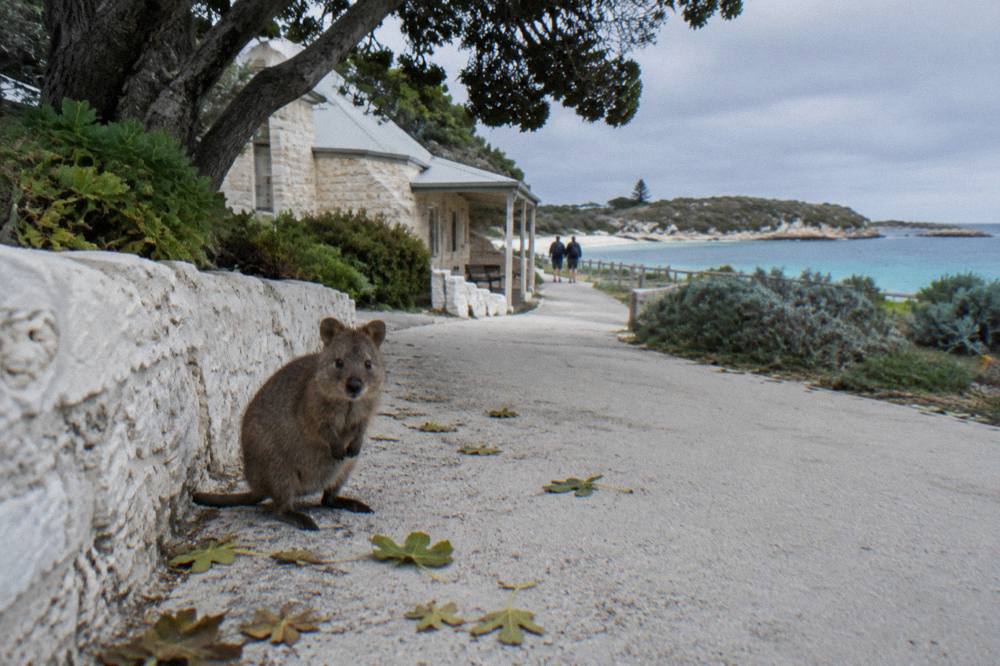
The practical version of the rule, as the island applies it: do not touch, do not feed, do not chase, do not block an animal's path, and do not use food to lure one closer for a photo. Every one of those behaviours is "interference" in the regulatory sense. If you want structured time around quokkas with someone managing the encounter, the guided options are the legitimate route, and the article's later sections cover exactly how those work, from the free walks to the private rickshaw tour that this site features.
What the rules say, and what they cost
| Rule or law | What it prohibits | Penalty |
|---|---|---|
| Rottnest Island Regulations 1988 | Deliberate interference with wildlife, including feeding and touching | On-the-spot fines |
| Biodiversity Conservation Act 2016 | Prosecution for interfering with protected wildlife | Fines up to A$10,000 |
| Animal Welfare Act 2002 | Cruelty to an animal, including mistreatment of quokkas | Up to A$300,000 and 5 years' imprisonment |
The numbers are real and they are enforced by island rangers, not just posted on signs. In practice, almost all visitors comply, and the fines exist for the minority who chase, grab or bait animals for content. If a quokka bites you, the animal is not punished; you were too close, and the island treats it that way. This site keeps a separate piece on that scenario, what to do if a quokka bites you, worth reading before a first visit.
Are Quokkas Human Friendly?
Quokkas are habituated to people, not friendly in the way pets are: they tolerate humans closely because generations on a car-free island learned we pose no threat, and they approach out of curiosity, often food-motivated. Habituation is not tameness, and it gives no permission to touch, feed or pick one up.
Quokkas are famously unafraid of people, and that is not the same as being friendly. Wild animals that tolerate proximity are usually habituated: they have learned, over generations, that humans on this island neither chase nor hunt them. Habituation looks like affection on camera. A quokka that ambles up to your backpack is investigating, not socialising, and it will move on the moment something more interesting, usually food-related, appears. Reading that behaviour as an invitation to touch is where the trouble starts.
The distinction matters for how you behave around them. A habituated quokka will stand at your feet, and a habituated quokka that has been fed by previous visitors will actively investigate bags and café tables. The island's stores and bakery have that problem daily in peak season. The animal is not "begging because it likes you"; it is running a learned foraging strategy that works. Every visitor who declines to feed it weakens that strategy slightly, and every one who hands over chips reinforces it toward the aggression the island warns about.
There is also a seasonal layer most first-time visitors miss. Quokkas are mainly nocturnal and most active early in the morning and late in the afternoon, which is why the settlement feels full of them at breakfast time and emptier at noon. In the cooler months, from roughly May through September, daytime activity rises and encounters become easier at any hour. August and September bring joeys: young born in late summer poke their heads from the pouch in August and take their first hops in September. A mother with a pouch young is exactly the animal you most want to leave alone, because the abandonment risk is highest then.
So the honest answer to "are they friendly" is: they are calm, bold and completely wild. That combination is unusual and precious. Islands like Rottnest, where predators have never taught the wildlife to flee, produce exactly this fearless behaviour, and it survives only as long as visitors do not exploit it. Treat a quokka the way you would treat any wild macropod on the mainland, and you will find the encounter more rewarding, not less, because the animal chose to be near you.
For travellers planning around quokka sightings, the timing questions have their own answers. This site's guide on the best time to see quokkas covers the dawn, dusk and seasonal patterns in detail, including which months give you the highest chance of a joey sighting.
Do Quokkas Like Being Petted?
Quokkas do not like being petted. They are wild macropods with no history of domestication, and stillness under touch is a freeze response rather than enjoyment. Wildlife carers minimise handling even of orphaned quokkas because contact causes stress, and stress in macropods can be physically harmful, so petting is never in the animal's interest.
No. There is no evidence that quokkas enjoy being petted, and everything known about macropod biology says the opposite. Marsupials do not have the domestication history of dogs or cats, they have no selection for tolerating human handling, and the ones in wildlife care are handled minimally, with hoods and quiet rooms, precisely because contact stresses them. A quokka that sits still while touched is not enjoying it; it is freezing, which is a fear response, and it looks identical on camera.
The freeze response deserves unpacking, because it explains a lot of viral footage. When a quokka is touched and does not flee, viewers read calm. What is usually happening is tonic immobility or simple risk assessment: the animal is deciding whether this contact predicts danger. It stays put because fleeing costs energy and the threat has not escalated, not because the sensation is pleasant. Film the same animal after the human leaves and you will often see it shake, groom the touched area, or relocate. None of that makes a highlight reel.
Compare the animals we know enjoy contact. Dogs seek petting, lean into hands, and return for more; that behaviour is the product of tens of thousands of years of co-evolution. Cats, horses, even hand-raised wallabies in sanctuaries show approach-and-solicit behaviour toward specific trusted people. A wild quokka shows none of this toward strangers. It does not approach to be touched, it approaches to inspect, and usually because somewhere in its history food was involved. The famous "quokka selfie" works precisely because no contact occurs: the animal stands nearby out of curiosity and the human does nothing but hold a camera.
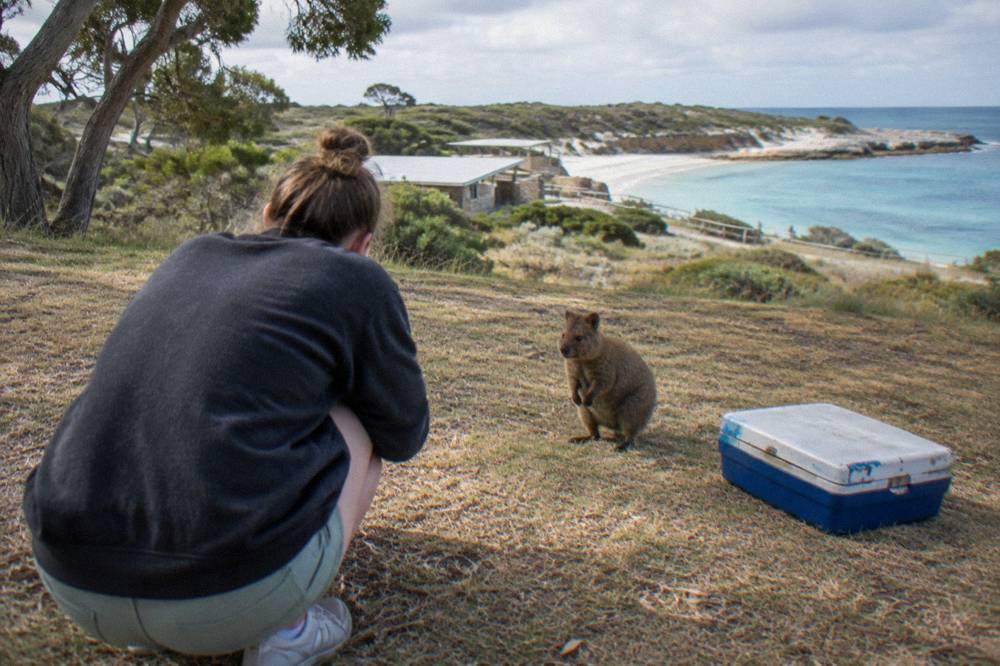
The island's guidance on selfies, for what it is worth, aligns with the biology. Observe from a safe distance, crouch rather than loom, do not use food or props to lure an animal closer, and never touch. Done that way, the photograph is honest: a wild animal choosing to share your frame. The moment a hand enters the picture, the encounter has stopped being wildlife viewing and started being an offence under the regulations described earlier. It has also, in a meaningful number of cases each summer, ended with a fine issued on the spot.
If the goal is time among quokkas without the guesswork, guided products solve it. The one-hour settlement segway tour from Segway Tours WA, rated 4.7 from 62 reviews and from A$98 per person, moves through the settlement area with a guide who knows the etiquette and the animals' preferred spots. Guests on segways stay at touring distance, which happens to be the correct distance, and the radio headset commentary means the guide can explain what the quokkas are doing as it happens. It is a clean example of a product designed around the no-touch rule rather than in spite of it.
What Is A Dark Fact About Quokkas?
The darkest verified fact is that a stressed or pursued quokka mother can abandon or drop her pouch young, and the joey then dies. Handling can trigger that stress response, which means a moment of touching can cost two animals. Beyond the biology, the species is IUCN-listed as Vulnerable, so every individual on the island matters to the population.
The darkest verified fact about quokkas is what touching and stress can do to their young. A mother quokka, like other small macropods, can drop or abandon her pouch young when severely stressed or pursued: the joey is left behind, effectively as a predator distraction, and it does not survive. That is not a moral failing of the animal, it is ancient escape biology, and it is the reason a chased or grabbed quokka can end up costing two lives rather than one. Handling by humans can trigger exactly this cascade.
A second dark fact, less visceral but more consequential: quokkas as a species are not secure. The IUCN Red List assesses the quokka as Vulnerable, with the Rottnest population estimated at 8,000 to 12,000 animals in a November 2024 assessment. The mainland population, in the southern forests of Western Australia, is fragmented and declining under fire, feral predators and habitat change. Rottnest is the species' stronghold precisely because the island has no foxes or cats, which is the same reason the quokkas there are fearless. The island population lives in something close to the world the species evolved for, and every visitor behaviour either protects that or chips at it.
The island itself carries a darker history that sits behind every quokka photograph. Wadjemup, the Noongar name for Rottnest, translates as "place across the water where the spirits are", and state records indicate around 3,700 Aboriginal men and boys were imprisoned there between 1838 and 1931, including children as young as eight, with a burial ground in the settlement. Visitors asking about the island's dark facts are usually told this history, and the Wadjemup Museum in the Old Mill and Hay Store, open daily with entry by contribution, presents it properly. It is part of understanding why this place is treated with the seriousness it is.
None of these facts are hidden, but they rarely travel with the cheerful quokka content. The selfie economy shows the smile and not the abandonment risk, the Vulnerable listing, or the prison history. A visitor who knows all three photographs the animal differently: with distance, and with the sense that this small marsupial is carrying a species' prospects on a 19-square-kilometre island.
Myths and verified facts side by side
| Common claim | What the verified record says |
|---|---|
| Quokkas throw their babies at predators | Mothers under extreme pursuit may release pouch young, which then die; "throwing" is a distortion, but the loss is real |
| Quokkas smile because they are happy | The open-mouth expression is jaw structure, not emotion; a quokka's state is read from behaviour, not its face |
| Touching one quokka once does no harm | Contact risks disease transfer and stress abandonment; harm is invisible at the time |
| Rottnest quokkas are numerous, so rules can bend | The species is IUCN Vulnerable; the island population estimate is 8,000 to 12,000, an assessment, not a count |
| Feeding them helps them | Feeding causes illness and aggression, and is expressly prohibited, with on-the-spot fines |
What Does A Safe Quokka Encounter Actually Look Like?
A safe encounter means the quokka controls every step: you crouch or sit, stay quiet, keep food sealed away, never touch or feed, and always leave the animal an exit. Quokkas commonly approach stationary humans to within arm's reach on their own, especially near the settlement in early morning or late afternoon, which is closer than most people ever get by trying. Even with careful distance, a curious quokka can nip a finger that smells like food, so knowing the first aid steps for a quokka bite on Rottnest Island before you visit is a smart move.
The island's etiquette boils down to one idea: let the quokka make every decision. It approaches, it stays, it leaves. Your job is to be boring. Sit or crouch, keep your hands to yourself, keep food sealed and out of sight, and give any animal a clear exit path. Quokkas in the settlement area around the bakery and the Thomson Bay lawns are so habituated that they will often settle within arm's reach on their own, which delivers the close encounter people want without a single rule broken.
Timing multiplies your odds. Because quokkas are mainly nocturnal, the first hour after the ferries arrive is often quiet and the last hour before departure is livelier, with dawn the best of all for anyone staying overnight. Cooler months raise daytime activity across the island, and the free daily walks by the Rottnest Voluntary Guides Association include a Meet the Quokkas walk departing from the Salt Store beside the Information Booth, no booking required, subject to weather and guide availability. A volunteer guide will point out animals and explain the rules better than any sign can, and the price is unbeatable.
Equipment matters less than behaviour, but a little helps. A phone camera in burst mode at quokka eye level beats a selfie stick. Food should stay in bags, not hands: an open packet near the bakery is the single most common way visitors end up in an unintentional "feeding" situation, which the regulations treat the same as deliberate feeding. If a quokka climbs onto your bag or towel, the correct response is to move away slowly rather than photograph the violation, and definitely never to lift or carry the animal.
Groups and families should agree the rules before arriving, especially with children, who are naturally drawn to small furry animals. Framing it for kids works best as a game: the quokka is the boss, and you win by letting it stand next to you. The island's ranger presence means repeated deliberate interference is noticed, and family holidays have genuinely ended in fines. For structured family time with wildlife, the ferry and bus tour combination, rated 4.6 from 1,512 reviews and from A$149 per person, includes the island admission and a 105-minute commentary bus tour, an easy way to see the settlement and the bays with quokka stops handled by a driver who knows where they gather.
How Do Guided Quokka Tours Handle The Rules?
Guided quokka tours handle the no-touch rule by having the guide manage all distance and timing: they position the group, brief the etiquette before animals appear, and know where quokkas gather at which hours. Guests get closer encounters than independent visitors usually manage, while the animals experience one calm, predictable group instead of many individual approaches.
Every licensed product on this island works inside the no-touch framework, and the good ones make it feel effortless rather than restrictive. Guides set the group's distance, intercept the over-eager before they reach out, explain the biology on the move, and know which clearings and lawns hold animals at which hours. Because the guide, not the guest, manages the encounter, the animals' behaviour stays predictable and the photographs still happen. It is the difference between improvising around wildlife and being hosted around it.
The private rickshaw quokka tour is the clearest example. Run by Rotto Rickshaws, it carries up to three adults or a family of four in a new electric rickshaw on an 18 km loop of the island, with a private guide and an audio commentary, and the listing names wildlife encounters with quokkas as a feature. It is rated 5.0 from a small pool of 15 reviews and costs A$145 per group, not per person, for about 90 minutes. Because it is private, the guide can slow or stop where the animals are that day, and the rickshaw's quiet electric drive does the approaching rather than a crowd on foot. This site's broader coverage of quokka-focused tours on the island compares it against the other options.
The segway products work the same way at a different pace. The Fortress Adventure segway tour, rated 4.8 from 117 reviews and from A$139 per person for about 90 minutes, covers the island's military heritage at the western end with the same guide-managed wildlife etiquette, and the one-hour settlement tour described earlier stays closer to town for visitors with less time or less confidence on two powered wheels. Both include rider training, safety equipment and personal radio communication so the guide's commentary reaches every rider without raised voices, which keeps the wildlife calm.
Even the ferry-based packages, which are not quokka products at all, end up inside the same etiquette because the island is small and the settlement is where everyone lands. The ferry and bike days, such as the Fremantle ferry and bike day tour rated 4.7 from 947 reviews and from A$127 per person, drop cyclists into quokka territory within minutes of arrival, and the island's signage and the free voluntary guides carry the messaging from there. The lesson from all of these products is consistent: closeness to quokkas is freely available on Rottnest, and the only thing the rules remove is the reaching out.
What Happens If You Feed Or Handle A Quokka Anyway?
Feeding or handling a quokka can draw an on-the-spot fine, and prosecution under the Biodiversity Conservation Act 2016 can reach A$10,000, with animal cruelty offences carrying up to A$300,000 and five years' imprisonment. Biologically, fed quokkas become ill or aggressive and handled ones risk disease transfer and abandoned young, so both tracks punish the same act.
The consequences run on two tracks, legal and biological, and both are worse than most visitors expect. Legally, deliberate interference draws on-the-spot fines under the Rottnest Island Regulations 1988, and prosecution under the Biodiversity Conservation Act 2016 can reach A$10,000. Cruelty, which includes mistreatment beyond touching, sits under the Animal Welfare Act 2002 with penalties up to A$300,000 and five years' imprisonment. Rangers patrol the settlement areas where encounters are most frequent, and the enforcement is not theoretical.
The biological track is the one people underestimate. A quokka habituated to human food stops foraging naturally, and the island's vegetation, not visitor snacks, is what its digestive system is built for. Fed animals gather where people gather, which concentrates them, spreads disease faster, and turns bold behaviour into problem behaviour: the animal that nips a bag or a hand is not vicious, it is running a routine that past visitors rewarded. The island states plainly that feeding causes illness and aggressive behaviour. The same feedback loop is why the free voluntary-guide walks and every commercial tour repeat the message at the start of every departure, to every group, every day.
There is a specific seasonal warning worth adding. Between August and September, pouch young are emerging, and a mother that is pursued, cornered or grabbed for a photo is the highest-risk animal on the island for the abandonment response described earlier. If you see a quokka with a joey at foot or in the pouch, the right distance doubles. Give her a wide berth, take the long lens, and let her cross. The joey season is also the most rewarding time to observe, because you watch a young quokka learn its world, and that observation is worth more than any contact would be.
For anyone unsure where the line sits, the island's rule of thumb is easy to remember: if your action changes what the quokka does, stop. Reaching, feeding, blocking, calling, luring with food, all change the animal's behaviour. Standing still, sitting down, being quiet, none of it does. Visitors who internalise that single test rarely need the fine schedule, and they consistently report the best encounters, because a quokka that has decided you are part of the furniture will graze, groom and doze at your feet.
Rottnest's broader wildlife etiquette follows the same logic beyond quokkas. Long-nosed fur seals at Cathedral Rocks are viewed from a purpose-built platform and swimming with them is not permitted, venomous dugites are present and given a wide berth, and sick or dead birds are reported to the Emergency Animal Disease Hotline on 1800 675 888 rather than handled. The island asks visitors to be the most careful species present, and on Rottnest Tours coverage of everything from ferry prices to snorkel trails, the same principle holds: the island runs on respect for what lives there.
Common Questions About Quokka Rules On Rottnest Island
Why Can't You Touch A Quokka?
Touching can make quokkas sick, spread disease, and cause mothers to abandon their young. Deliberate interference, including feeding, draws on-the-spot fines under the Rottnest Island Regulations 1988 and can be prosecuted under the Biodiversity Conservation Act 2016 with fines up to A$10,000.
Why Can't I Touch Quokka?
Even when a quokka approaches you, contact carries invisible risks to the animal: pathogens and chemicals on human hands, and stress responses in the quokka. Wildlife authorities ask all visitors to observe from a safe distance with no touching, feeding or luring.
Are Quokkas Human Friendly?
Quokkas are habituated to people rather than friendly in a domesticated sense. They tolerate close proximity because generations on a predator-free island learned that humans pose no threat, and they approach out of curiosity. Habituation is not tameness and gives no licence to touch.
Do Quokkas Like Being Petted?
No. There is no evidence quokkas enjoy petting, and as wild macropods they lack any domestication for handling. A quokka that stays still while touched is usually freezing, a stress response, not expressing pleasure. Wildlife carers minimise handling even of orphaned quokkas for this reason.
What Is A Dark Fact About Quokkas?
A severely stressed or pursued quokka mother can abandon or drop her pouch young, and the joey does not survive. Handling by humans can trigger that response. The species is also listed as Vulnerable by the IUCN, with the Rottnest population assessed at 8,000 to 12,000 animals.
Can You Take A Selfie With A Quokka?
Yes, without contact. Crouch, stay quiet, keep food sealed away, and let the quokka choose its distance. Quokkas often approach stationary people closely on their own, especially in the settlement in the early morning or late afternoon, which produces the best photographs without breaking any rule.