Rottnest Island Weather And The Best Time To Go
Rottnest Island runs on a Mediterranean cycle of hot dry summers and mild wet winters, moderated by the Leeuwin Current. Here is what the verified weather station data says about every month, and which tours fit each one.
Short answer
Summer (December to February) averages 25.3 to 27.3°C and almost no rain; winter (June to August) averages 17.9 to 18.8°C with up to 114.1 mm of rain a month. Sea temperature ranges from about 18.5°C in September to about 22.6°C in March. Most visitors choose October to April for biking, snorkelling and swimming.
Rottnest Island sits 19 km off Fremantle in the Leeuwin Current, and that single fact shapes almost everything about its weather. The same latitude that bakes Perth in February is softened offshore by a warm ocean current, so the island summers run slightly cooler and the winters slightly milder than the mainland. The Bureau of Meteorology has maintained a station on the island, station 009193, since 1983, and its long-run averages give this guide its numbers: every temperature, rainfall figure and rain-day count below comes from that record or from the island's own official pages.
The practical payoff is that Rottnest is genuinely a year-round destination, but the right month changes what you should book. A 22 km bike loop in February is a very different proposition from the same loop in July, and the seasonal operators that run snorkel boats and wildlife cruises open and close around the water temperature rather than the calendar. This guide works through the year month by month, then matches each tour type on the Rottnest Tours roster to its best window.
What Is The Weather Like On Rottnest Island?
Rottnest has a Mediterranean climate: hot, dry summers and mild, wetter winters, with the ocean flattening both extremes. Mean daily maximum temperatures run from 17.9°C in July to 27.3°C in February, and rain is concentrated between May and September. The island records about 557.9 mm of rain a year across roughly 75.6 rain days, leaving the five months from November to March almost completely dry.
The Bureau of Meteorology station 009193 averages, computed over more than four decades of records, show how sharply the year divides. November through March each average less than 20 mm of rain, and February averages just 10.3 mm with under one rain day reaching the 1 mm threshold. From May the numbers climb steadily: 70 mm in May, 103.2 mm in June, a peak of 114.1 mm in July, then a slow decline through August and September. Winter rain on Rottnest tends to arrive in frontal bands off the ocean rather than in all-day drizzle, and clear breaks between systems are common.
Temperature behaves more gently than the rainfall suggests. Because the surrounding water never drops below about 18.5°C, winter daytime maxima sit near 18°C, which is still comfortable for walking and cycling in a windproof layer. Summer maxima cluster around 26 to 27°C, but the marine influence and the reliable afternoon sea breeze, the Fremantle Doctor, keep the island off the 40°C marks Perth occasionally records. The official island summary credits the Leeuwin Current with holding the sea around 23°C in summer and about 18°C in winter.
Wind matters as much as rain for planning. The strongest gusts come with winter fronts and can swing the ferry crossing from flat to lively in an hour; the dedicated question how rough is the ferry to Rottnest Island covers that in detail. In summer the dominant wind is the afternoon south-westerly, which is exactly why sailors, snorkellers and the whale-watching skippers all favour the calm morning windows.
The seasons in summary, before the month-by-month detail:
| Season | Months | Mean max air (°C) | Typical monthly rain | Character |
|---|---|---|---|---|
| Summer | Dec to Feb | 25.3 to 27.3 | 9.4 to 13.3 mm | Hot, dry, sea breeze, busiest ferries |
| Autumn | Mar to May | 21.2 to 26.2 | 18.0 to 70.0 mm | Warm sea, rain builds through May |
| Winter | Jun to Aug | 17.9 to 18.8 | 86.6 to 114.1 mm | Frontal rain, mild days, whales and joeys |
| Spring | Sep to Nov | 19.0 to 23.1 | 18.2 to 51.2 mm | Coolest sea, clearing skies, thin crowds |
Rottnest Island Weather Month By Month
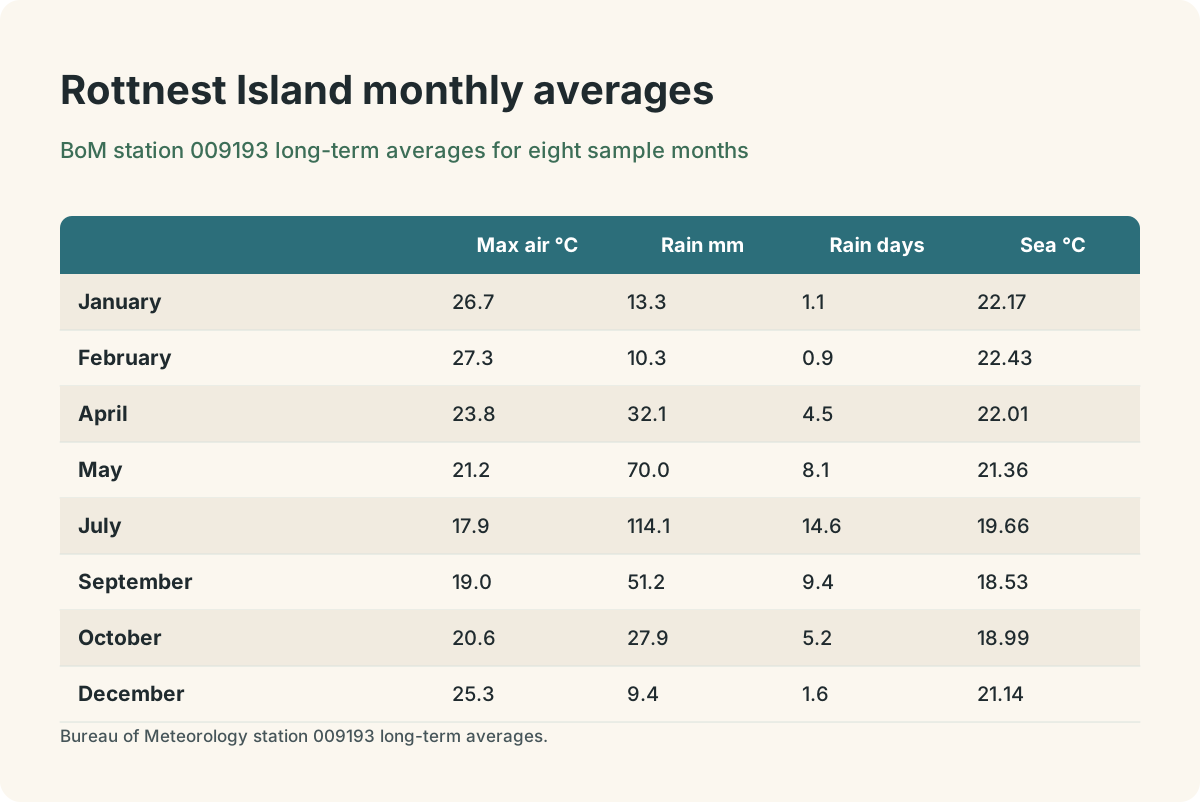
February is the warmest month on average at 27.3°C with 10.3 mm of rain, July is the wettest at 114.1 mm, and September is the coldest for both air (19.0°C) and sea (about 18.5°C). The full BoM table below gives every month's mean maximum, rainfall and rain days, so you can place any planned visit on the curve before booking a ferry.
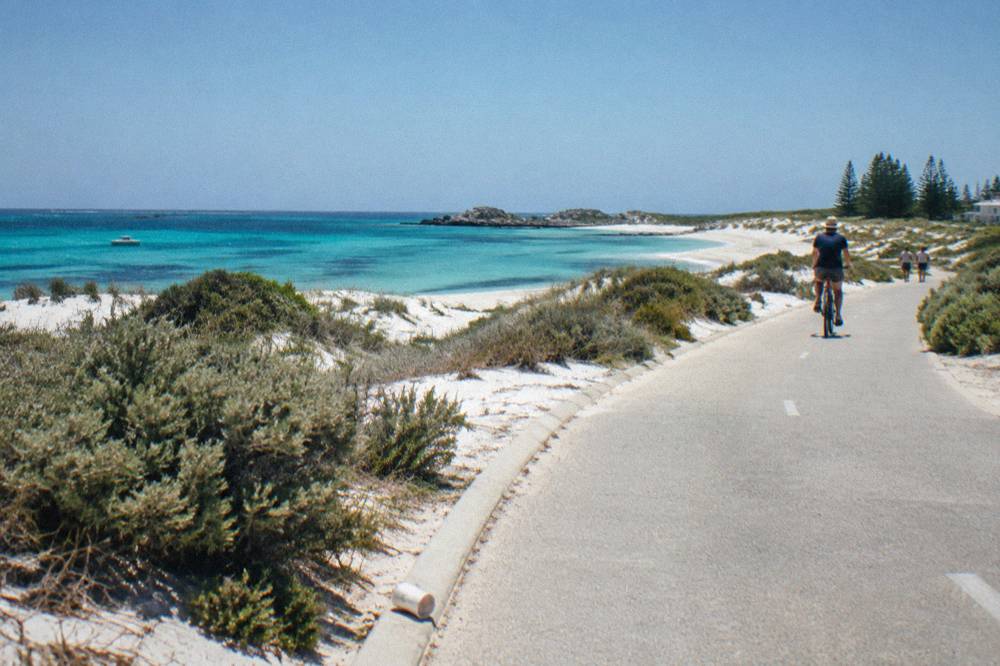
The table below is drawn straight from the Bureau of Meteorology's long-term averages for station 009193. Rain days count days with 1 mm or more, so light drizzle that never reaches the gauge is excluded, and the sea-temperature column is the 10-year monthly average rather than a single reading.
| Month | Mean max air (°C) | Mean rain (mm) | Rain days (≥1 mm) | Mean sea temp (°C) |
|---|---|---|---|---|
| January | 26.7 | 13.3 | 1.1 | 22.17 |
| February | 27.3 | 10.3 | 0.9 | 22.43 |
| March | 26.2 | 18.0 | 2.3 | 22.55 |
| April | 23.8 | 32.1 | 4.5 | 22.01 |
| May | 21.2 | 70.0 | 8.1 | 21.36 |
| June | 18.8 | 103.2 | 11.4 | 20.58 |
| July | 17.9 | 114.1 | 14.6 | 19.66 |
| August | 18.0 | 86.6 | 13.1 | 18.80 |
| September | 19.0 | 51.2 | 9.4 | 18.53 |
| October | 20.6 | 27.9 | 5.2 | 18.99 |
| November | 23.1 | 18.2 | 3.4 | 19.77 |
| December | 25.3 | 9.4 | 1.6 | 21.14 |
Reading the table as seasons rather than months: November to March is the dry stretch of the year, when every month averages 18.2 mm of rain or less and the sea sits at 19.77°C or warmer. May is the pivot, doubling April's rainfall, and June to August is the wet core, when roughly one day in three brings measureable rain. October is the quiet surprise of the year: 20.6°C, only 5.2 rain days and a sea that has begun its spring climb, which is why locals rate it ahead of the busier summer months.
Two second-order effects are worth knowing. First, the wettest months are also the quietest on the island's paths and bays, so a winter visit trades swimming comfort for near-solitude at spots that queue in January. Second, the coldest sea (September) lags the coldest air (July) by two months because water releases stored heat slowly, which is why spring snorkelling feels colder than the air temperature suggests. The Bureau of Meteorology publishes the full station record at its climate averages page for station 009193.
For travellers matching a visit to the sea temperature rather than the air, the sweet spot runs from late November through April, when the water holds above 21°C. That window is exactly when the ferry-and-bike days, the island's most-booked product, are at their best: dry paths, long daylight and bays you will actually want to swim in after the ride.
When Is The Best Time To Visit Rottnest Island?
For most visitors the best window is October to April: dry, warm enough for swimming from December, and outside the peak-crowd weeks of the summer school holidays. October and November deliver about 19 to 23°C, light rain and thin crowds, while February is the warmest and driest month if you accept busier ferries. Winter suits walkers and wildlife watchers.
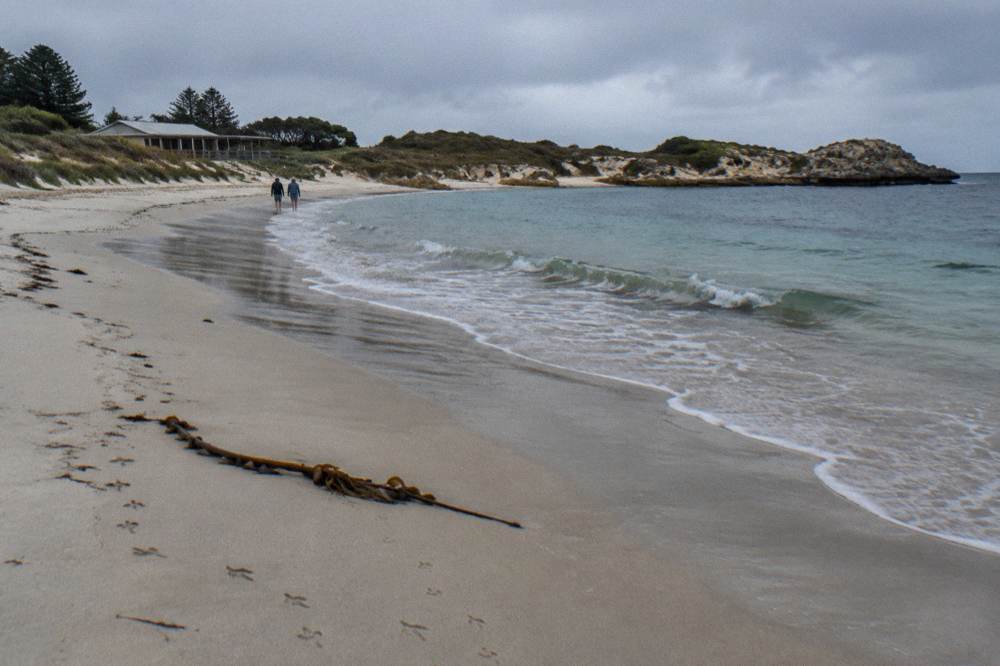
Crowd pressure on Rottnest tracks the Western Australian school calendar, not the weather curve. The WA summer holidays run from Thursday 17 December 2026 to Sunday 31 January 2027, with Term 1 2027 starting on 1 February; autumn holidays fall from Saturday 10 to Sunday 25 April 2027; and winter holidays run from Saturday 3 to Sunday 18 July 2027. Within those windows, the ferry operators themselves advise booking ahead because peak-period services and the popular island tours often sell out, a point worth checking against do I need to book the Rottnest ferry in advance.
The shoulder logic is strong here. Late October and November combine 19 to 23°C air, 3 to 5 rain days a month and a post-holiday lull, and December before the 17th is arguably the single best-value stretch of the year: 25.3°C, 1.6 rain days and pre-holiday fares and availability. April after the autumn holidays is the autumn mirror, with 23.8°C and a still-warm 22.01°C sea. The deeper question of overall trip timing is covered in whats the best time to visit Rottnest Island.
Winter, June to August, is a different product rather than a worse one. Rain falls on roughly one day in three, but the intervening days are mild, the island is at its quietest, and it is the heart of both the whale season and quokka joey season, covered below. The ferry-and-bike day still works in winter for confident riders, but the sheltered choice is a bus-and-ferry package: the From Perth or Fremantle ferry and bus tour option pairs the crossing with a 105-minute guided island bus tour and island admission from A$149 per person, with free cancellation, which suits a forecast that could swing.
Between the two, the classic full-day ferry and bike trip from Hillarys, from A$124 per person with bike, helmet, lock and island admission included and a 4.7 rating across 2,937 reviews, remains the default choice for the dry months, and its free-cancellation terms absorb most forecast risk.
How Warm Is The Water Around Rottnest Island?
Sea temperature on a 10-year average runs from about 18.5°C at its September low to about 22.6°C at its March high, a narrow 4°C band caused by the Leeuwin Current. That current funnels warm tropical water down the Western Australian coast, keeping Rottnest's ocean several degrees warmer than comparable latitudes and swimmable for most of the year.
The warm-water peak arrives in March (22.55°C on average), a month after the February air-temperature peak, and holds above 22°C through January and April. The minimum lags even further: September's 18.53°C is the yearly floor, and the water only climbs back past 20°C as November turns to December. For snorkellers this lag matters more than any other number in this guide, because 18.5°C in a swimsuit feels categorically different from 22.55°C even though the figures look close on a page.
The practical guidance splits by activity. Swimmers happy in 20°C-plus water have the whole of December to April, which conveniently covers the summer holidays. Snorkellers wanting maximum comfort should target February to April. Divers and keen swimmers with wetsuits manage comfortably year-round, and the island's boat-based snorkel products do not include wetsuits, so spring bookings should factor that in. The Parker Point Snorkel Trail, 12 interpretive plaques on the seabed a 17-minute bike ride from Thomson Bay, is swimmable most of the year but is at its friendliest in that late-summer window.
The Leeuwin Current is also why the island supports an unusually tropical marine community for this latitude, including more than 135 species of tropical fish among the official island counts of 63 beaches and 20 bays. Five marine sanctuary zones, Kingston, Parker Point, Green Island, Armstrong Bay and West End Demersal, protect the reef and its residents, and no fishing or collecting is permitted inside them. The full picture is in the Rottnest Island snorkelling guide.
On the water itself, the half-day snorkel and sail catamaran tour, from A$185 per person with a 4.8 rating from a small pool of 33 reviews, includes gear, kayaks and SUPs plus a fruit platter, and operates in the warmer months, so it fits the November-to-April sea-temperature window neatly.
For a fully guided alternative that runs with a restroom and refreshments on board, the guided snorkel boat experience from A$239 per person, rated 4.5 across 51 reviews, covers the same warm-water season with a guide in the water beside you.
When Can You See Whales Off Rottnest Island?
The Perth and Rottnest whale season runs from August to December, with humpback and southern right whales passing the island on their winter and spring migration, and sightings possible as early as June and July in some years. No tour on this roster guarantees a whale, but ferry passengers regularly report them from the deck in season.
The official island page on whale watching states the season plainly: August to December, with June and July appearances in some years. Humpbacks dominate the counts, southern right whales appear as well, and the whales are frequently seen from ordinary ferries, so a standard crossing in September or October carries a real, if unguaranteed, chance of a sighting from the window. Guest reviews of the ferry products, including the fast ferry from Hillarys and the Fremantle ferry and admission ticket, mention whales turning up mid-crossing, though no operator sells the crossing as a whale tour.
For a deliberate marine outing, the adventure tour with a 90-minute high-speed wildlife cruise, from A$164 per person and rated 4.5 across 244 reviews, is the roster's closest product: it pairs the same-day return ferry from Perth or Fremantle with a fast boat loop that looks for seals, dolphins and seabirds around the island's west end. Seals are a stronger bet than whales: the long-nosed fur seal colony at Cathedral Rocks is resident year-round and viewable from a purpose-built platform, though swimming with them is not permitted. The seasonal detail, including the island-based whale cruise that runs from Thomson Bay between September and November, is laid out in when can you see whales on Rottnest Island.
When Is Quokka Joeys Season And Does Weather Change Quokka Spotting?
Quokka joeys first poke their heads from their mothers' pouches in August and take their first hops in September, making late winter and early spring the joey window. Quokkas are mainly nocturnal and most active early morning and late afternoon, and cooler months raise their daytime activity, so winter visits often see more quokkas, not fewer.
The timing chain starts in late summer, when quokkas give birth, but the visible payoff arrives seven months later: August pouch appearances and September first hops. The island's quokka population, estimated at 8,000 to 12,000 in an IUCN assessment, is the world's largest, and the animals' habit of lounging near the settlement makes them the island's signature sight. The full behavioural and rules background is in quokkas on Rottnest Island, and the law is strict: no touching or feeding, with on-the-spot fines and penalties up to A$10,000 under the Biodiversity Conservation Act 2016, and animal cruelty carrying up to A$300,000 and five years' imprisonment.
Weather interacts with spotting in two ways. Heat sends quokkas into shade through the middle of summer days, so February visitors do best at dawn and the hour before the last ferry. In the cooler months of May to September, daytime activity rises, and an overcast July afternoon can produce more sightings than a bright January noon. The free daily Meet the Quokkas walk run by the Rottnest Voluntary Guides Association from the Salt Store is a good fit for that pattern.
What Does Rain And Wind Mean For The Ferry Crossing?
Winter fronts bring the roughest crossings: June to August averages 86.6 to 114.1 mm of rain a month and the strongest winds, with the trip from Fremantle taking about 25 to 30 minutes and from Hillarys about 45. Sea sickness is most likely in July and August, and all three operators run weather-dependent seasonal timetables that can change sailings at short notice.
Three operators run the crossing: Rottnest Express from Fremantle and Perth, Rottnest Fast Ferries from Hillarys, and SeaLink Rottnest from Fremantle and Perth. The crossing is short, about 25 to 30 minutes from Fremantle and 45 from Hillarys, which limits exposure time, but the open stretch off the west end can still produce a lively ride behind a winter front. Passengers who know they are prone to sickness should sit low and central, take a remedy before boarding, and prefer a Fremantle departure, which spends less time in open water than the Perth routing through the river and sea. The mechanics are covered fully in how long is the ferry from Perth to Rottnest Island coverage of timings elsewhere on this site, and the operator timetables themselves are summarised in the Rottnest ferry timetable guide.
Weather rarely stops the ferries entirely, but it does shuffle them. Operators publish seasonal timetables that adjust for demand and daylight, and all sailings are subject to weather. The practical rule for a winter booking is simple: keep your plans flexible within the day rather than the week, and prefer products with free cancellation, which most of the ferry-and-bike and bus packages on this roster carry. Ferry tickets themselves also fold in the island admission, A$21.50 per adult for a single day, collected by the operators on behalf of the Rottnest Island Authority, so a weather-driven change of date does not create a separate refund problem.
Which Tour Fits Which Month On Rottnest Island?
Bike-and-ferry days suit October to April, bus and grand island tours work year-round including winter, boat-based snorkel trips fit November to April when the sea is warmest, and the wildlife cruise and whale-window ferry trips peak from August to December. The table below matches each major tour family on this roster to its strongest months using the BoM and sea-temperature data above.
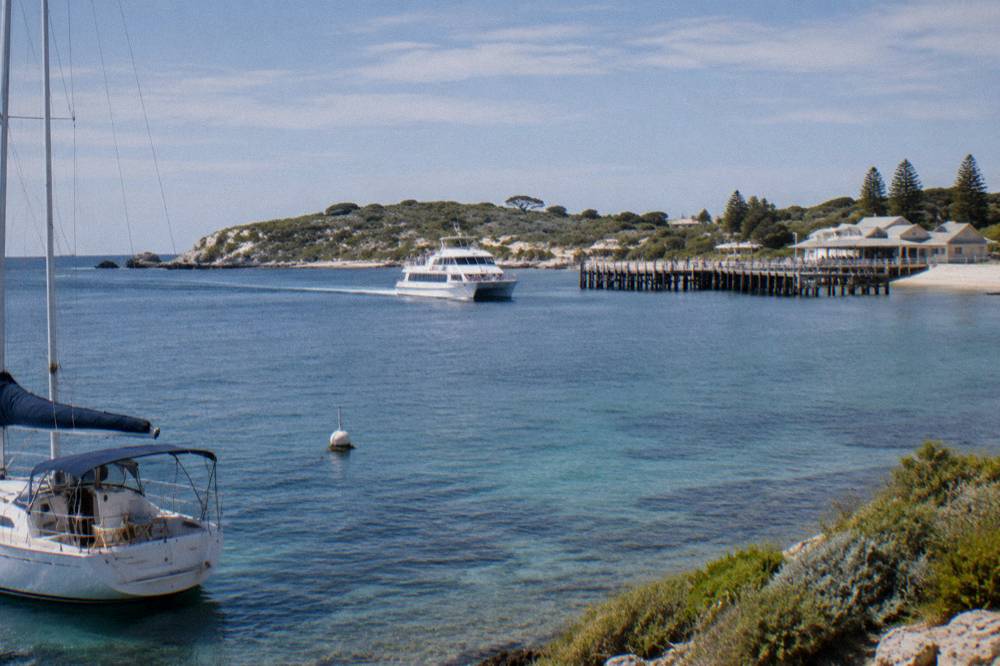
| Tour type | Best months | Why | Example listing |
|---|---|---|---|
| Ferry and bike day | October to April | Dry paths, sea above 18.99°C, long daylight | Hillarys full-day bike and ferry trip, from A$124, rated 4.7 from 2,937 reviews |
| Ferry and bus tour | Year-round | Sheltered, 105-minute guided commentary covers the island without exposure | From A$149, rated 4.6 from 1,512 reviews |
| Grand island tour with lunch | Year-round, best in shoulder seasons | 3.5 to 4 guided hours by bus and train, lunch included | Hillarys grand island tour from A$199, rated 4.4 from 671 reviews |
| Snorkel and sail catamaran | November to April | Warmest sea, seasonal operation | From A$185, rated 4.8 from 33 reviews |
| Guided snorkel boat trip | October to April | In-water comfort and seasonal reopening | From A$239, rated 4.5 from 51 reviews |
| Wildlife adventure cruise | August to December | Aligns with whale migration window | From A$164, rated 4.5 from 244 reviews |
| Skydive | October to April | Calmer mornings, clearer coastal visibility | From A$499, rated 4.9 from 265 reviews |
| Segway tours | Year-round | Short 1 to 1.5 hour formats dodge the midday heat or rain | Fortress tour from A$139, rated 4.8 from 117 reviews |
| Scenic flight transfer | Year-round | 15 minutes in the air, weather dependent | From A$350, rated 4.6 from a small pool of 11 reviews |
Two nuances sit behind the table. The adrenaline options, notably the tandem skydive at 4.9 from 265 reviews, are booked around morning calm rather than temperature, because the jump runs best in stable air; winter mornings often deliver that, so an adventurous off-season visitor should not rule it out. And the segway formats, one hour around the settlement or 1.5 hours through the fortress precinct, are short enough to slot into a clear break in a showery forecast, which is precisely why they earn a year-round row.
What Should You Pack For Rottnest Weather?
Pack for the sun first and the rain second in any month: reef-safe sunscreen, a hat and at least 2 litres of water per person are the island's own stated requirements, rising to 3 litres in hot weather. In winter add a windproof layer and a light rain jacket; in summer add swimwear and rash protection, since no island beach is patrolled by lifeguards.
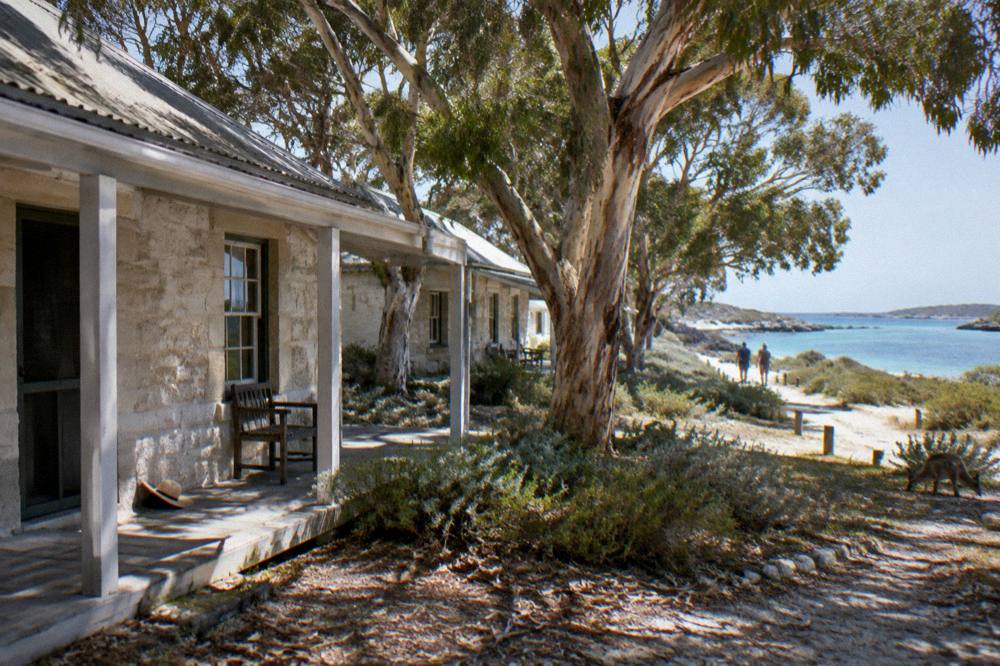
The official island advice carries water refill points at Thomson Bay, Army Jetty, Kingstown Barracks, The Basin, Vlamingh Lookout and Geordie Bay, so a long ride does not mean carrying the full ration all day. Helmets are required by law when cycling, which every bike-inclusive listing on this roster already covers. The practical tips page also warns that blue bottle jellyfish can be present at any time of year, do not touch them, and that venomous dugites live on the island; give any snake a wide berth and seek medical help if bitten.
Layering beats bulk for a day trip because a single crossing can serve up four seasons: a cool marine morning, a warm midday, an afternoon sea breeze and, in winter, a squall. A packable rain shell plus a fleece covers November to April evenings; add gloves only if you are riding the full 22 km loop in June or July. Footwear should be something you can both walk and ride in, since even bus-based visitors end up walking the settlement and the Thomson Bay frontage.
Sun protection deserves more emphasis than most visitors give it. The summer UV in Western Australia is extreme by the time of the mid-morning ferry arrival, the island's shade is patchy on the west end, and the sea breeze masks how much exposure you have taken on. Sunglasses, a broad hat and sunscreen reapplied after swimming are the difference between a full afternoon and a cabin-bound one.
Common Questions About Rottnest Island Weather
What Is The Hottest Month On Rottnest Island?
February, with a mean daily maximum of 27.3°C and only 10.3 mm of rain on average, closely followed by January at 26.7°C. The surrounding sea keeps summer peaks below the extremes Perth sometimes records inland.
What Is The Wettest Month On Rottnest Island?
July, averaging 114.1 mm of rain across 14.6 rain days, ahead of June at 103.2 mm. Rain arrives in frontal bands, and clear breaks between systems are common even in midwinter.
When Is The Sea Warmest For Swimming?
March, with a 10-year average sea temperature of 22.55°C. The water stays above 22°C from December to April and bottoms out at about 18.5°C in September.
Is Winter A Bad Time To Visit Rottnest Island?
No, just a different one. June to August brings the most rain but also the whales, the quokka joeys, the quietest paths and mild 18°C days. Bus-based and grand island tours work well in winter.
Do The School Holidays Affect Rottnest Crowds?
Yes. The summer holidays run 17 December 2026 to 31 January 2027, autumn holidays 10 to 25 April 2027 and winter holidays 3 to 18 July 2027. Ferry operators advise booking ahead because peak services and tours often sell out.
What Is The Best Time To Visit Rottnest Island?
October to April for warm, dry conditions and swimming, with October, November and early December offering the best balance of good weather and thin crowds. February is warmest if you accept busier ferries.