How Rough Is The Ferry To Rottnest Island?
An honest look at Rottnest ferry sea states by departure point: Fremantle, Hillarys and Perth crossing times, what changes the conditions, seasickness tips and cancellation realities.
How Rough Is The Ferry To Rottnest Island?
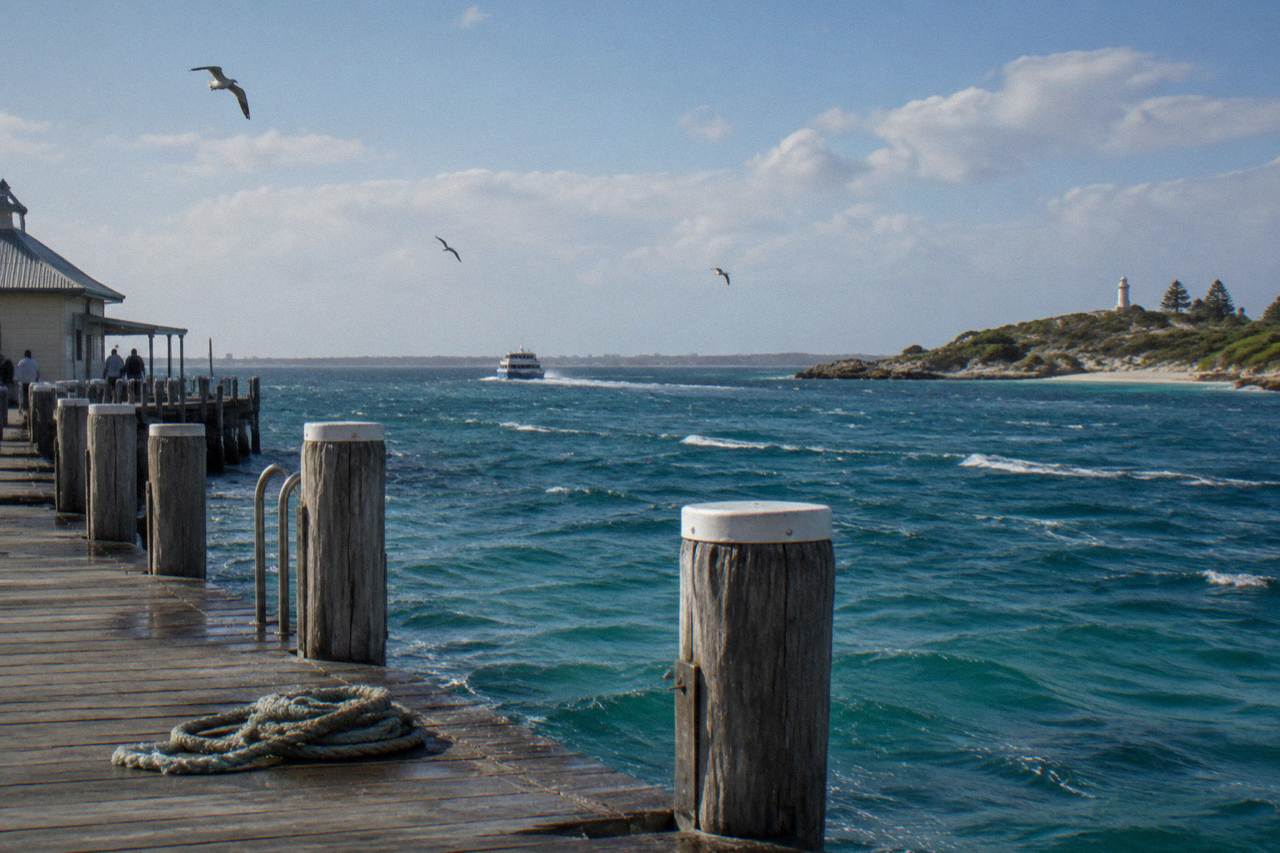
The honest answer is that roughness varies by departure point and by the day: the Fremantle crossing takes about 25 minutes across relatively sheltered water, Hillarys takes about 45 minutes across more open sea, and Perth takes up to 90 minutes along the open coast. No operator publishes a smoothness promise, and conditions change with weather and season. No disruption notices were found.
That is the unglamorous truth. There is no single answer to this question because there is no single ferry. Three operators, Rottnest Express, Rottnest Fast Ferries and SeaLink Rottnest Island, run the crossing from four departure points, and each route behaves differently. The island sits about 19 km from Fremantle Port, 22 km from Hillarys Boat Harbour and 33 km from Perth, so the exposure to open Indian Ocean swell grows with the distance travelled. On a calm morning in late summer, all three crossings can be flat and uneventful. The same afternoon with a fresh seabreeze building can turn the Hillarys and Perth legs into a bumpy ride that has passengers reaching for the motion sickness bags. If the Hillarys departure is the one you're weighing up, this guide to the ferry from Hillarys Boat Harbour covers what that crossing is actually like.
The operators themselves frame it simply: all sailings are subject to weather, and each publishes seasonal timetables that shift with demand and conditions. What research across the official pages and fare tables does show is a stable pattern worth knowing before you book. Ferries from Fremantle cover the shortest distance in the least time. Ferries from Perth add a river departure and a long coastal leg. Ferries from Hillarys sit between the two in time but cross water that is more exposed than the Fremantle route for most of the trip.
This article compares the three crossings honestly, explains what actually changes the sea state on the day, and covers the practical side: seasickness management, children and older travellers, cancellations, and what to pack. If you are still deciding how to get there at all, the Rottnest Island ferry options compared guide walks through every route in detail.
Which Crossing Is The Calmest: Fremantle, Hillarys Or Perth?
Fremantle is generally the calmest and certainly the shortest, about 25 minutes across water that is partly sheltered by the coast and the island chain. Hillarys takes about 45 minutes across more open ocean, and Perth takes up to 90 minutes including the longest open-water exposure. None of the three is an ocean-going voyage, but they are not equal either.
The geography does most of the work here. Rottnest Island lies 19 km due west of Fremantle, and the track from Fremantle's terminals at Northport and B Shed crosses the relatively shallow, partially protected waters off the metropolitan coast before reaching the island. It is the shortest exposure to swell of any route, and passengers consistently notice the difference: less time on the water simply means less time for the swell to matter. Rottnest Express runs this route from Fremantle and also from Perth's Barrack Street Jetty, where the trip includes the Swan River and then up to 90 minutes of sailing once the vessel clears Fremantle. If that longer river departure has you weighing your options, our guide on how long the ferry from Perth to Rottnest Island actually takes compares the sailing times from each departure point.
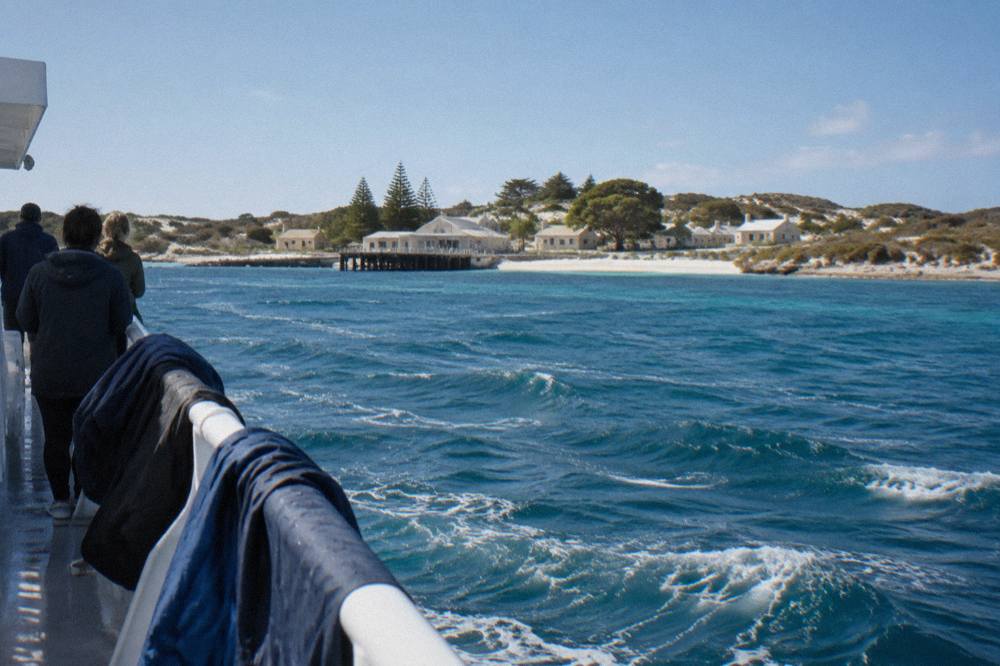
Hillarys sits between the two. Rottnest Fast Ferries runs from Hillarys Boat Harbour in Perth's northern suburbs, 22 km from the island, and the crossing takes about 45 minutes. The first part of the run passes through the somewhat sheltered water behind the reef lines off the northern beaches, but the middle section is open ocean, and when a westerly swell is running, this is where the motion picks up. The crossing is popular with families precisely because it is direct and reasonably quick, with free parking at the harbour included in the ticket.
SeaLink Rottnest sails from both Fremantle and Perth's Barrack Street Jetty, so the same logic applies: its Fremantle sailings are short and comparatively gentle, and its Perth sailings carry the longest ride. The comparison below puts the three routes side by side using the official crossing times and distances.
| Departure point | Operator | Distance to island | Typical crossing time | Exposure |
|---|---|---|---|---|
| Fremantle (Northport / B Shed) | Rottnest Express, SeaLink Rottnest | 19 km | About 25 minutes | Shortest, partly sheltered |
| Hillarys Boat Harbour | Rottnest Fast Ferries | 22 km | About 45 minutes | Mixed, open sections mid-crossing |
| Perth (Barrack Street Jetty) | Rottnest Express, SeaLink Rottnest | 33 km | Up to 90 minutes | Longest, river plus open coast |
If a smooth ride is your top priority, the Fremantle departure is the sensible pick, and the ferry from Fremantle to Rottnest guide covers the terminals and fares in detail. If convenience from the northern suburbs matters more, the Hillarys roundtrip is a well-reviewed middle ground.
What Actually Changes The Sea State On The Way To Rottnest?
Three things: wind, swell direction, and the season. A fresh afternoon seabreeze builds local chop on top of any background swell, westerly conditions push ocean energy straight onto the crossing routes, and winter brings both stronger frontal systems and bigger ground swell than summer. The same route can be glassy at dawn and lumpy by mid-afternoon.
The most common rough-crossing scenario in Perth is not a storm. It is the summer seabreeze, the famous afternoon southwesterly that builds almost daily between October and March. Morning sailings often go out on calm water, and by early afternoon the wind has stacked up a short, sharp chop across the metropolitan coast. Passengers on the 90-minute Perth run feel this the most, simply because they spend the longest time in it. The Bureau of Meteorology's long-term averages for the Rottnest Island weather station show the pattern behind the seasons: mean rainfall peaks in July at 114.1 mm against just 9.4 mm in December, and winter mean maximum temperatures sit near 18C against 27C in February, which is to say winter systems are wetter and windier but summer afternoons are breezier per day. You can read the station data yourself at the Bureau of Meteorology climate averages for Rottnest Island.
Swell direction matters as much as wind. The crossing routes run broadly east to west, so a long-period westerly or southwest ground swell meets the hull side-on for much of the trip, producing a rolling motion rather than a pitching one. When the swell comes from the north, the water inside the reef lines off the coast can be almost flat while the open middle section still moves. This is why two passengers on the same day can describe the same crossing completely differently depending on where they sat and which leg they remember.
Season is the third factor. Winter frontal systems between June and August bring stronger sustained winds and larger swell events, but they also pass through, leaving genuinely calm days between them. Summer delivers reliably mild mornings and reliably breezy afternoons. Spring and autumn sit between the two. The official position of every operator is the same on this point: sailings are subject to weather, and the master of the vessel makes the call on the day. The Rottnest Island Authority's own ferry page states that booking is recommended particularly in peak summer periods, and it is worth reading for its plain-language description of what each departure involves at the official getting-there-by-ferry page.
Is The Rottnest Ferry Rough For Children And Older Travellers?
Most crossings are comfortable for children and older passengers, but the honest caveat is that no sailing is guaranteed calm. Very young children, anyone with mobility or balance concerns, and passengers prone to motion sickness should prefer morning departures from Fremantle for the shortest, gentlest exposure to open water.
The fleet on this crossing consists of large, modern passenger catamarans and fast ferries, not small charter boats, and that matters for how the motion feels. Catamarans in particular are stable platforms in moderate conditions, and the crew briefs passengers on the ride before departing. Children generally tolerate these ferries well, and the operators carry family fares as standard: Rottnest Express quotes a family (2 adults and 2 children) same-day return from Fremantle at A$240 including island admission, and Rottnest Fast Ferries quotes A$250 from Hillarys on the same basis. Under-4s travel without the admission fee.
The practical advice from the operators and from the island's own tips pages is simple and applies to every age group: sit in the middle of the vessel rather than at the bow, where motion is amplified; stay low and central if the ride is bumpy; look at the horizon rather than a phone screen; and take seasickness remedies before departure rather than after symptoms start. Official practical guidance for visitors, including water, sun protection and general safety, is collected at the island's practical tips page.
For older travellers, the 25-minute Fremantle crossing is the lowest-stress option on every measure: shortest exposure, least walking distance at the terminals in most cases, and the widest choice of sailings across two operators. The Perth departure is the one to think twice about on a windy forecast, not because the vessels are less seaworthy but because 90 minutes of open-coast sailing in a seabreeze is a long time for anyone whose stomach is uncertain. Whales are sometimes seen from the ferry in season, August to December, which is a genuine bonus on a calm day and a reason some passengers actively prefer the longer Perth leg in spring.
How Can You Reduce Seasickness On The Rottnest Crossing?
Take a remedy 30 to 60 minutes before boarding, choose a mid-ship seat with a horizon view, eat a light meal beforehand rather than nothing, and prefer a morning sailing when the seabreeze has not yet built. None of this guarantees a calm stomach on a rough day, but together these measures handle the overwhelming majority of crossings without incident.
The timing point deserves emphasis because it is the one people get wrong. Motion sickness remedies, whether tablets from a pharmacy or the simpler ginger-based options, work preventively. Once the boat is rolling and you feel queasy, most oral remedies come too late to help on a crossing this short. Board with the remedy already in your system, especially for the Hillarys and Perth routes. The Fremantle crossing at about 25 minutes is short enough that many passengers who know they are prone simply endure it comfortably, but prevention beats endurance.
| Strategy | Why it helps | Best for |
|---|---|---|
| Remedy 30 to 60 minutes before boarding | Preventives need time to absorb | All routes, especially Perth |
| Mid-ship seat, lower deck | Least motion in any swell | Rough forecasts |
| Eyes on the horizon | Reconciles the visual and inner-ear signals | Anyone feeling queasy |
| Light meal before travel | An empty stomach is not calmer | Morning sailings |
| Morning departure | Seabreeze builds through the day | Summer crossings |
| Fremantle route | About 25 minutes of exposure | Very sensitive passengers |
Where you sit matters more than most people expect. The bow of any vessel moves the most, rising and falling through each swell, and the stern slams down on the return. The centre of the vessel, close to the waterline if there is indoor seating there, experiences the least vertical motion. Outdoor aft seating is popular for the view and the sea air, and many passengers find fresh air itself helps, but in genuine chop the mid-ship indoor seats are the steady ones. Avoid reading, scrolling a phone, or looking down at a map while the vessel is in open water.
Finally, do not build the crossing up into something it usually is not. The typical Rottnest ferry ride is a routine 25 to 90 minutes with a coffee in hand, and on the majority of days the only complaint is the queue at the island bakery. Rough days happen, the crew handles them routinely, and the strategies above cover almost everything short of an actual weather cancellation.
Which Ferry Ticket Should You Book If You Are Worried About The Ride?
Choose a Fremantle departure for the shortest crossing, or the Hillarys roundtrip if the northern suburbs suit you better and free parking matters. Both come with free cancellation on this roster, so if the forecast turns ugly you can rebook or withdraw rather than face a crossing you would rather avoid. Prices start from A$90 from Fremantle and A$95 from Hillarys, admission included.
The ticket itself is part of the answer to a rough-crossing worry, because flexibility is what converts a bad forecast from a problem into a schedule change. On this roster, the SeaLink Rottnest ferry and admission ticket from Fremantle starts from A$90 per person for a same-day return, rated 4.7 from 580 reviews, and includes the island admission fee plus onboard WiFi and bar service. The Rottnest Fast Ferries roundtrip from Hillarys, rated 4.7 from 128 reviews, starts from A$95 per person, includes all fees and government landing charges, and adds free parking at Hillarys Boat Harbour plus optional hotel transfers. Both carry free cancellation, which is the feature to look for when sea state is your concern.
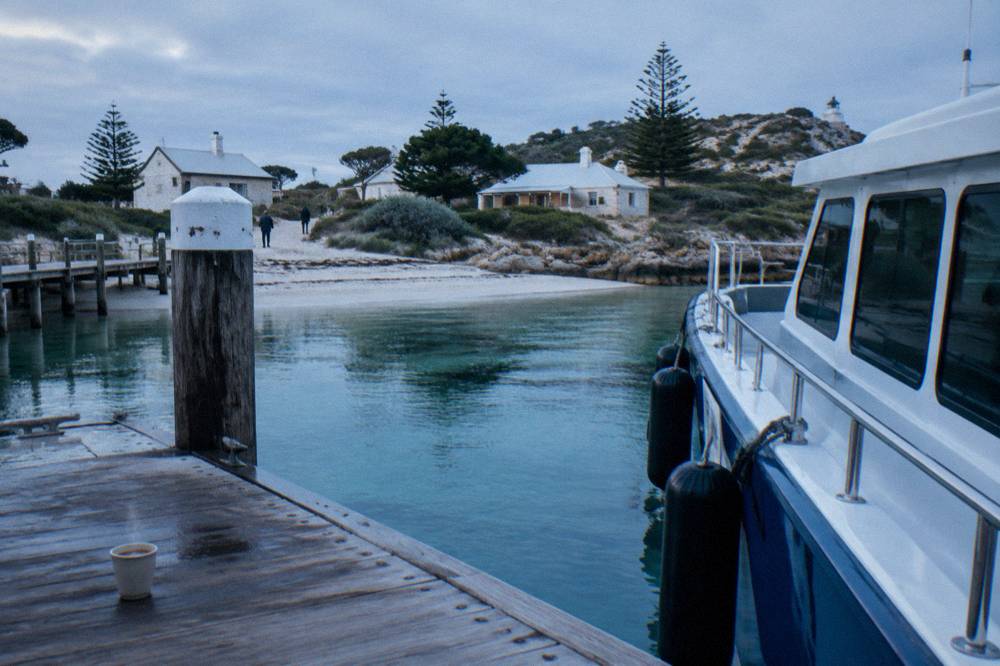
The Perth options trade a longer, more exposed sailing for the convenience of departing from the city, and one of them, the Rottnest Express ferry and bike trip from Perth, adds a Swan River cruise with commentary on the way out, rated 4.5 from 691 reviews from A$175 per person. It is a lovely product on a calm day and a long one on a windy afternoon. SeaLink's bus-tour package from Perth, 4.6 from 1,512 reviews from A$149 per person, includes the river cruise and a 1-hour 45-minute island bus tour for passengers who would rather not ride a bike after a bumpy crossing. Whatever you choose, checking the forecast two days out and again the night before is the single highest-value planning step, and the advice on whether to book the Rottnest ferry in advance explains how the peak-period sell-outs interact with that decision.
Is There A Toilet On The Rottnest Express?
The verified fare and vessel details for Rottnest Express do not state onboard toilet facilities in the listing material, so the honest answer is to check with the operator directly before you travel. Large passenger ferries on a 25 to 90-minute scheduled service almost always provide them, but this site only prints what the sources confirm, and a quick check of the operator's own FAQ settles it.
That caution cuts both ways, and it is deliberate. There is a real difference between a fact and an assumption, and onboard amenities are exactly the kind of detail that changes between vessels and refits. Rottnest Express publishes its own frequently-asked-questions page covering vessel facilities and carriage rules at the Rottnest Express FAQ page, and that is the authoritative source for what each vessel carries. The same applies to food service: the SeaLink listing for the Fremantle ferry and admission ticket confirms an onboard bar and WiFi, but onboard catering on the other operators' vessels is something to verify on their pages rather than take on faith.
The related practical point for a rough-crossing article is that if you are prone to seasickness, locate the amenities when you board, before departure, not mid-crossing. Moving around a rolling vessel is the hardest part of any rough trip, and knowing your way to the middle-deck seating, the fresh air of the aft deck and the facilities before the vessel clears the harbour removes most of the stress. Arrive at the terminal 30 minutes before departure as the operators request, which gives you time to board calmly, choose a good seat and settle.
Do Ferries Get Cancelled When The Sea Is Too Rough?
Yes, occasionally, and the master of each vessel makes that call. Cancellations for weather are the exception rather than the rule on this crossing, but every operator reserves the right to cancel or amend sailings when conditions require it, with refunds or rebooking handled by the operator.
What the research shows is a routine, professional operation across all three companies: seasonal timetables published in advance, period-specific schedules around school holidays and the December-January peak, and weather clauses that exist as standard practice rather than as a frequent event. Summer school holidays run 17 December 2026 to 31 January 2027, with extra ferry services laid on around the New Year period including the free family fireworks on Thursday 31 December 2026. Those peak weeks are also when the seabreeze-and-crowds combination is at its strongest, which is why operators recommend booking ahead for peak periods.
If a sailing is cancelled, the practical sequence is straightforward: the operator contacts ticketholders or posts the change, and the booking is rebooked or refunded. Passengers holding packages that bundle the ferry with island activities, such as the ferry-and-bike days or the grand island tours, should expect the whole package to be handled together, since the ferry component is the foundation of the day. This is another quiet argument for free-cancellation tickets and for checking the forecast rather than gambling on the last sailing of the day. The question of how long the ferry from Perth to Rottnest Island takes covers the timing side of that planning.
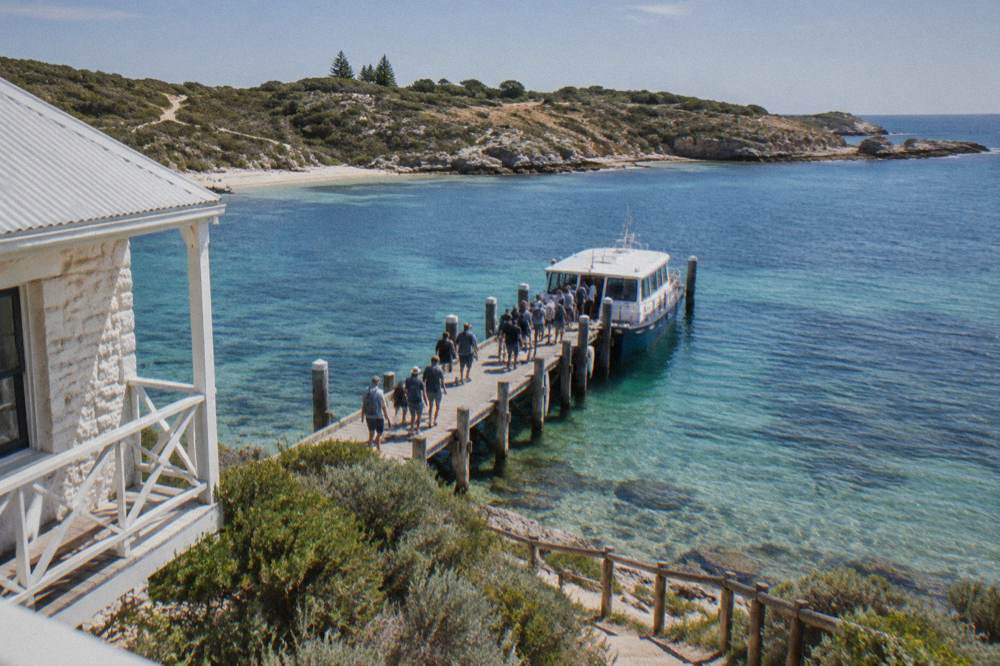
One planning note that follows from the same research: the crossing is also the island's cheapest whale-watching platform. Humpbacks and southern right whales pass Rottnest between August and December, sometimes from June and July, and the official position is that they are seen from the ferry. Nobody sells or guarantees a sighting from a scheduled crossing, but on a calm spring morning the 90-minute Perth leg has more scope for a whale than any other route, purely because you are on the water longest.
What Should You Pack For A Potentially Rough Crossing?
Pack light and secure: a small day bag rather than loose items, motion sickness remedies taken before boarding, a layer for the wind and spray on outdoor decks, water, and any valuables in a zipped pocket. Loose hats, phones on open tables and unsecured coffee cups are the first casualties of a bumpy leg, and the island's lockers handle anything you would rather not carry all day.
The wind point surprises visitors more than the swell does. Even on a calm crossing, a fast ferry at 25-plus knots creates its own apparent wind on the open decks, and combined with an afternoon seabreeze it will take an unsecured hat overboard without ceremony. A light jacket or windbreaker earns its place in the bag year-round, and sunglasses do double duty against spray on the forward outdoor decks. The island's own guidance is to carry at least 2 L of water per person for a day of walking and cycling, 3 L in hot weather, with refill points at Thomson Bay, Army Jetty, Kingstown Barracks, The Basin, Vlamingh Lookout and Geordie Bay.
Bags and bikes have their own rules. Bikes travel as pre-booked freight, with SeaLink quoting A$20 for a pedal bike and A$25 for an e-bike with the battery removed and packed separately, subject to size limits and availability, and no tandems carried. If you would rather not bring a bike at all, the ferry-and-bike packages bundle hire into the ticket, from A$124 per person for the Hillarys full-day trip with Rottnest Fast Ferries, rated 4.7 from 2,937 reviews, which includes the bike, helmet, lock, island admission and the ferry. For the rough-crossing question specifically, the argument for these packages is that one booking covers everything, and one free cancellation covers all of it at once.
| Item | Why it earns its place |
|---|---|
| Seasickness remedy, taken pre-boarding | Prevention works, cure mid-crossing does not |
| Zipped day bag | Keeps loose items from sliding on a moving deck |
| Windbreaker or light layer | Apparent wind on outdoor decks, spray on forward seats |
| Water bottle | At least 2 L per person for the island day |
| Sunglasses with a strap | Sun, glare and spray all day |
| Phone in a zipped pocket | Flat surfaces move in chop |
The last packing decision is the one the whole article turns on: which departure you chose in the first place. Everything above is easier on a 25-minute Fremantle crossing than on a 90-minute Perth one, and easier at 8 am than at 3 pm. Choose accordingly, and the roughness question answers itself on most days.
The Perth ticket from Barrack Street is the one that deserves the closest look before you commit, because its 90-minute leg is the longest exposure of the three routes, and the same free-cancellation flexibility applies if the forecast turns against you.
For everything the ferry ride itself involves, from terminals to arrival times, Rottnest Tours keeps the full set of route, fare and activity guides in one place. And to compare the exact ticket options side by side before you commit, the trio below covers the shortest crossing, the mid-length option and the Perth city departure.
Common Questions About The Ferry Crossing To Rottnest Island
How Rough Is The Ferry To Rottnest Island?
It depends on the route and the day. The Fremantle crossing takes about 25 minutes over partly sheltered water and is generally the calmest, Hillarys takes about 45 minutes with open-water sections, and Perth takes up to 90 minutes with the longest exposure. Conditions change with wind, swell and season, and every sailing is subject to weather.
Is There A Toilet On The Rottnest Express?
The verified listing material does not state onboard toilet facilities, so check the operator's own FAQ page before you travel. Large scheduled passenger ferries normally provide them, but this site only prints confirmed facts.
Which Ferry To Rottnest Is The Least Rough?
The Fremantle departure, which covers 19 km in about 25 minutes, is the shortest and least exposed crossing. Both Rottnest Express and SeaLink Rottnest sail from Fremantle, giving you the widest choice of sailings on the calmest route.
Do Rottnest Ferries Get Cancelled For Rough Seas?
Occasionally, and the vessel's master makes the call. Weather cancellations are the exception on this crossing, but all sailings are subject to weather and operators rebook or refund affected tickets.
How Do I Avoid Seasickness On The Rottnest Ferry?
Take a remedy 30 to 60 minutes before boarding, sit mid-ship near the centreline, keep your eyes on the horizon, eat lightly beforehand, and prefer a morning sailing in summer when the afternoon seabreeze has not yet built the chop.
Is The Rottnest Ferry Rough For Children?
Usually not. These are large, stable passenger vessels and family fares are standard across all three operators, but on a windy forecast a morning Fremantle sailing gives children the shortest time on open water.