Why Is Rottnest Island So Famous?
Rottnest Island is famous for quokkas, 63 beaches, a car-free landscape and the deep Wadjemup story of its Traditional Owners. This guide explains each reason the island is known worldwide.
Why Is Rottnest Island So Famous?
Rottnest Island is famous for four things at once: the world's largest quokka population, 63 beaches on an island only 11 km long, a car-free landscape with 22 km of cycle paths, and the Wadjemup heritage of its Whadjuk Noongar Traditional Owners. Tourism began with the first Sunday tourist ferries in 1902, so the fame is more than a century older than the selfie. To understand the island beyond its beaches and quokkas, start with the Wadjemup story told by its Whadjuk Noongar Traditional Owners in our guide to Wadjemup's Aboriginal heritage.
The island, 19 km from Fremantle and 33 km from Perth, packs a lot into 19 square kilometres. Its highest point is just 45 m, yet it carries 63 beaches, 20 bays, 12 salt lakes and more than 135 species of tropical fish, kept warm by the Leeuwin Current. That concentration is the engine of the fame: almost nothing on Rottnest requires a long journey once you step off the ferry at Thomson Bay.
The fame also has a serious layer that the quokka photographs never show. State records indicate that 3,700 Aboriginal men and boys were imprisoned at Wadjemup between 1838 and 1931, and a Wadjemup Aboriginal burial ground lies in the settlement itself. The island is a place of celebration and of memory, and the official heritage pages treat it that way.
For most visitors today the fame converts into one practical decision: how to see the island in a day. The three ferry operators run crossings of about 25 minutes from Fremantle, 45 from Hillarys and up to 90 from Perth, and a roster of 20 tours layers on top. Three of the strongest options cover the classic fame itinerary, from a bus commentary tour to a bike day to a quokka-focused rickshaw loop.
Why Are Quokkas So Special?
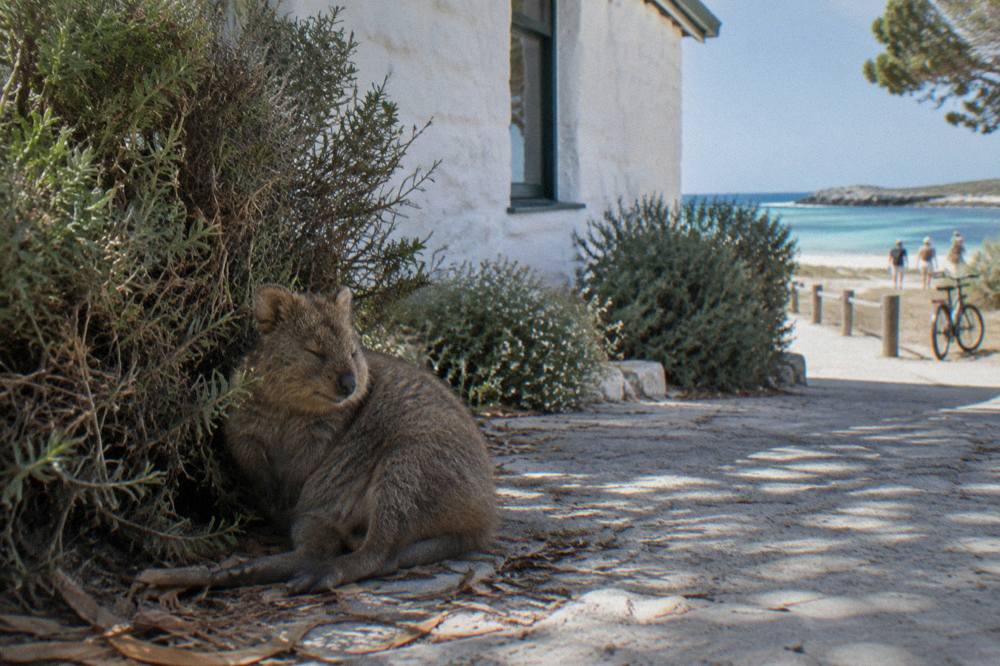
Quokkas are special because Rottnest Island holds the world's largest population of them, an estimated 8,000 to 12,000 animals in an IUCN assessment from November 2024, on an island without predators. They are mainly nocturnal, most active early morning and late afternoon, and touching or feeding them carries on-the-spot fines and prosecution risks up to A$10,000.
The island's quokkas are marsupials related to wallabies, and their tameness near the settlement is what made them a global photographic subject. That tameness has rules behind it. Touching can spread disease or cause mothers to abandon young, and deliberate interference, including feeding, is fined on the spot under the Rottnest Island Regulations 1988 and can be prosecuted under the Biodiversity Conservation Act 2016. Animal cruelty penalties reach A$300,000 and five years' imprisonment. The official wildlife protection page states the rules plainly, and they are enforced.
Timing shapes what you see. Quokkas give birth in late summer, joeys poke their heads from pouches in August, and first hops happen in September. Cooler months from May to September raise daytime activity, which is why winter visitors often report better sightings than summer crowds. None of this is a guarantee: quokkas are wild animals and no tour sells a certain sighting at a certain hour, as the wildlife guides on our quokkas on Rottnest island page explain in detail.
The rules are easiest to hold in one view, so here is the frame every visitor should carry before pointing a camera at a quokka.
| Rule or fact | What applies |
|---|---|
| Touching or feeding | Prohibited for all wildlife; on-the-spot fines under Rottnest Island Regulations 1988 |
| Worst case prosecution | Up to A$10,000 under the Biodiversity Conservation Act 2016; animal cruelty up to A$300,000 and 5 years |
| Population | World's largest; IUCN estimate 8,000 to 12,000, assessed November 2024 |
| Best hours | Early morning and late afternoon; quokkas are mainly nocturnal |
| Best months | Cooler months raise daytime activity; joeys emerge August, first hops September |
| Sick or dead birds | Report to the Emergency Animal Disease Hotline, 1800 675 888 |
The fame question for planners is simple: the quokka experience is free, but the delivery is not. You need a ferry ticket from A$90 return from Fremantle including admission, or a package that bundles the crossing with wheels. The From Perth ferry and bus tour (4.6 from 1,512 reviews, from A$149) includes a 1 hour 45 minute commentary bus tour and island admission, which pairs the wildlife fame with the heritage story. You can Check availability beside our fuller ferry and bus tour write-up.
Does Anyone Live On Rottnest Island?
Yes, people live on Rottnest Island, but only staff and a small resident population connected to running the island and its services, not a general township. Visitors cannot move there, private cars are not allowed, and the island is managed as a Class A Reserve by the Rottnest Island Authority on behalf of the state.
The resident reality is unusual. The island is predominantly car-free, with only approved public transport, facilities management, staff and contractor vehicles permitted, and the workforce lives in accommodation the Authority controls. A daily shuttle connects Thomson Bay, Geordie Bay and Kingstown for the parts of the settlement life that visitors never need to think about. Dugites, venomous but timid snakes, share the island with everyone, which is one reason the grass stays short and the walking advice is specific.
That resident base is also why the island functions as a complete destination rather than a day park. There is a nursing post at Thomson Bay, two General Stores open seven days, a 24 hour self-serve fuel point and an ATM at the Visitor Centre. The official stay list includes Stay Rottnest self-contained units, the campground and hostel, Discovery Rottnest Island's 83 eco-tents at Pinky Beach, Samphire Rottnest and The Lodge Wadjemup, with bookings opening nine months ahead on the first Wednesday of each month.
Overnight fame is real enough that timing matters more than most first-time visitors expect. Stay Rottnest opens its booking window nine months in advance on the first Wednesday of each month, and the peak summer window fills fastest. Campfires are prohibited on the Class A Reserve, and recreational drones are not permitted, which keeps the night sky quiet and the wildlife undisturbed. Lockers at the Visitor Centre and the two General Stores mean an overnight stay does not require hauling supplies around the settlement.
How Many Beaches Does Rottnest Island Have?
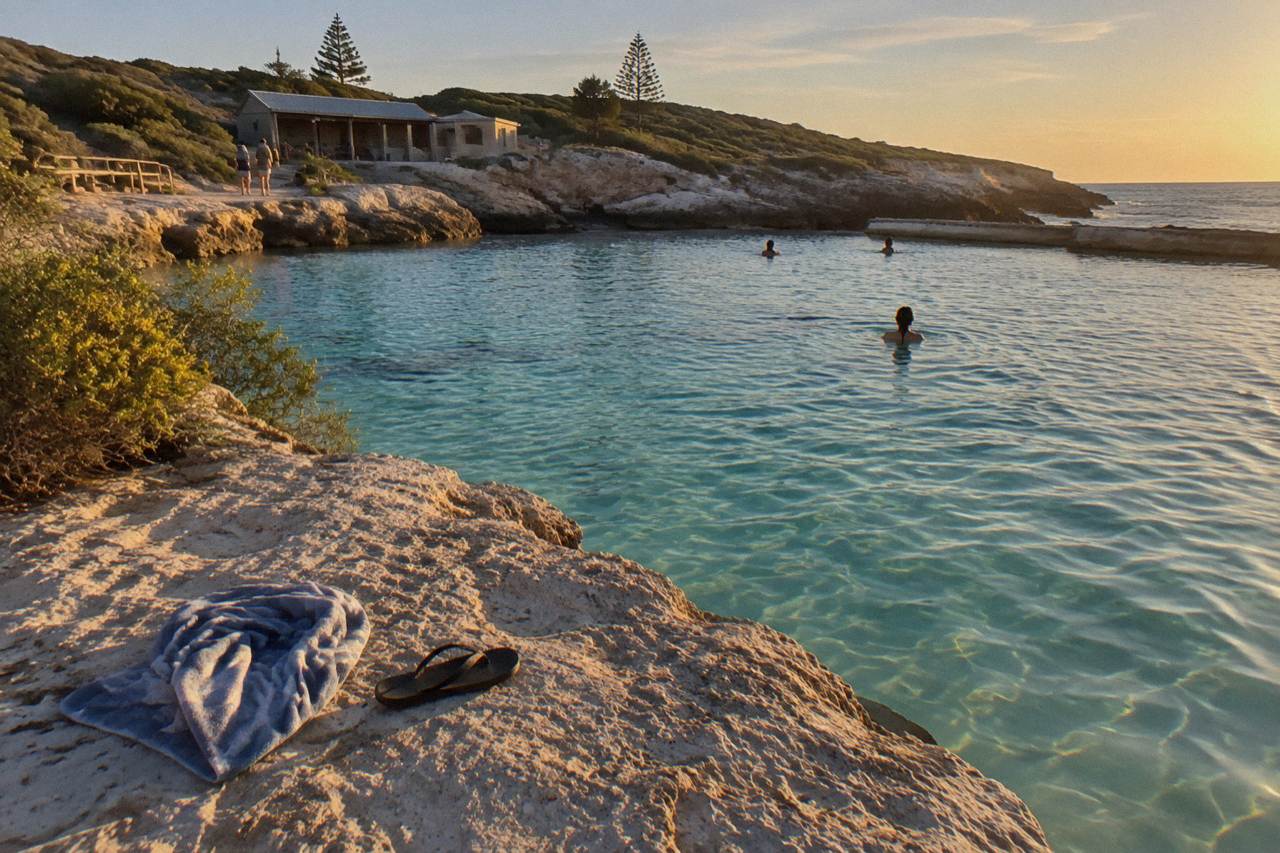
Rottnest Island has 63 beaches and 20 bays along roughly 11 km of island, and none of them is patrolled by lifeguards. The most famous, The Basin and Pinky Beach, sit a short walk or ride from the Thomson Bay settlement, while the snorkel trails at Parker Point hold 12 interpretive plaques on the seabed.
The number matters because it explains the island's reputation for water that looks tropical in photographs. The Leeuwin Current holds the sea around 23C in summer and about 18C in winter, which keeps swimming plausible for most of the year. Five marine sanctuary zones, Kingston, Parker Point, Green Island, Armstrong Bay and West End Demersal, protect the reefs, and fishing or collecting inside them is prohibited.
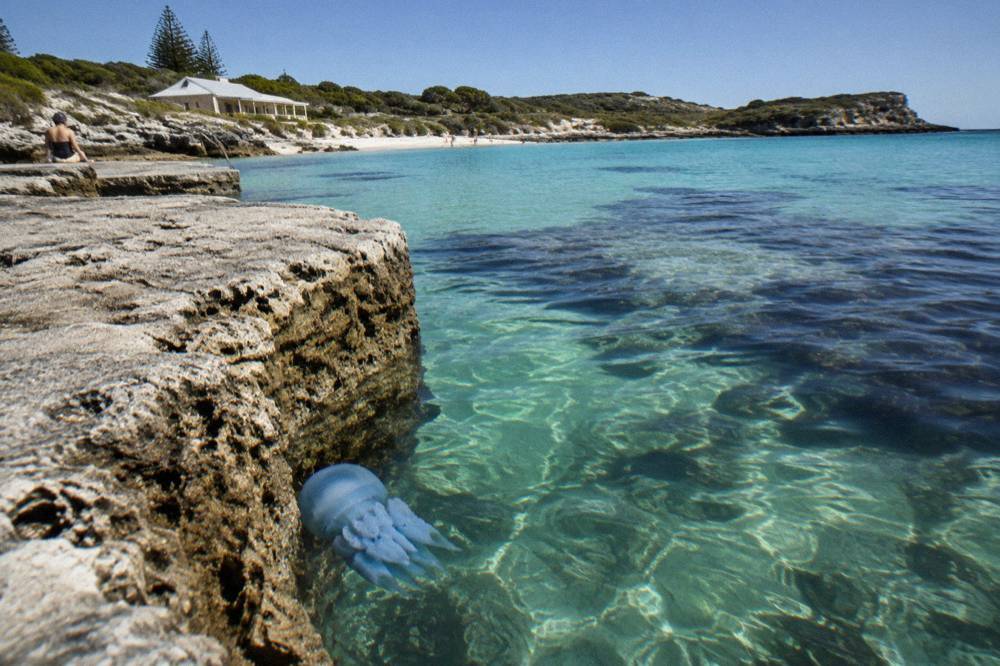
Safety is the unglamorous half of the beach fame. Swim with a friend, check conditions, keep clear of the jetties and moored boats, and leave blue bottle jellyfish alone if they wash up: stings are painful but not life-threatening. The official practical tips page carries the full list, and it is worth two minutes before your first swim.
Beach hopping is where the tour roster earns its keep. The half-day snorkel and sail catamaran (4.8 from 33 reviews, a small pool, from A$185) runs from the island with gear, kayaks and SUPs included, while the guided snorkel boat trip (4.5 from 51 reviews, from A$239) covers three hours on the water with a restroom on board. For beach access under your own power, the Hillarys ferry and bike day remains the classic combination, and it appears again below.
Why Is Rottnest Island Car-Free?
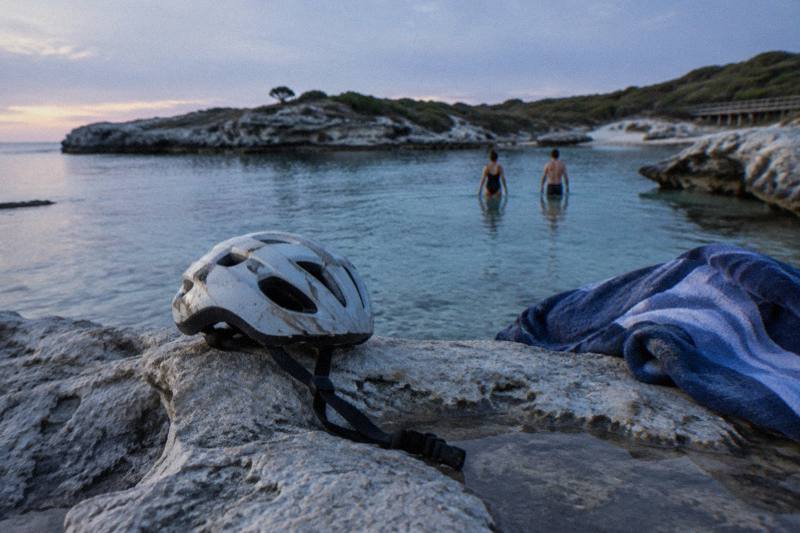
Rottnest Island is car-free because it is managed as a Class A Reserve where visitors' private vehicles are simply not permitted; only approved public transport, service, staff and contractor vehicles are allowed. Cycling is the main way around, on 22 km of cycle paths, with the full island loop taking three to five hours and helmets required by law.
The policy sounds strict and is, but it created the island's most distinctive experience. A visitor arriving at the Main Jetty steps into a landscape of bikes, feet and the occasional Quokka Coaches bus, which is precisely what the postcard version of Rottnest shows. Bike hire is the practical backbone: Pedal & Flipper, the main provider behind Hotel Rottnest, charges A$35 for a standard multi-geared bike for a day plus a A$50 deposit, and A$83 plus a A$200 deposit for an electric bike, restricted to riders 18 and over.
Bundled bike days remove the friction. The Hillarys ferry and bike day (4.7 from 2,937 reviews, from A$124) includes the return ferry from Hillarys, bike, helmet and lock rental, the island admission fee and even return courtesy hotel pickup from selected Perth and Scarborough hotels on request. Riders on that listing should note the A$25 cash deposit per bike required on the day.
The car-free rule has limits worth knowing. Bringing your own bike on the ferry means pre-booked freight, A$20 for a pedal bike and A$25 for an e-bike on SeaLink, with size limits and no tandems. E-bike batteries must be removed and packed separately. The Rottnest Island bike hire guide compares the hire and freight options line by line.
Getting around without pedalling is fully supported too. The Island Explorer hop-on hop-off bus runs every 15 minutes across 19 stops from about 8:45 am to 3 pm, and a Seasonal Transport Pass costs A$180 adult or A$120 child for 12 trips, bought in person. For visitors who want someone else to do both the driving and the talking, the bus and guided tour options on the roster cover the same ground with commentary included.
What Is Wadjemup And Why Does It Matter?
Wadjemup is the Noongar name for Rottnest Island, glossed officially as "place across the water where the spirits are", and the Whadjuk Noongar people are its Traditional Owners. The island carries 40,000 years of Aboriginal history and the prison history of 3,700 Aboriginal men and boys held there between 1838 and 1931.
This is the fame that postcards skip and that the island now addresses directly. The Rottnest Island Aboriginal Establishment ran for 93 years, children as young as eight were among those imprisoned, and the Wadjemup Aboriginal burial ground lies in the settlement. Visitors walk and ride past these places every day, and the official Aboriginal history page sets out the record in the state's own words.
Heritage visits have depth if you want it. The Wadjemup Museum, in the Old Mill and Hay Store, is open daily from about 10 am to 3:30 pm by contribution, and the Rottnest Voluntary Guides Association runs free daily walks from the Salt Store next to the Information Booth, including Pioneers and Prisoners and Salt Settlers and Survivors, subject to weather and guide availability. The 45 km Wadjemup Bidi, five trails whose name means trail in Noongar, lets walkers take the whole story in on foot.
The Oliver Hill guns and tunnels add the military chapter. A 2-hour tour with live commentary runs from A$40, though its review pool is small at 35 reviews against a 4.6 rating, and it departs on the island so ferry arrangements are your own. Combined grand island packages fold the tunnels, a sandwich lunch and a guided bus loop into one ticket, from A$199 with Rottnest Fast Ferries or A$209 with SeaLink.
When Did Rottnest Island Become A Tourist Destination?
Rottnest Island became a tourist destination in stages: the first tourist ferries ran on Sundays from 1902, and it developed as a recreation destination from 1907, closing to the public only in wartime. More than a century later, three operators, Rottnest Express, Rottnest Fast Ferries and SeaLink Rottnest, run the crossing from four departure points.
The modern numbers show how the fame compounded. Today's same-day return adult fares including the A$21.50 admission run A$87.50 from Fremantle on Rottnest Express, A$95 from Hillarys on Rottnest Fast Ferries, and from A$90 from Fremantle on SeaLink with dynamic pricing. Family fares run from A$230 to A$250 depending on operator and port. Operators publish seasonal timetables, all subject to weather, and booking ahead is recommended in the peak summer periods when services and tours often sell out.
| Operator and route | Crossing time | Same-day adult return (incl. admission) | Family (2 adults + 2 children) |
|---|---|---|---|
| Rottnest Express, Fremantle | About 25 minutes | A$87.50 | A$240 |
| Rottnest Fast Ferries, Hillarys | About 45 minutes | A$95 | A$250 |
| SeaLink Rottnest, Fremantle | About 25 minutes | From A$90 | From A$230 |
| SeaLink Rottnest, Perth | Up to 90 minutes | From A$134.50 | From A$369 |
| Rottnest Express, Perth | Up to 90 minutes | A$135.50 | A$378 |
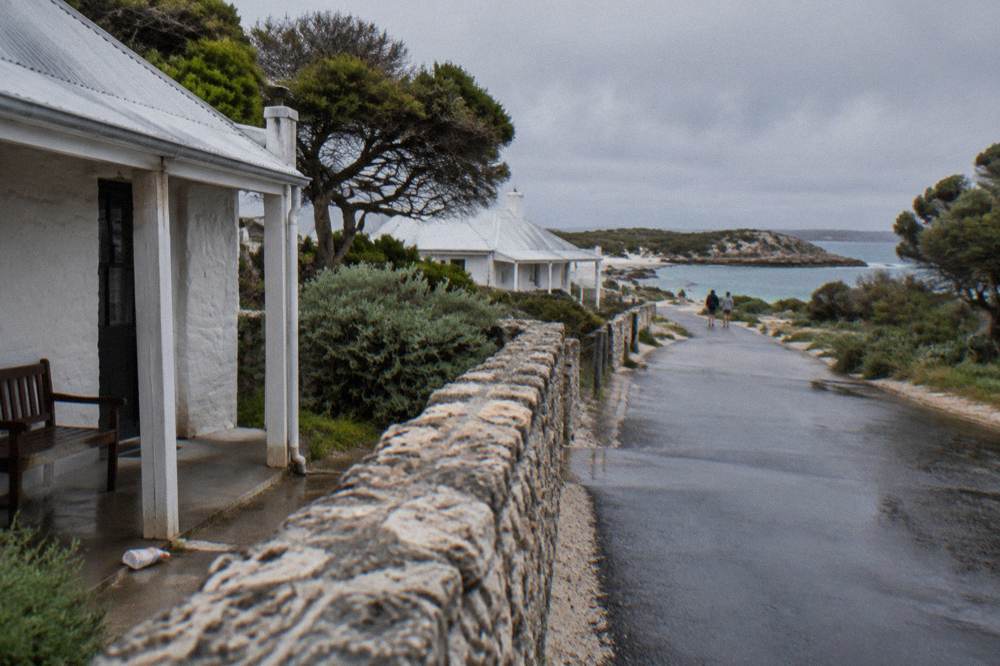
The event calendar deepens the pull. The South32 Rottnest Channel Swim falls on Saturday 20 February 2027, free family fireworks light up Thursday 31 December 2026 with extra ferry services, and WA school holidays run 17 December 2026 to 31 January 2027, 10 to 25 April 2027 and 3 to 18 July 2027. Peak-period planning is covered in our Rottnest Island day trip guide.
Can You See Whales And Seals On Rottnest Island?
Yes, whales are seen from the ferry and from headlands between August and December, humpbacks and southern right whales on their migration, and long-nosed fur seals haul out at Cathedral Rocks near Cape Vlamingh year-round. No tour on this roster guarantees a whale sighting, and swimming with the seals is not permitted.
The seal colony is the most reliable wildlife show after the quokkas. A purpose-built viewing platform at Cathedral Rocks overlooks the resident fur seals, and Australian sea lions use the island as a resting and feeding site. Ospreys nest on rocky stacks around the coast, adding a third layer for anyone with binoculars.
Boat products frame the marine side of the fame. The adventure Rottnest tour with a 90-minute high-speed wildlife cruise (4.5 from 244 reviews, from A$164) is the roster's closest thing to a marine safari, and guest reviews of it and of the ferry crossings mention whale sightings during the season. Rottnest Express also runs its own Eco Express whale cruise from Thomson Bay between September and November, an island product outside this site's roster. Our Rottnest Island adventure boat tour guide compares what each cruise actually covers.
For the luxury end of the marine fame, the island seafood cruise (4.9 from 56 reviews, from A$395) serves a 7-course lunch designed by executive chef Tony Howell with lobster caught or watched from the deck, all-inclusive Margaret River wines and a beach landing season only, as it does not run in winter. It books out ahead of the summer window, and it shows how far the island's produce fame now reaches beyond the quokka.
Is The Fame Justified Without A Tour?
Mostly, yes: the free layer of Rottnest is unusually rich, with free daily Voluntary Guides walks including Meet the Quokkas, free beaches, free heritage buildings and a museum by contribution. But the paid layer, the ferry, a bike, a bus commentary or a boat, is what turns a famous name into a full day, and the two work best together.
The free walks alone justify the crossing for budget travellers. Meet the Quokkas departs the Salt Store twice daily, and themed walks cover reefs and wrecks, pioneering history and the west end, with free school holiday programs in summer from 2 to 31 January 2027. Our free things to do on Rottnest Island guide lists the lot, including which ones suit children.
Where a paid tour genuinely adds value is time and context. A visitor with limited hours benefits from the 1 hour 45 minute bus commentary or a guided loop rather than self-navigation, and families with young children or non-riders benefit from motorised options. The private rickshaw tour (5.0 from 15 reviews, a small pool, from A$145 per group for three adults or a family of four) covers an 18 km loop with an audio tour, a private guide and quokka encounters along the way, priced per group rather than per person.
On the publisher side of the ledger, this site, Rottnest Tours, exists because the fame question converts into a booking decision: which ferry, which package, which day. Comparing the listings rather than the marketing is the useful work, and the roster of 20 products from A$40 to A$499, carrying 9,663 reviews between them, gives that comparison real spread.
Common Questions About Rottnest Island's Fame
Why Is Rottnest Island So Famous?
The world's largest quokka population, 63 beaches on a car-free island, and the Wadjemup story of its Whadjuk Noongar Traditional Owners, plus more than 120 years of tourism dating to the first Sunday ferries of 1902, make Rottnest Island famous worldwide.
Why Are Quokkas So Special?
Rottnest holds the world's largest quokka population, an estimated 8,000 to 12,000 animals in a 2024 IUCN assessment, on an island without predators. They are mainly nocturnal, protected by on-the-spot fines and penalties up to A$10,000 for touching or feeding, and joeys emerge from pouches in August and September.
Does Anyone Live On Rottnest Island?
Yes. Staff and a small resident population connected to running the island live there under Rottnest Island Authority management, with visitor accommodation ranging from the campground to The Lodge Wadjemup. It is a Class A Reserve with no private visitor cars, not a general township.
Can You Swim At Every Beach On Rottnest Island?
You can swim at most of the 63 beaches, but none is patrolled by lifeguards. Swim with a friend, check conditions, avoid the jetties and moorings, and expect blue bottle jellyfish at some times of year; the sanctuary zones allow swimming but no fishing or collecting.
Are The Ferry Crossings Rough?
Crossings take about 25 minutes from Fremantle, 45 from Hillarys and up to 90 from Perth, and all services are subject to weather, with operators publishing seasonal timetables. No disruption notices were found in the most recent operator checks, but sea conditions vary and rough days do occur.
Do You Need A Tour To Enjoy Rottnest Island?
No. Free Voluntary Guides walks, free beaches and the museum by contribution carry a full day on their own. A tour such as the ferry and bus package from A$149 or the Hillarys ferry and bike day from A$124 adds context, wheels and guaranteed structure, which matters most on a short visit.