Free Things To Do On Rottnest Island
Rottnest Island is not free to reach, but once your ferry ticket has landed you on the jetty, most of the best of the island costs nothing: 63 beaches, the world's largest quokka population, free daily guided walks and shore snorkelling in a marine sanctuary.
Short answer
Nothing on Rottnest Island is free to reach: every ferry fare includes the A$21.50 adult admission. Once there, beaches, quokka watching from a distance, the free daily volunteer walking tours from the Salt Store, the Wadjemup Museum by contribution and shore snorkelling all cost nothing. The cheapest ticket on this roster is the Fremantle ferry and entry at A$90.
Getting to Rottnest Island always costs money, and any guide that pretends otherwise is selling you something. Every ferry fare from Fremantle, Perth or Hillarys carries the Rottnest Island Authority admission fee of A$21.50 per adult, collected by the operators at booking, so the island has a floor price before you have seen a single beach. What surprises most first-time visitors is how little you need to spend after that. The settlement, the beaches, the quokkas, the snorkelling from shore and a daily program of free guided walks add up to a full day that costs almost nothing beyond the crossing and lunch. If you're wondering what makes this place draw visitors from around the world, our guide to why Rottnest Island is so famous covers the quokkas, the beaches and the island's deeper history.
This guide separates what is genuinely free once you are on the island from what carries a fee, and it names the one Perth-side free walk that pairs neatly with a Barrack Street Jetty ferry day. It draws on the operator fare tables, the Rottnest Island Authority fee schedule and the volunteer guides' own program details. For the wider picture of paid options, start with things to do on Rottnest Island and come back here for the zero-spend layer.
What Is Actually Free On Rottnest Island?
Once the ferry has landed you at the Main Jetty in Thomson Bay, the beaches, the quokkas, the walking trails, the snorkelling from shore, the historic settlement buildings you can wander past and the free daily volunteer guided walks all cost nothing. The Wadjemup Museum asks only for a contribution. The genuinely unavoidable costs are the ferry fare, food and drink, and any gear hire such as bikes or snorkel equipment.
The island is a Class A Reserve of 19 square kilometres with 63 beaches, 20 bays and 12 salt lakes, and none of that coastline charges an entry fee. The admission you paid inside your ferry ticket covers the whole island. There are no gatekeepers at The Basin, no charge for the walk to Wadjemup Lighthouse, no fee to stand at Cathedral Rocks and watch the long-nosed fur seals from the viewing platform. In that sense Rottnest behaves more like a national park than a resort: the infrastructure is modest and the scenery is the product.
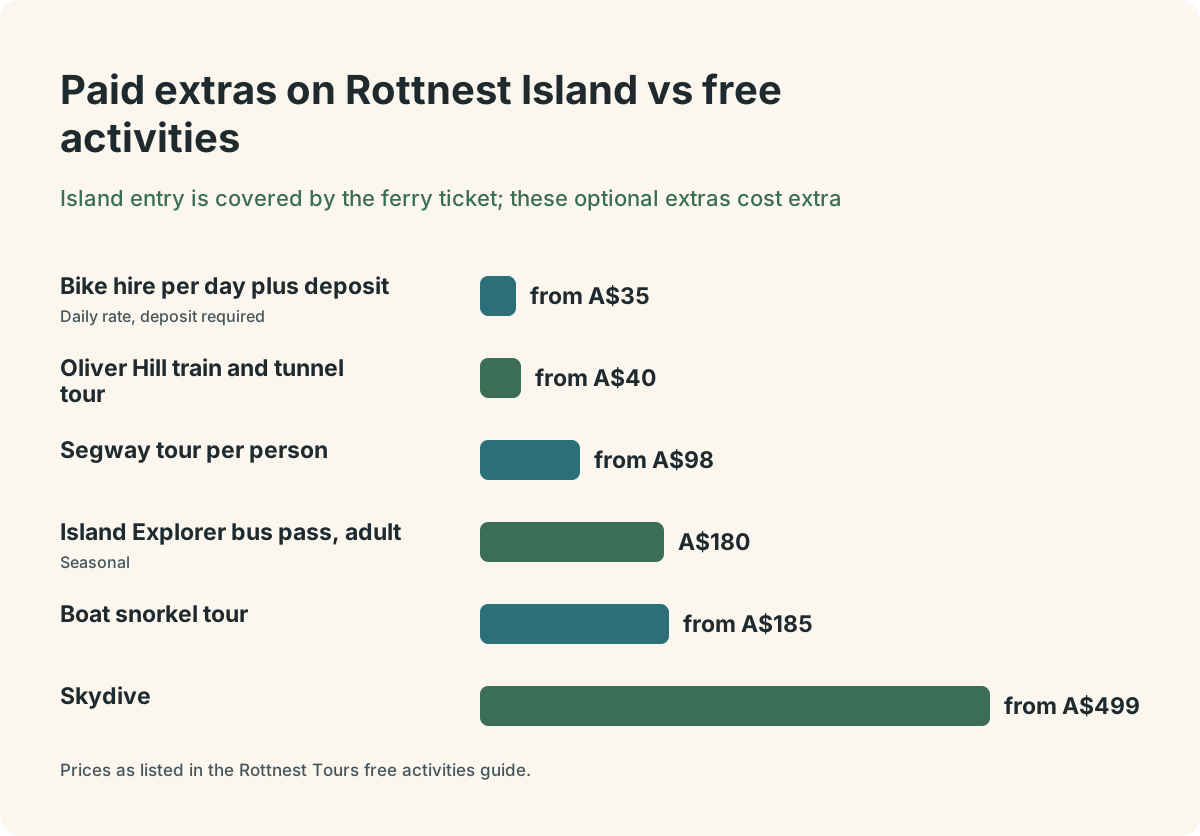
What is not free is anything with equipment or a guide attached. Bikes, the Island Explorer hop-on hop-off bus, the segway tours, the catamaran snorkel trips and the Oliver Hill train and tunnel tour all carry real prices. The pattern is consistent and worth internalising early: the island is free, the machines and the guided vehicles are not. Plan your day around the free layer, then decide which one or two paid extras genuinely earn their place.
| Free once on the island | Paid extras |
|---|---|
| All 63 beaches and 20 bays | Bike hire from A$35 a day plus deposit |
| Watching quokkas from a distance | Segway tours from A$98 per person |
| Free volunteer guided walks daily | Oliver Hill train and tunnel tour from A$40 |
| Shore snorkelling at Parker Point and Little Salmon Bay | Boat snorkel tours from A$185 |
| Cathedral Rocks seal viewing platform | Island Explorer bus pass, A$180 adult seasonal |
| Wadjemup Museum entry by contribution | Skydive from A$499 |
The table above is the honest ledger. If you arrived with a ferry ticket, a towel, a mask and a water bottle, you could fill eight hours without spending another dollar, and plenty of visitors do exactly that. The free layer is not a consolation prize for budget travellers; the volunteer walks and the snorkel trails are, on most reviews, among the best experiences on the island at any price.
Free Beaches, Bays And Coastal Walks
Every beach and bay on Rottnest Island is free to access, with no lifeguards, no entry gates and no charges. The Basin and Pinky Beach sit a short walk from the Thomson Bay settlement, Little Salmon Bay and Parker Point sit along the southern coast reachable on foot or by bike, and the 45-kilometre Wadjemup Bidi walking network, five linked trails, costs nothing to walk. If walking or cycling between those bays sounds too tiring, our guide to whether Rottnest Island has a free bus explains which shuttles cost nothing and which ones charge.
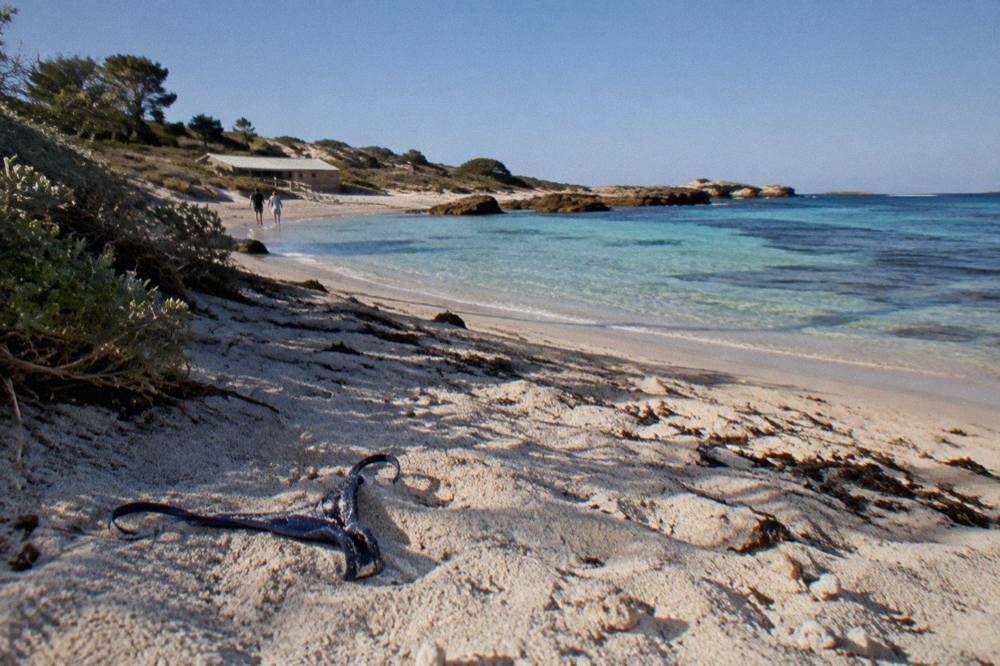
The closest swimming to the ferry jetty is The Basin, a sheltered rock pool a short walk from the settlement, calm enough that families treat it as the default first stop. Pinky Beach lies about ten minutes' walk further, facing west toward the sunset. Neither has kiosks, lifeguards or fees, and the Rottnest Island Authority's own excursion management plan states plainly that beaches are not patrolled by lifeguards, so swim with a friend, read the signs and check conditions before entering the water. Blue bottle jellyfish can be present at any time of year.
Further afield, the southern coast holds the island's clearest water. Parker Point and Little Salmon Bay both sit inside marine sanctuary zones where fishing and collecting are prohibited, which is precisely why the fish and reef are so visible from the surface. Parker Point is a 17-minute bike ride from Thomson Bay and stop five on the Island Explorer route, but it is also a very pleasant walk along the headland if you would rather not hire anything. The Wadjemup Bidi network, whose name means trail in Noongar, threads the whole island in five sections and is free end to end.
| Beach or walk | Distance from settlement | What it costs |
|---|---|---|
| The Basin | Short walk | Nothing |
| Pinky Beach | About 10 minutes on foot | Nothing |
| Parker Point | 17-minute bike ride or a longer walk | Nothing to walk in |
| Little Salmon Bay | Southern coast, via trails | Nothing to walk in |
| Cathedral Rocks seal platform | Far western end | Nothing |
| Wadjemup Lighthouse walk | Central island | Nothing |
One rule matters more here than anywhere else on the island: never swim between the Main Jetty and the Fuel Jetty, or near any moorings or anchorage areas. The ferry traffic zone is actively avoided by swimmers and the official tips page names it directly. Everywhere else, the standard coastal cautions apply, and a friend in the water is the island's substitute for lifeguard flags.
Since the ferry is the unavoidable cost, the ticket you choose shapes the whole budget, and it is worth comparing the realistic options before you commit.
Free Quokka Watching (And The Rules That Keep It Free)
Quokka watching is free and it is the island's signature experience, supported by the world's largest quokka population, an estimated 8,000 to 12,000 animals in the IUCN assessment. Quokkas are mainly nocturnal and most active early morning and late afternoon, and the rules are strict: no touching, no feeding, no chasing, with on-the-spot fines and prosecution up to A$10,000 under the Biodiversity Conservation Act 2016.
You do not need a tour to see a quokka. They graze around the Thomson Bay settlement all day, lounging in the shade of the lawns near the bakery and the shops, and the cooler months from May through September raise their daytime activity considerably. Dawn and dusk are the reliable windows year-round. The photographs that made the island famous, quokkas appearing to smile beside a crouched visitor, were all taken at a respectful distance with no bait and no contact, and that is exactly what the rules require. The island's protect our wildlife page sets it out: touching can spread disease and cause mothers to abandon young, and feeding causes illness and aggressive behaviour.
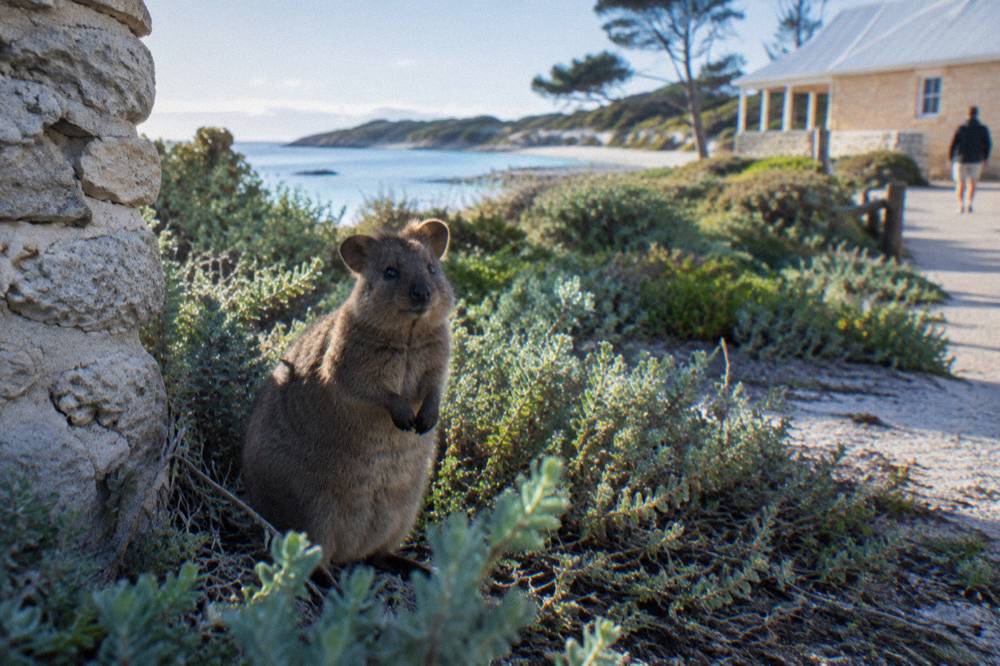
The penalties are not theoretical. Deliberate interference, which includes feeding, draws on-the-spot fines under the Rottnest Island Regulations 1988 and can be prosecuted under the Biodiversity Conservation Act 2016 with fines up to A$10,000; animal cruelty carries up to A$300,000 and five years' imprisonment under the Animal Welfare Act 2002. Enforcement aside, the rules exist because the island's quokkas have no natural predators and human food makes them genuinely sick. Watch, photograph from a distance, give them a clear path to move away, and the experience costs nothing and harms nothing.
Two seasonal notes add real value for free. Joeys begin poking their heads from their mothers' pouches in August and take their first hops in September, which makes late winter and early spring the most rewarding time to linger near the settlement lawns. And if you encounter a sick or dead bird, do not touch it; report it to the Emergency Animal Disease Hotline on 1800 675 888. Venomous dugites also live on the island; they are timid, but give any snake a wide berth.
The seal colony at the island's western end rounds out the free wildlife layer. Cathedral Rocks hosts a resident colony of long-nosed fur seals, viewable from a purpose-built platform, and Australian sea lions also rest and feed in the area. Swimming with the seals is not permitted, and the platform exists precisely so the colony stays undisturbed while visitors get a genuinely good look. Reach it on foot, by bike or on the Island Explorer and the viewing itself costs nothing.
Free Guided Walking Tours From The Salt Store
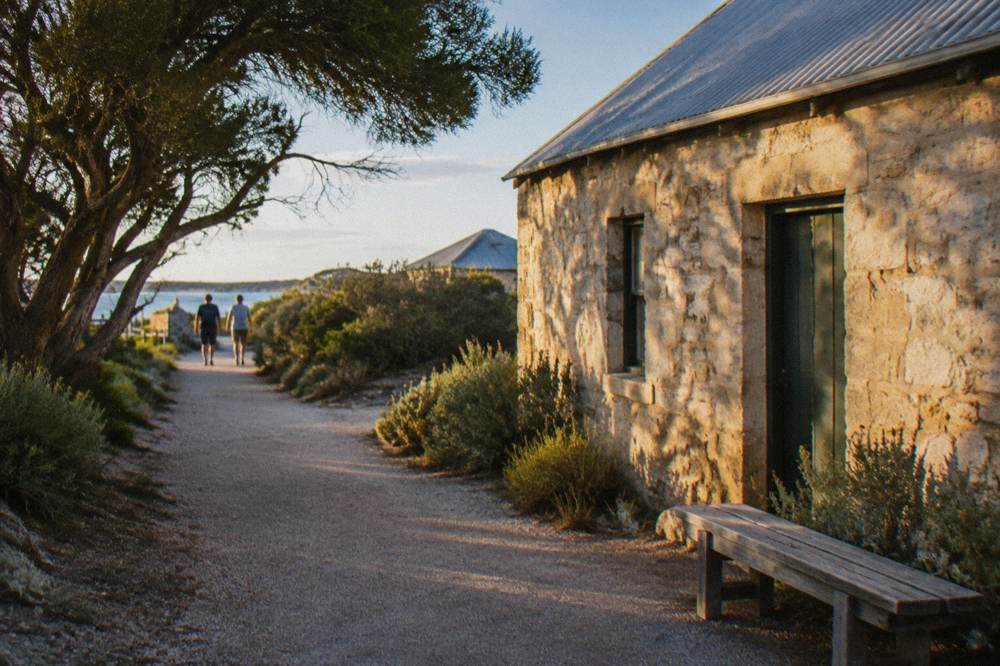
The Rottnest Voluntary Guides Association runs free guided walking tours daily from the historic Salt Store next to the Information Booth, with no booking required. The program includes Meet the Quokkas at about 9:15 am and 2 pm, Reefs Wrecks and Daring Sailors at about 10:15 am, Pioneers and Prisoners at about 11:15 am, and Salt Settlers and Survivors at about 1:30 pm, subject to weather and guide availability.
This is the single best free offer on the island and many visitors never hear about it. The volunteer guides are locals who know the island's layered history intimately, from its Whadjuk Noongar name Wadjemup, meaning place across the water where the spirits are, to the sombre record of the Aboriginal prison that operated here for 93 years, during which state records indicate 3,700 Aboriginal men and boys were imprisoned between 1838 and 1931. Pioneers and Prisoners confronts that history directly. Meet the Quokkas is the family favourite, and Reefs Wrecks and Daring Sailors covers the shipwrecks that litter the approaches to the island. The official walking tours page confirms the departures and the meeting point.
| Free walk | Departs from the Salt Store | Focus |
|---|---|---|
| Meet the Quokkas | About 9:15 am and 2 pm daily | Quokka behaviour and biology |
| Reefs Wrecks and Daring Sailors | About 10:15 am | Shipwrecks and maritime history |
| Pioneers and Prisoners | About 11:15 am | Colonial and Aboriginal prison history |
| Salt Settlers and Survivors | About 1:30 pm | Settlement life and industry |
| Whitecaps and Wilderness | Parker Point, morning window | Coastal nature |
| West End Wanderer | Roving at the western end | Seals, seabirds, geology |
Treat the times as approximate rather than contractual. The guides themselves note that departures vary with weather and volunteer availability, and walks do not run in poor conditions, so check the notice at the Salt Store when you land. No booking is stated for the regular walks; you simply turn up. There is no upsell at the end of these walks, and the guides genuinely volunteer their time, which is worth respecting by arriving on time and staying for the full walk.
The Wadjemup Museum, housed in the Old Mill and Hay Store near the settlement, works on the same honour system: open daily from about 10 am to 3:30 pm, entry by contribution. Its exhibits cover more than 40,000 years of island history and culture, and it makes a natural pairing with the history-themed walks. Between a morning walk, an afternoon at The Basin and an hour in the museum, an entire free day assembles itself without effort.
If a walking-focused day appeals but you want the island's heritage brought to you rather than the reverse, the paid contrast is the Oliver Hill train and tunnel tour, from A$40 for two hours with live commentary and air-conditioned transport, rated 4.6 from a small pool of 35 reviews.
Free Snorkelling From Shore
Shore snorkelling on Rottnest Island is free, and two marked snorkel trails make it easy: the Parker Point Snorkel Trail with 12 interpretive plaques on the seabed inside the Parker Point marine sanctuary zone, and the Little Salmon Bay trail marked by surface buoys. Neither charges an entry fee; you need only your own mask, fins and a reasonable level of water confidence.
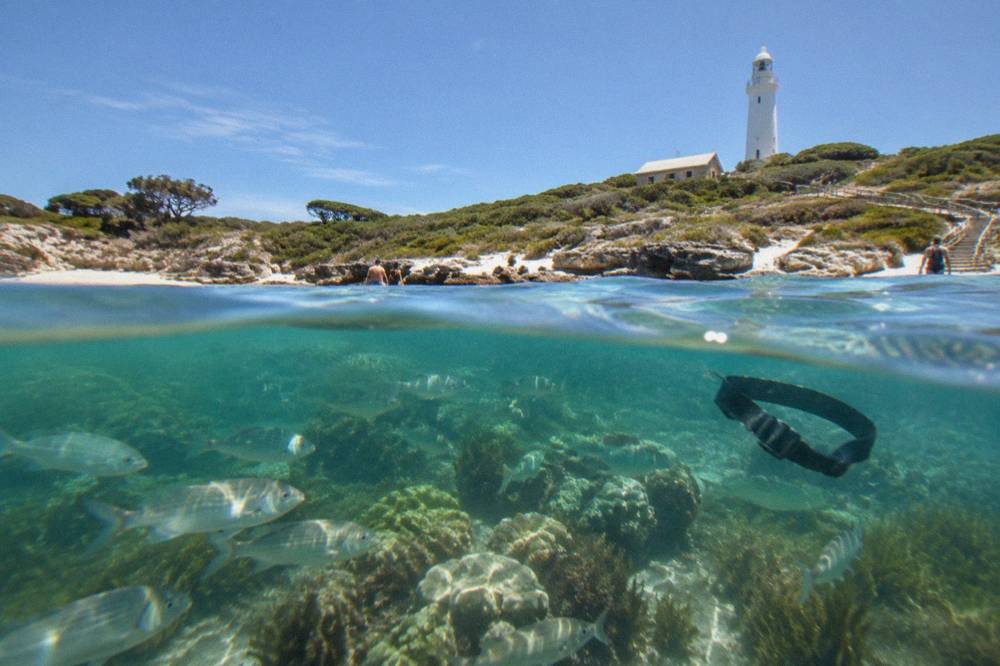
The Parker Point trail is the better known of the two, a 17-minute bike ride from Thomson Bay or a longer but beautiful coastal walk, and its 12 seabed plaques describe the reef and its residents as you swim over them. More than 135 species of tropical fish reach the island on the Leeuwin Current, which also holds the sea around 23 degrees in summer, and the sanctuary zone protections mean the reef is in visibly better condition than anywhere you might pay to snorkel elsewhere on the Perth coast. Little Salmon Bay's buoys mark a second plaque trail in the same protected stretch of southern coast. Five sanctuary zones ring the island, from Kingston to West End Demersal, and all prohibit fishing and collecting.
The cautions are the same as for any unpatrolled beach. Check conditions before you get in, swim with a friend, stay clear of jetties and moorings, and treat blue bottles with respect if they are present. If you own a mask and fins, bring them; hiring gear is the one cost that can creep into an otherwise free swim, and the island's bike-hire shops do rent equipment for those who arrive empty-handed. For the fuller picture on where to get in the water, see snorkelling on Rottnest Island.
A Free Perth City Walk To Pair With Your Ferry Day
GuruWalk runs a free, pay-what-you-want walking tour of Perth itself, called Perth: The Heart of the City of Gold, about two hours from Elizabeth Quay near the Spanda sculpture, in English and Spanish, rated 4.37 from 38 reviews. It is in Perth city, not on Rottnest Island, and GuruWalk has no walking tour on the island. It works as a Perth-side add-on to a Barrack Street Jetty ferry day.
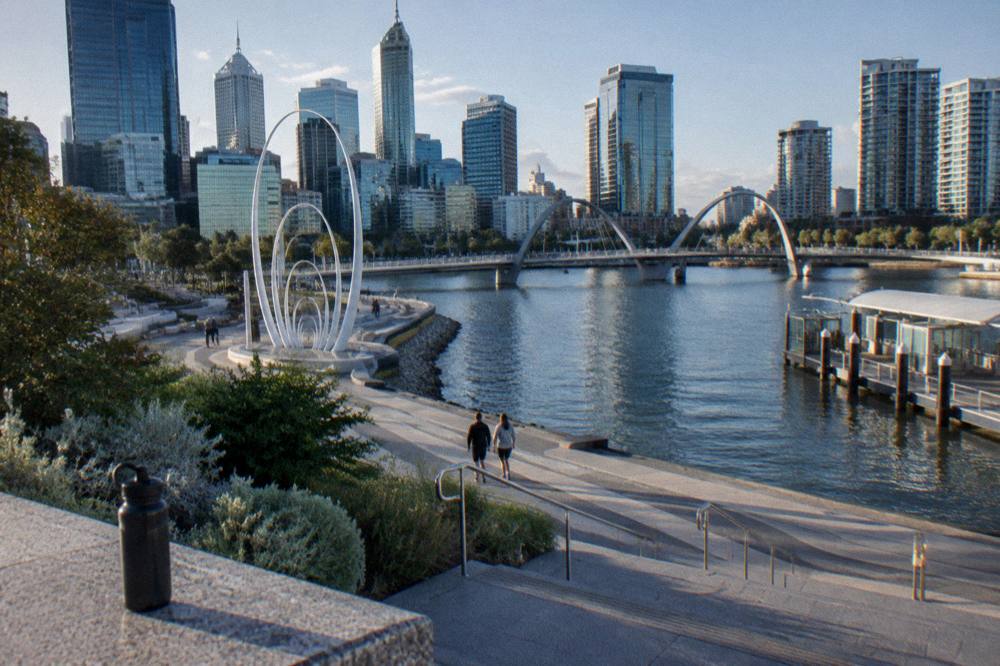
The pairing is genuinely convenient. Ferries from Perth to the island leave Barrack Street Jetty at Elizabeth Quay, the same precinct where this GuruWalk walk begins, so a morning ferry to Rottnest and an afternoon free walking tour of the city assemble into a single inexpensive day: one paid crossing bracketed by two free guided experiences. The walk is free to join with tips for the guide at the end, the standard pay-what-you-want model. On the island itself, the equivalent free offer is the volunteer guides' program from the Salt Store, covered above, and that remains the only free guided walking program on Rottnest.
See this free tour on GuruWalk
| Free walk | Where | Duration | Rating and pool |
|---|---|---|---|
| Meet the Quokkas | Rottnest, from the Salt Store | About 1 hour | Free, volunteer run |
| Pioneers and Prisoners | Rottnest, from the Salt Store | About 1 hour | Free, volunteer run |
| Perth: The Heart of the City of Gold | Perth city, Elizabeth Quay | About 2 hours | 4.37 from 38 reviews |
For visitors basing themselves on the island rather than day-tripping, the same logic applies in reverse: a late-afternoon return ferry to Perth leaves room for the city walk before dinner, or the walk fills a morning when the island weather turns. Neither experience needs to be booked as a product, which is exactly why they belong in a free-things guide rather than a tour comparison.
The Cheapest Way To Get To The Free Stuff
The cheapest roster ticket to Rottnest Island is the Fremantle ferry and entry ticket from A$90 per person, a same-day return with the island admission included, rated 4.7 from 580 reviews, with free cancellation. The crossing from Fremantle takes about 25 to 30 minutes, the shortest of the three departure ports, and the same fare structure applies whether you plan a free day or a paid one.
The island will never be free, and this guide will not pretend otherwise, but the gap between a bare-bones day and a loaded one is wide. A same-day return from Fremantle with admission sits at A$87.50 to A$90 depending on the operator; the Hillarys equivalent from Rottnest Fast Ferries is A$95 including admission with free parking at the harbour; and the Perth departures run longer and dearer, from about A$134.50 to A$135.50, though they add a Swan River cruise leg on some products. Every one of these fares already contains the A$21.50 adult admission, so there is no second charge on arrival and no way to dodge it. The question of whether to book the ferry in advance matters most in school holidays and peak summer, when sailings sell out.
| Ticket | From | Price | Rating and pool |
|---|---|---|---|
| Ferry and entry ticket | Fremantle | From A$90 | 4.7 from 580 reviews |
| Roundtrip fast ferry | Hillarys | From A$95 | 4.7 from 128 reviews |
| Ferry and admission | Perth | From A$135 | 4.7 from 345 reviews |
| Ferry and bike day | Fremantle | From A$127 | 4.7 from 947 reviews |
If a purely free day on the island is the goal, the plain ferry and entry ticket is the honest pick: it buys the crossing and the admission and nothing else, which is all a beaches-and-walks day needs. Pair it with a packed lunch, since food on the island is the other unavoidable spend, and the total day cost lands close to the fare alone. Rottnest Rottnest Tours compares these ticket options side by side, including the bike-and-ferry packages that suit visitors who want wheels as well as water.
For context on the money question generally, the breakdown of why a Rottnest trip costs what it does explains how the admission, the sea crossing and the island's captive food market stack up. The short version: the ferry is the cost, everything after it is negotiable.
Free Events And Seasonal Programs
The volunteer guides add free school holiday programs in summer from 2 to 31 January 2027 and autumn from 10 to 25 April 2027, the island hosts free family fireworks on New Year's Eve, Thursday 31 December 2026, and free cultural events appear on the island calendar across the year. None of these charge entry, though ferry fares and peak-period booking pressure apply as always.
The holiday programs deserve a special mention for families: beach discovery sessions, behind-the-scenes tours and quiz nights, all free, all run by the same volunteer guides who lead the daily walks. The summer program runs through January 2027 and the autumn program through the April school holidays, and the island's event calendar lists the individual sessions. The New Year's Eve fireworks are a free family event in the late afternoon and evening, with extra ferry services laid on, though that also means the return sailings that night are among the busiest of the year and need early booking.
One more free-to-watch spectacle belongs on any list like this: whales, in season, from the shore and even from the ferry. Humpbacks and southern right whales pass the island between August and December, sometimes as early as June and July, and the western headlands are the natural viewing points. No listing on this roster sells or guarantees a whale sighting, and the island's own whale cruise is a separate operator product running September to November, but standing at Cape Vlamingh with binoculars costs exactly nothing. The seasonal detail lives in when you can see whales on Rottnest.
Common Questions About Free Things To Do On Rottnest Island
Is Rottnest Island free to visit?
No. Every visitor arriving by ferry pays the Rottnest Island Authority admission within the fare, A$21.50 per adult for a single day, so the island has a floor cost. Once landed, beaches, quokka watching, walking trails, shore snorkelling and the free volunteer guided walks all cost nothing.
Are the Rottnest walking tours really free?
Yes. The Rottnest Voluntary Guides Association runs free daily walks from the Salt Store building next to the Information Booth, including Meet the Quokkas at about 9:15 am and 2 pm, with no booking stated. They are subject to weather and guide availability, so they are not guaranteed to run every day.
Can I see quokkas for free on Rottnest Island?
Yes, quokkas roam freely around the Thomson Bay settlement and across the island, and watching them costs nothing. They are mainly nocturnal and most active early morning and late afternoon. Do not touch or feed them: on-the-spot fines apply and prosecution can reach A$10,000.
Is there a free GuruWalk tour on Rottnest Island?
No. GuruWalk has no walking tour on Rottnest Island. Its free Perth: The Heart of the City of Gold walk, about two hours from Elizabeth Quay, rated 4.37 from 38 reviews, takes place in Perth city and pairs with a Barrack Street Jetty ferry day as a mainland add-on.
What is the cheapest way to get to Rottnest Island?
Among the tickets on this roster, the Fremantle ferry and entry ticket from A$90 per person is the cheapest, a same-day return with admission included. The same-day return fare from Fremantle runs A$87.50 to A$90 across operators, against A$95 from Hillarys and from about A$134.50 from Perth.
Is snorkelling free on Rottnest Island?
Snorkelling from shore is free at every beach, including the marked Parker Point and Little Salmon Bay trails inside the marine sanctuary zones, provided you bring your own mask and fins. Gear hire and boat snorkel tours are the paid alternatives, from A$185 for a guided catamaran trip.
A free day on Rottnest Island is not a compromise version of the island; it is the island as most locals use it. The beaches cost nothing, the quokkas ask only for distance and respect, the volunteer guides give their time away daily, and the clearest water on the Perth coast sits a short walk from the jetty with no gate and no fee. Budget for the crossing, pack a lunch, and the rest of the day is yours for the price of attention.