Is Rottnest Tap Water Safe To Drink?
What the verified record actually says about tap water on Rottnest Island, where the official refill points are, and how much water to carry on a bike, bus or boat day.
Is Rottnest Tap Water Safe To Drink?
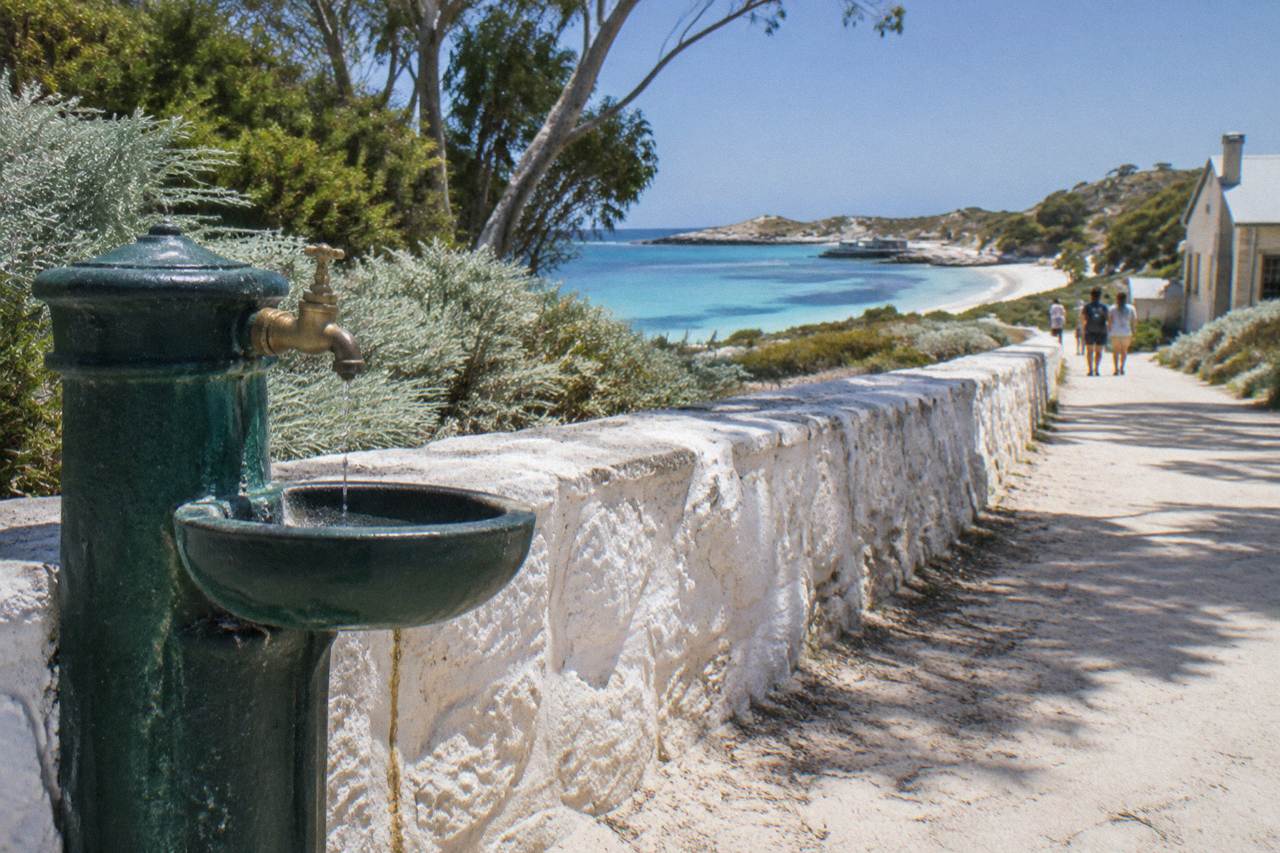
Nobody can give you a yes or no from the official record, because no authority publishes a drinkability rating for tap water on Rottnest Island. What the official guidance does say is practical: carry at least 2 litres per person, 3 litres in hot weather, and use the marked refill points around the settlement and bays. Read the signage at each tap and ask staff at the Visitor Centre before filling up. That position sometimes surprises visitors expecting a simple answer, but it is the honest one. The island's own practical tips page, the same source that lists the water refill points, frames water as a carrying and planning question rather than a treatment question. This article works through what is actually verified, where the refill points sit, how much water a day on the island really demands, and how the ferry, bike and bus products on the roster fit into a hydration plan. If you want to see where each refill point sits in relation to the bays and bike routes, the map of Rottnest Island's bays and tour stops puts them all in one place.
The short version for trip planning: arrive with a full bottle, treat every refill point as a stop worth knowing, and do not assume a rating that has not been published. If a sign at a tap tells you something different from what you expected, the sign wins. The island's Visitor Centre in Thomson Bay is the right place for a direct question about any specific outlet, and sick or injured wildlife questions go to the hotline, not the water question, which is reported through official channels.
For most visitors the day is built around one of the ferry packages, and a full cycling day in the sun is exactly the scenario where the 2 litre guidance earns its keep. The selection below covers the three most common formats: the Hillarys bike day, its Fremantle equivalent, and the bus tour for anyone who wants to spend less time pedalling between water stops.
Where Can You Refill Your Water Bottle On Rottnest Island?
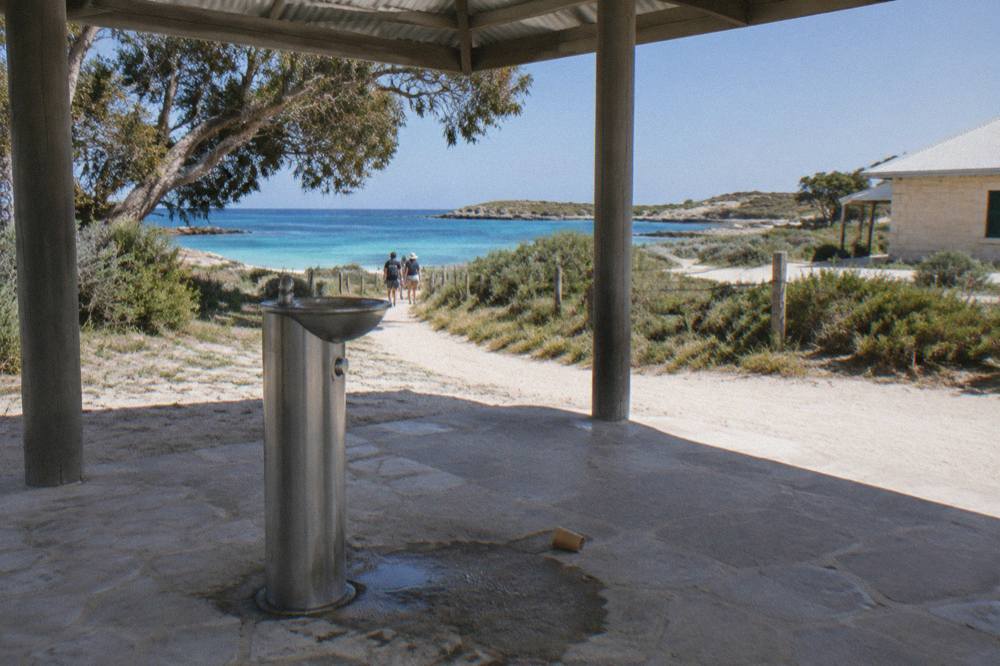
The official practical tips page names six refill points: Thomson Bay, Army Jetty, Kingstown Barracks, The Basin, Vlamingh Lookout and Geordie Bay. They are spread deliberately, following the settlement and the western riding route, so a cyclist doing the full island loop passes several of them. Not every point is a fancy fountain; some are simple taps, which is exactly why reading the signage at each one matters. Thomson Bay is the practical anchor. It sits in the main settlement where the ferry jetty, the Visitor Centre, the bakery and the General Store all cluster, so it is the easiest place to top up before setting off. Geordie Bay and Kingstown Barracks sit along the northern shore, useful for anyone riding the island loop clockwise or staying in that corner. The Basin is the famous swimming spot a short walk from the settlement, and Vlamingh Lookout is out toward the western end near the seal colony viewing platform at Cathedral Rocks, where there is little else in the way of services.
| Refill point | Where it sits | Best for |
|---|---|---|
| Thomson Bay | Main settlement, by the ferry jetty and Visitor Centre | Topping up on arrival and before the ferry home |
| Army Jetty | Settlement edge | A second stop before leaving the town area |
| Kingstown Barracks | Northern side of the island | Riders on the northern loop |
| The Basin | Short walk from the settlement | Swimmers and families based nearby |
| Vlamingh Lookout | Western end, near Cathedral Rocks | The long ride out west |
| Geordie Bay | Northern bays | Loop riders and Geordie-based visitors |
A sensible riding plan uses the geography: fill at Thomson Bay, top up at The Basin or Geordie Bay depending on your direction, and do not count on anything between Vlamingh Lookout and the settlement except what you are carrying. The official practical tips page is the source for both the refill list and the carry-at-least-2-litres rule, and it is the page worth re-reading before any hot-weather trip. If you are comparing ferry and bike days against bus formats for a family member who struggles with heat, the pairing of refill geography and transport matters more than any other single detail.
How Much Water Should You Carry On A Rottnest Day Trip?
The official figure is at least 2 litres per person for a day on the island, rising to 3 litres in hot weather. That is a floor, not a target: a cyclist doing the full island loop in a Perth summer, or a family combining riding with swimming, should treat the higher figure as the starting point. Children need proportionate amounts, and the guidance applies year-round, not only in summer. The reason the guidance is framed in litres rather than in tap quality is simple arithmetic about the island itself. Rottnest has 22 km of cycle paths and a full loop commonly takes three to five hours of riding, much of it exposed to sun off the ocean with limited natural shade. The Leeuwin Current keeps the surrounding sea around 23 degrees in summer, but that says nothing about the air temperature you are pedalling through, and the island's highest point is only 45 m, meaning little relief in the way of altitude or canopy. Wind, salt and reflection off white sand push sweat loss higher than most people instinctively expect.
Carrying capacity is a real constraint on a bike day. The Hillarys package, which includes bike, helmet and lock rental alongside return ferry and island admission from A$124 per person, and the Fremantle equivalent from A$127 per person both leave you to arrange your own hydration: food and drinks are excluded on both listings (see Food On Rottnest). So the water bottle plan belongs in your bag before boarding, not in a purchase you plan to make at sea. A practical pattern many day-trippers settle on is two bottles per person in the pannier or backpack, one drunk between the settlement and the western end, one for the return leg, plus a refill stop planned before the last stretch. As this site's Rottnest Tours coverage of the ferry options shows, the departure point you choose changes your morning schedule, and an earlier arrival simply buys you cooler hours for the exposed western riding.
How Hot Does Rottnest Island Get, And When Is Hydration Hardest?
Bureau of Meteorology averages for the island show mean daily maximum temperatures from about 18 degrees in July and August to about 27 degrees in February, with the warmest stretch from December through March. Hydration risk peaks not only with temperature but with rainfall patterns: the driest months on average are February and December, and wet weather does little to offset sweat loss on a riding day. The numbers matter because they reshape what "hot weather" means in the official 3-litre guidance. A February day with a mean maximum of 27.3 degrees, an average of just 10.3 mm of rain for the whole month, and a sea breeze that may or may not arrive early, is a day when the higher carry figure is simply the correct one. Shoulder months still deserve respect: April averages 23.8 degrees and can produce warm, dry riding conditions with fewer people around to notice if someone in your group is struggling.
| Month | Mean daily maximum (C) | Mean rainfall (mm) |
|---|---|---|
| January | 26.7 | 13.3 |
| February | 27.3 | 10.3 |
| March | 26.2 | 18.0 |
| April | 23.8 | 32.1 |
| May | 21.2 | 70.0 |
| June | 18.8 | 103.2 |
| July | 17.9 | 114.1 |
| August | 18.0 | 86.6 |
| September | 19.0 | 51.2 |
| October | 20.6 | 27.9 |
| November | 23.1 | 18.2 |
| December | 25.3 | 9.4 |
The Bureau of Meteorology averages for station 009193 are long-term means, not forecasts, so check the live forecast before any summer trip. Winter riders have the opposite problem less often discussed: cool, damp conditions make people under-drink, and a three to five hour loop still depletes you. Quokka behaviour points the same way: the island's marsupials are mainly nocturnal and most active early and late in the day, and cooler months raise their daytime activity. Humans benefit from the same scheduling. Ride the exposed western section in the morning, plan the middle of the day around the settlement or a bay, and you will need less heroic hydration to stay comfortable.
Do The Bike And Bus Tours Factor In Water Stops?
Not as an advertised inclusion: no listing on the ferry-and-bike or bus side of the roster mentions water or drinks as included, and several state plainly that food and drinks are excluded. Water planning is yours to own. The bus formats change the equation in your favour, though, because the Island Explorer hop-on hop-off network and the guided bus tours pass through or near the settlement regularly, putting refill points within easy reach all day. Compare the formats honestly and the hydration picture sorts itself quickly. A bike day from Hillarys or Fremantle puts you on your own schedule with your own carrying capacity. The ferry and bus tour, which includes return ferry tickets, a 105-minute commentary bus tour and island admission from A$149 per person with a 4.6 rating from 1,512 reviews, alternates riding time with seated touring time, and seated time in an air-conditioned vehicle is time you are not sweating through your supply. The grand island formats go further: the Rottnest Fast Ferries grand tour from A$199 per person includes a light picnic lunch, and the SeaLink grand package from A$209 per person includes a sandwich lunch, though drinks remain something to buy or bring.
Families with heat-sensitive members or riders who will not manage a full loop should read the bus option not as a lesser choice but as the format where the official water guidance is easiest to satisfy. Solo cycling on a 27-degree day with two small bottles and a long western leg is the scenario the guidance exists to prevent.
Can You Buy Drinks On The Island?
Yes, at the two General Stores, one in the Thomson Bay settlement and one at Geordie Bay, both open seven days and generally about 8 am to 6 pm with holiday variations, and at the bakery and other food outlets in the settlement. Specific drink prices are not published, so treat buying on the island as a backup rather than a budget plan. The geography of the stores mirrors the refill points, which is no accident. Both stores sit on the populated northern arc of the island; the western end around Cathedral Rocks and Vlamingh Lookout has no retail at all. So the purchasing plan and the refill plan are really the same plan: load up on liquids whenever you are in the settlement or Geordie Bay, and ride west carrying everything you will want before you turn back. Some ferry products improve your starting position. The SeaLink ferry-and-admission listing from A$90 per person notes an onboard bar and WiFi on the ferry, so a cold drink on the crossing itself is available on that route, though food and drinks on the island are excluded from that package too.
There is an ATM at the Visitor Centre if you prefer cash for small purchases, and lockers at the Visitor Centre can hold a spare bottle or a change of clothes if you want to do a final refill-and-drop before the ferry home. None of this is expensive or complicated; it is simply easier at 9 am in the settlement than at 1 pm halfway to the western end.
What About Water On The Ferry Crossing?
The crossing itself is short enough that dehydration is not the concern, but the day around it is long: about 25 minutes from Fremantle, about 45 from Hillarys, and up to 90 minutes from Perth's Barrack Street Jetty. Operators advise arriving 30 minutes before departure, which means your island day starts well before the ferry does, and breakfast-hour coffee is a mild diuretic worth balancing with plain water. The Perth-departing products add a scenic Swan River cruise to the sea crossing, stretching the travel portion of the day further, from about 9 hours door-to-door on the Perth ferry and bike trip from A$175 per person. Longer travel days argue for a bottle in the terminal, not because the crossing is demanding, but because the easy hours slip past without a drink. On the return leg, after a full day of sun and salt, the ferry is exactly where the day's deficit catches up with people: headaches on the homeward crossing are a familiar pattern on any island day trip, and they are usually a hydration story, not a seasickness one.
For readers weighing whether the whole outing is worth the logistics, the blog piece on whether a Rottnest day trip is worth it works through the value question, and the answer leans on getting details like water, timing and departure point right rather than on any single headline experience.
What Should You Do If You Feel Unwell In The Heat?
Rottnest has a nursing post in Thomson Bay, and the official advice for a medical emergency anywhere on the island is to call 000. For lesser heat symptoms, the right moves are the standard ones: stop exertion, get into shade, drink, and cool down, and the settlement offers all three within a short distance of the ferry jetty. Recognising early symptoms in yourself or a companion beats treating them later. The island's beaches are not patrolled by lifeguards, which is worth knowing alongside the water guidance: there is no supervising service watching for a swimmer or rider in trouble, so groups look after their own. Blue bottle jellyfish can be present at times, so a rinse and a rest at a bay is best done with an eye on conditions rather than blindly. Venomous dugites live on the island too; they are timid and avoid people, but the general rule of watching where you step off a path applies on hot afternoons when any snake is more active. A guided outing can also take you past some of these quieter bays with a skipper who knows the local conditions, which is where the Rottnest Island adventure boat tour guide earns its keep.
The practical tips page also covers the carry rule for hot weather, and links the water question to the broader sun-safety picture: shade on Rottnest is a scarce resource on the western half of the island, and a hat plus a wet shirt at a refill point does more for body temperature than most people expect. If someone in your group goes quiet, pale or headachy on a ride, believe it early and turn the day into a settlement-based one. The island rewards that call: quokkas are most active early and late in the day anyway, and the midday hours are better spent near cold drinks than mid-loop.
Does The Water Question Change With Longer Or More Active Days?
It scales, and the scaling is roughly linear with hours and effort. A three-hour guided snorkel boat trip, a 90-minute segway tour or a two-and-a-half-hour skydive package each shift the hydration question from "riding all day" to "exerting hard for a block, then resting", and the boat formats solve part of it for you by carrying supplies onboard. The listing inclusions tell you which ones do. The half-day snorkel and sail catamaran tour from A$185 per person, rated 4.8 though from a small pool of 33 reviews, includes a seasonal fruit platter plus coffee and tea, and the guided snorkel boat experience from A$239 per person includes bottled water, fruit platters, coffee and tea, and even a restroom onboard. Those inclusions matter on the water: swimming is deceptively dehydrating, and salt exposure accelerates it, so a boat that brings its own supply is doing part of your planning for you.
The adventure cruise format, which pairs a same-day ferry with a 90-minute high-speed wildlife cruise and a local guide from A$164 per person, is a middle case: a guide is included, drinks are not, so bring the bottle. At the far end of the scale, the luxe seafood cruise from A$395 per person is the one product on the roster where drinks are the least of your concerns, with an all-inclusive wine list and a welcome cocktail built into a 7-course lunch. The segway formats, the 1-hour settlement tour from A$98 and the 1.5-hour fortress tour from A$139, are short and close to the settlement, which makes a pre-tour refill at Thomson Bay trivially easy. Whatever the format, the same two numbers govern the day: 2 litres minimum, 3 litres in the heat, and the refill map above.
How Should You Plan Water For An Overnight Stay?
Overnight visitors can refill at the same six points as day-trippers, and the extended-stay island admission of A$28.50 for adults is the only fee difference relevant to the picture. The official stay list runs from Stay Rottnest self-contained units, hostel dorms and the campground through Discovery Rottnest Island's 83 eco-tents at Pinky Beach, Samphire Rottnest and The Lodge Wadjemup, and bookings open nine months ahead on the first Wednesday of each month. Campers carry the biggest hydration load of any visitor group, because a campground day starts early and the western end of the island stays dry and retail-free all day. Self-contained units and the hotels change the calculus only slightly: a kettle or a store run makes the morning easier, but the riding day still runs on what you bring. Campfires are prohibited on the island, a Class A Reserve rule, so any camper's image of boiling water over a flame needs revising toward a stove.
Seasonal timing interacts with staying over in ways day-trippers escape. Summer school holidays run from 17 December 2026 to 31 January 2027, the South32 Rottnest Channel Swim lands on Saturday 20 February 2027, and free family fireworks run on New Year's Eve, Thursday 31 December 2026, with extra ferry services, all of which means peak crowds, peak heat and peak demand on the same weeks. The guide to where to stay on Rottnest Island covers the booking mechanics, but the water rule for those weeks does not change: the higher carry figure, a refill map in the pocket, and shade plans for the middle of the day.
By now the shape of the answer should be clear. The drinkability question gets an honest "read the sign and ask the Visitor Centre", but the question that actually determines whether your day goes well is the one the authorities answered with numbers: how much you carry, and where you can top up. Every product format on the roster, from the A$90 ferry-and-admission ticket to the A$499 tandem skydive, sits inside that same frame.
Common Questions About Drinking Water On Rottnest Island
Is Rottnest Tap Water Safe To Drink?
No official source publishes a drinkability rating for the island's tap water, so this site asserts neither safe nor unsafe. The verified official guidance is to carry at least 2 litres per person, 3 litres in hot weather, read the signage at each refill point, and ask staff at the Visitor Centre in Thomson Bay about any specific outlet.
Where Are The Official Water Refill Points On Rottnest Island?
Six are listed in the official practical tips: Thomson Bay, Army Jetty, Kingstown Barracks, The Basin, Vlamingh Lookout and Geordie Bay. They follow the settlement and the northern riding routes, and there is no retail or listed refill point on the western end of the island.
How Much Water Should I Bring For A Full Island Bike Loop?
Start at the official minimum of 2 litres per person and move to 3 litres in hot weather. The full 22 km loop commonly takes three to five hours with limited shade, so plan a refill stop at The Basin or Geordie Bay before the exposed western section rather than counting on stops after it.
Can I Buy Drinks On Rottnest Island?
Yes. Two General Stores, one at Thomson Bay and one at Geordie Bay, open seven days, generally about 8 am to 6 pm with holiday variations, plus bakery and other settlement outlets. Verified prices are not published, so budget for it as a convenience rather than a plan.
Do Any Tours Include Drinks?
Some boat products do. The guided snorkel boat trip includes bottled water, coffee, tea and fruit, and the catamaran sail includes fruit, coffee and tea. The ferry, bike and bus formats exclude food and drinks, though the grand island tours include light lunches and the SeaLink ferry notes an onboard bar.
What Do I Do In A Heat Emergency On The Island?
Call 000 for any medical emergency. Rottnest has a nursing post in Thomson Bay. For milder heat symptoms, stop exertion, get to shade, drink and cool down; the settlement with its stores, shade and refill points is a short distance from the ferry jetty.